
Introduction: Why Project Hail Mary Is the Sci-Fi Novel Everyone Is Talking About
Have you ever picked up a book that completely changed how you see the world?

That is exactly what is happening with Andy Weir’s Project Hail Mary. This novel has become a cultural phenomenon, and for good reason. It blends hard science with heartfelt storytelling in a way that few books ever pull off.
Readers cannot stop talking about its unique premise. An astronaut wakes up alone on a spaceship with no memory of who he is or how he got there. His mission? Save humanity from extinction. But here is the real magic: the story is not just about science or survival. It is about connection, friendship, and hope. The emotional journey of Ryland Grace stays with you long after you turn the last page.
In 2026, the excitement around this book has only grown. The film adaptation won the Best in Show prize at the Golden Trailer Awards, showing just how much people love this story.

And it makes sense. Weir has created something rare: a science fiction novel that feels both real and deeply human.
This article explores what makes Project Hail Mary a modern classic. We will look at how it stacks up against other beloved books like The Hunger Games or 1984. We will also talk about why it appeals to people who normally prefer non fiction novels, thanks to its grounded, realistic science.
So if you are curious about the book everyone is buzzing about, you are in the right place. Let us dive in and see why Project Hail Mary has earned its place in the sci-fi hall of fame.
The Science Behind the Story: Fact vs. Fiction in Project Hail Mary
One reason this project hail mary book feels so different is how much research went into it. Andy Weir has built his reputation on getting the science right. He calls scientific accuracy his "whole shtick." And this story is packed with real scientific ideas.
Take the astrophage, the tiny alien microbe at the center of the plot. It is fictional, but it is based on real concepts. The idea of a microbe feeding on sunlight comes from actual microbes on Earth called extremophiles. These organisms survive in harsh places like deep-sea vents. And the threat to the sun? That draws from real solar physics. The sun has natural cycles where its brightness changes slightly. The story just takes that idea much further.
The book also uses real engineering challenges to move the plot. The Hail Mary spaceship has to solve problems with propulsion, gravity, and life support. The characters face issues like time dilation and artificial gravity through acceleration. These are real physics problems that scientists actually study.
But how accurate is it all? Astrophysicists have shared their thoughts on how plausible Project Hail Mary is.

Many parts are very solid, like the silence of space and the physics of spacewalks. Other parts stretch the truth. For example, turning xenon gas into a solid material like Rocky uses is not yet possible. Still, most experts agree the core science is grounded in reality. One astrophysicist noted that while some concepts are "very squishy," the film accurately depicted many aspects.
This mix of fact and fiction is exactly what makes the project hail mary book so engaging.
It feels possible while still being entertaining. And that careful balance is a big reason the story works so well.
Character Depth and Emotional Resonance: The Heart of the Story
The science is great, but what really makes this project hail mary book stick with you is the heart. The main character, Ryland Grace, starts out as an ordinary middle school science teacher with no memory of how he got on a spaceship. Over time, he grows into someone willing to sacrifice everything for his friends.
Dr. Ryland Grace begins the story confused, scared, and alone. He has no idea why he is in space or what his mission is. As the pieces come back, we see a man who was forced into this journey against his will. He was a reluctant hero at first. But as he faces one impossible problem after another, he finds courage he didn’t know he had. The character analysis of Ryland Grace from the book shows how his relationships slowly shift his mindset from survival mode to selfless friendship.
The real emotional anchor of the story is the bond between Grace and Rocky, an alien from the planet Erid. Rocky is built entirely differently from humans. He breathes ammonia, sees through echolocation, and speaks in musical tones. Yet the two become the best of friends. Their connection feels genuine and earned. They share jokes, take risks for each other, and never give up.

The Project Hail Mary character analysis from SuperSummary points out how Rocky’s constant optimism helps Grace through his darkest moments.

That friendship is one of the most touching parts of modern sci-fi.
Beyond the characters, the book explores deep themes: memory, identity, sacrifice, and hope. Grace wrestles with who he is without his past. He makes a choice at the end that shows just how much he has grown. The author himself has spoken about that ending, and in an interview about the Project Hail Mary ending, Andy Weir reveals why Grace’s final decision makes so much sense for his character.
If you love stories that balance thrilling science with real human emotion, this project hail mary book delivers both in a big way.
Comparing Project Hail Mary to Classic Sci-Fi: What Makes a Masterpiece?
When you pick up the project hail mary book, you step into a tradition that goes back decades. Andy Weir keeps company with legends like Arthur C. Clarke and Isaac Asimov. These writers built their stories on real science and careful problem-solving. Weir does the same thing, but he adds something fresh: humor and deep emotion.
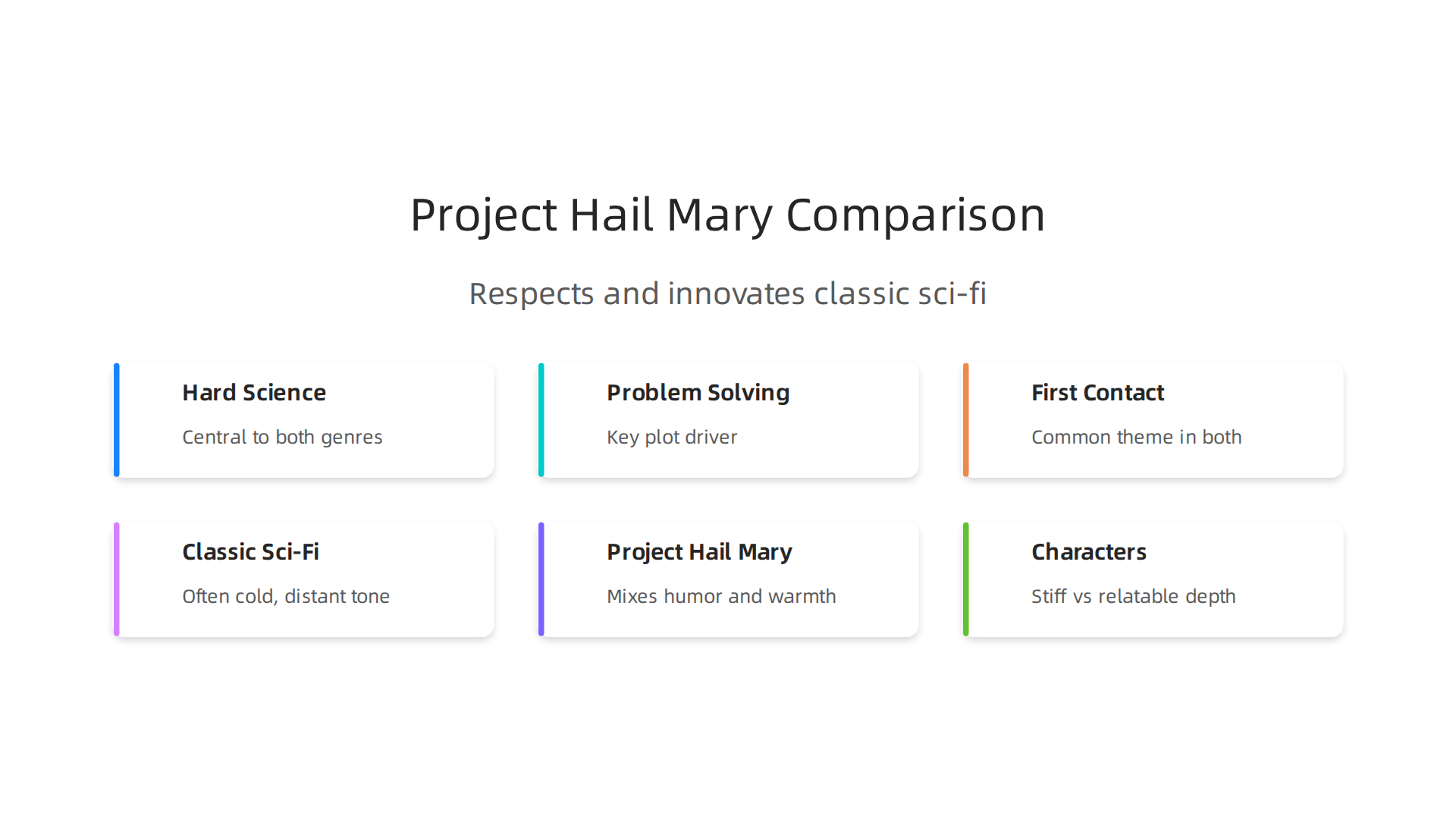
The book leans into hard science fiction. That means the science has to make sense. Astrophysicists have actually checked the book’s ideas, and they found a lot of it holds up. The New York Times asked several scientists to weigh in on how plausible the book is, and they agreed that many of the concepts have real grounding in physics, even if some stretch a little.

That kind of accuracy is what makes the project hail mary book feel so solid.
Think about classics like Rendezvous with Rama or Childhood’s End. Those stories also center on first contact with something entirely alien. Grace meets Rocky, and their communication is built on logic, math, and trial and error. That mirrors the careful, step-by-step approach Clarke and Asimov used. The problem-solving is front and center. Every obstacle gets solved through science, not magic.
But here is where Weir breaks away. Classic sci-fi often feels cold or distant. The characters can be stiff, and the tone stays serious. The project hail mary book goes the other way. It mixes real science with jokes, dad humor, and a friendship that makes you smile. Grace cracks jokes even when things look hopeless. Rocky chirps musical notes that feel warm and funny. That blend of nerdy rigor and human warmth is rare.
Because of this, the book reaches readers who might not normally pick up hard sci-fi. It feels like a fresh take on a familiar genre, one that respects the old masters while carving its own path. If you love the classics, you will recognize the roots. And if you just want a great story, you will get that too.
The Role of Humor in Hard Science Fiction
Here is the thing about hard science fiction. It can get heavy. You read about radiation, orbital mechanics, and life support systems. Your brain starts to hurt. Andy Weir knows this. That is why the project hail mary book is full of jokes. Grace uses humor the way other astronauts use oxygen. He needs it to survive.
Weir turns the pressure valve with every sarcastic thought Grace has. When Grace wakes up with no memory, he does not panic immediately. He cracks a joke about his own amnesia. Later, when he figures out that his only chance to save Earth involves a one way trip to another star system, his internal dialogue stays light. He calls himself a glorified eighth grade teacher. That self deprecating voice keeps the story from feeling too grim.
Humor also makes the science easier to swallow. Grace explains complex ideas like astrophage or the Petrova problem with simple comparisons. He talks to himself like he is explaining it to a classroom of bored kids. That approach works for the reader too. The jokes break up the technical stuff and give you a moment to breathe.
And then there is Rocky. Grace and Rocky develop a shared sense of humor even though they come from different planets. Grace’s sarcasm rubs off on Rocky, who starts making his own chirpy jokes. Their banter feels real and warm. According to a detailed character analysis from SuperSummary, Rocky shares Grace’s sarcastic sense of humor and does not hesitate to risk his own life for a good laugh.

That bond is built on laughter as much as science.
Most hard sci-fi stays serious. Books like The Hunger Games or 1984 have little room for jokes because the stakes are so high. But Weir proves you can save the entire human race and still make the reader smile. Humor makes the project hail mary book more than just a smart story. It makes it a human one.
Why This Book Resonates: A Psychological Look at Reader Engagement
But humor is just one piece of the puzzle. The real reason this book sticks with you goes deeper. It taps into something psychological.
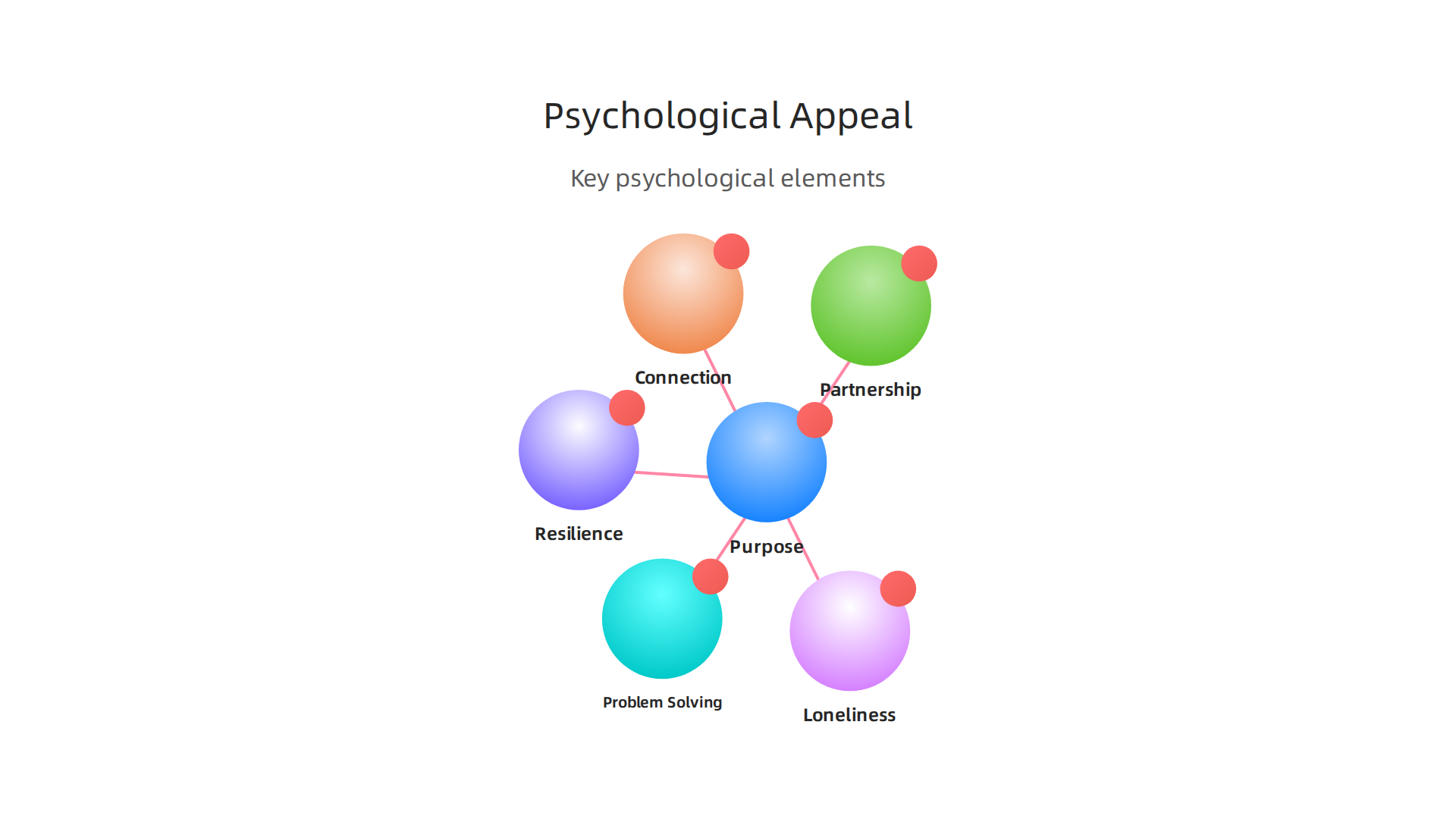
Think about what drives you in life. Purpose. Connection. The chance to beat impossible odds. The project hail mary book hits all three.
Grace wakes up with no memory and a dying star threatening Earth. He has one job. Save humanity. That clear mission gives the story a powerful pull. When you read it, your brain latches onto that goal. You want him to succeed. Every step of his journey feeds a deep human need for purpose.
The problem solving also activates your brain’s reward system. Each time Grace figures out a scientific puzzle, you get a little dopamine hit. It feels satisfying. You are not just reading. You are solving problems alongside him. That makes the reading experience active, not passive. You stay hooked.
Then there is the loneliness. Grace is completely alone at first. Waking up on a spaceship with no memory and no company is terrifying. That isolation speaks to something many people feel today. According to a Project Hail Mary film review from Vanyaland, the story uses this isolation to create a deeply human connection when Rocky shows up. Their bond feels real because both characters need it. Grace needs a friend. Rocky needs a partner. Together, they fill a void.
Modern life can feel lonely too. Scrolling through feeds, working from home, living far from family. Many people crave authentic connection. When Grace and Rocky build trust across species, it gives readers hope. It says connection is possible even in the strangest circumstances.
The book also shows that failure is not the end. Grace makes mistakes. He almost dies more than once. But he keeps trying. That resilience speaks to anyone who has faced setbacks. It reminds you that giving up is optional.

So when you close the project hail mary book, you carry more than science facts. You carry a story about purpose, partnership, and the will to keep going.
That is why readers come back to it again and again.
The Martian vs. Project Hail Mary: A Companion Analysis
If you loved The Martian, you will probably enjoy the project hail mary book too. Both come from Andy Weir. Both follow a scientist fighting impossible odds with clever thinking and solid science.
But they are not the same story.
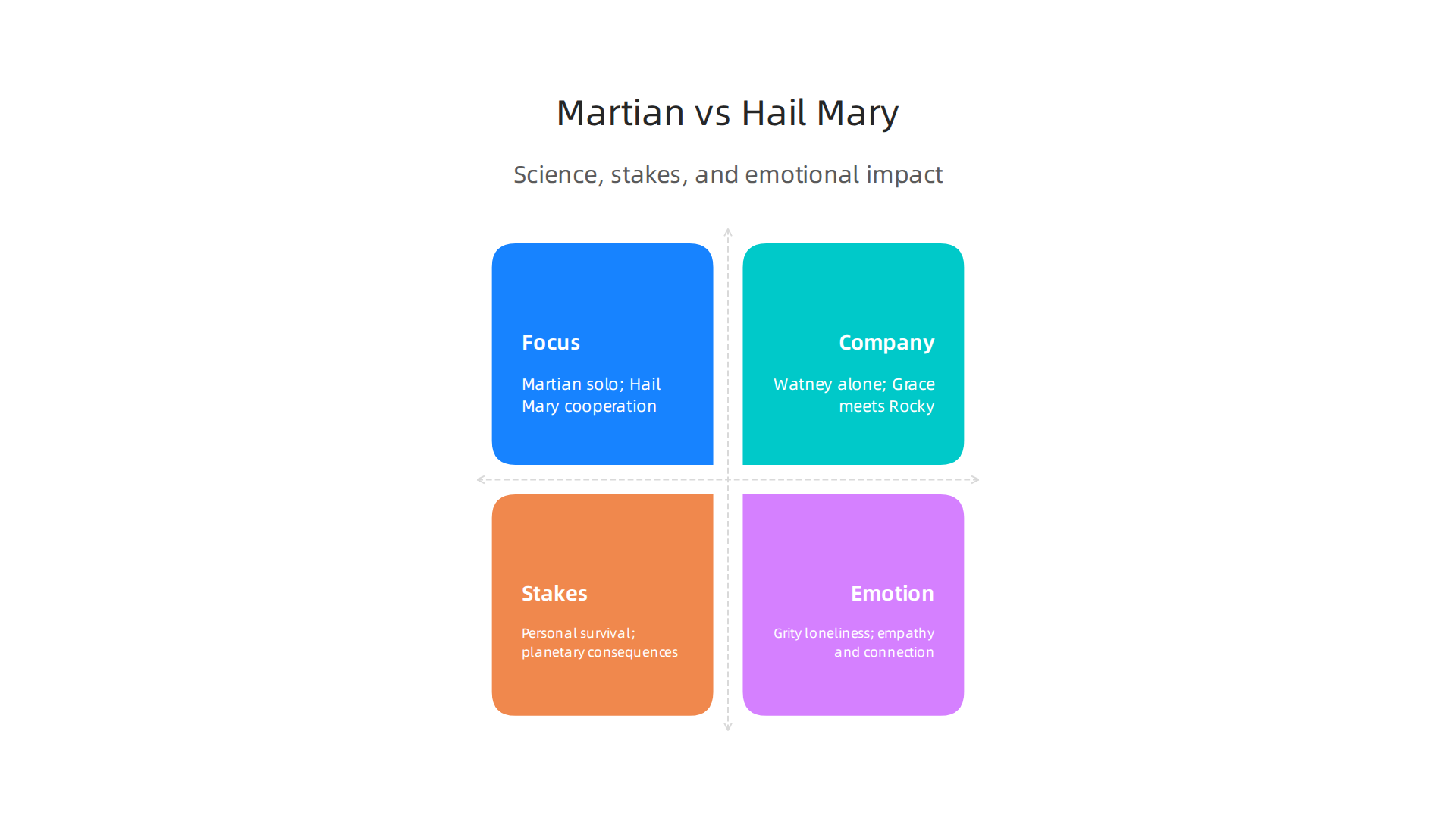
The Martian is a solo survival story. Mark Watney is stuck on Mars. He has no one to talk to. Every problem is his alone to solve. The tension comes from one man against an empty planet. It is grounded and practical.
The project hail mary book takes a bigger swing. Ryland Grace wakes up on a spaceship with no memory and a mission to save Earth from a dying sun. Soon he meets Rocky, an alien from another dying star. Now the story is not just about survival. It is about trust, cooperation, and first contact. The stakes are planetary. The scope is galactic.
Fans often debate which one is better. Some say The Martian is tighter and more realistic. Others argue that Project Hail Mary shows growth in Weir as a writer. One Reddit thread comparing the books captures this split. Many readers find Project Hail Mary more emotionally satisfying because of the friendship between Grace and Rocky. The loneliness of The Martian is replaced by connection. That shift changes everything.
Here is the simple truth. Both books are worth reading. The Martian is a masterclass in engineering and grit. The project hail mary book is a masterclass in curiosity and heart. Read one. Then read the other. You will see how Andy Weir stretched his craft and gave us two very different ways to save the world.
How Andy Weir Uses Comedy to Enhance Tension
One of the smartest choices Andy Weir makes in Project Hail Mary is knowing exactly when to crack a joke. The story is full of life-or-death moments. A star is dying. A fuel tank is leaking. An alien species is at risk. Any one of these could crush the mood. Instead, Weir drops a funny line right after the biggest scares.
Readers often notice the perfect timing of humor in Project Hail Mary. A tense scene builds. Your shoulders tighten. Then Grace mutters something sarcastic about his own situation, and you laugh. That laugh is not a break from the story. It is a release valve. Weir knows that without those moments, the tension would become overwhelming. By letting you breathe, he makes the next scare hit even harder.
Ryland Grace is not a traditional hero. He is a middle school science teacher who would rather make a joke than give a speech. That makes him relatable. When he faces impossible odds, his sarcastic observations remind you that he is just a normal person trying his best. You root for him because he feels real, not because he acts noble.
The comedy never undercuts the danger. It actually makes the stakes feel bigger. A humorless character facing doom is just a statue. A funny character facing the same doom is someone you care about. Weir uses laughter to keep you close to Grace, so when the tension comes back, you feel it twice as much.
The Appeal of Problem-Solving Narratives
Another reason this rhythm works so well is that the Project Hail Mary book hinges on something almost everyone loves: a good puzzle. Weir does not just throw danger at Grace and hope for the best. He gives him real, solvable problems. A broken ship part. An unknown alien substance. A calculation that needs fixing. And then he lets us watch Grace think his way out.
This is deeply satisfying. When Grace gets stuck, you get stuck with him. When a solution clicks into place, you feel that click too. Readers who have compared the Project Hail Mary and The Martian experience note that both stories rely on a main character using clever thinking to survive. That shared DNA is what makes them both so hard to put down. Your brain stays active the whole time because the story is asking you to solve problems right alongside Grace.
These "aha!" moments release a small burst of feel-good chemicals in your brain. That is why puzzle games, escape rooms, and mystery novels feel so rewarding. The Project Hail Mary book taps into that same instinct on nearly every page. Each new crisis is a riddle. Each solution is a victory you share with the protagonist.
You see this approach in other popular stories too. Series like The Hunger Games book use survival puzzles to keep readers hooked. A 1984 book uses political riddles that force the reader to think deeply. Even non fiction novels often borrow this structure because it mirrors how real people solve real problems.
The result is a reading experience that feels less like watching a movie and more like playing a game. You are not just a passenger. You are part of the team. And that makes every page turn feel earned.
Summary
Project Hail Mary by Andy Weir has become a modern sci‑fi touchstone because it blends plausible hard science with warm, human storytelling. The article examines the book’s premise — an astronaut who wakes with no memory on a lone mission to save Earth — and explains how Weir roots speculative ideas like the astrophage in real scientific concepts while still taking imaginative leaps. It explores character depth, especially the friendship between Ryland Grace and the alien Rocky, and shows how humor and well‑timed jokes keep tension from becoming overwhelming. The piece compares the novel to classics and to The Martian, details why readers feel actively engaged by the puzzle‑solving pace, and considers the psychological reasons the story resonates today. By the end, readers will understand which parts of the science hold up, why the emotional core matters, and what makes this book accessible to both hard‑science fans and general readers.