
Why thoughtful reviews of long and short stories matter
Have you ever finished a book or a short story and felt like you just read it, but didn’t really feel it? In 2026, it’s easy to get lost in endless scrolling and quick reads, leading to a kind of passive way of taking in stories. This can leave us feeling overwhelmed and not truly connected to what we’re reading. But what if there was a way to make every story count more?
Thoughtful reading and writing a book review can change everything. It’s not just about saying if you liked a book or not. It’s about diving deeper, understanding why a story touched you, or how it made you think. This kind of deep look is sometimes called "close reading," where you pay careful attention to the words, ideas, and how the story is put together Close Reading | ClassicsWrites – Harvard University.
When you truly think about a story, it makes the reading experience richer.
For readers, a thoughtful long short story review helps you connect with stories on a deeper level.

You might find hidden meanings, understand characters better, and even learn new things about yourself. It changes reading from a quick pass to a real adventure, making each story a chance for personal growth. Plus, sharing your thoughts in a meaningful way can help other readers discover their next favorite book, perhaps from a popular "book of the month" club or by finding exciting "book deals."
For writers, your reviews are like a helpful guide. When you take the time to write a book review that explains what worked and what didn’t, you give authors valuable feedback. This helps them grow and create even better stories. It can also spark new ideas for "fiction writing prompts" for aspiring writers.
This article will give you simple tools and ideas to help you move past just reading and into truly experiencing and reviewing stories. You’ll learn how to make your insights clear and helpful, making the world of stories more vibrant for everyone.
Want to keep up with new ideas and ways to engage with stories and creativity? Join The Newsletter for ongoing updates and opportunities. You can also explore how understanding story basics can help by checking out 10 Story Elements Every Novel and Short Story Needs.
To really experience stories and write a helpful long short story review, you need to read like a detective. This means using "close reading" skills, which help you look at a story very carefully. It’s like peeling back the layers of an onion to see what’s truly inside. Here’s a simple way to practice this in 2026.
Your First Read: Getting the Big Picture
When you pick up a story, your first read should be all about getting to know it.
Don’t worry about understanding every tiny detail right away. Just let the story wash over you.
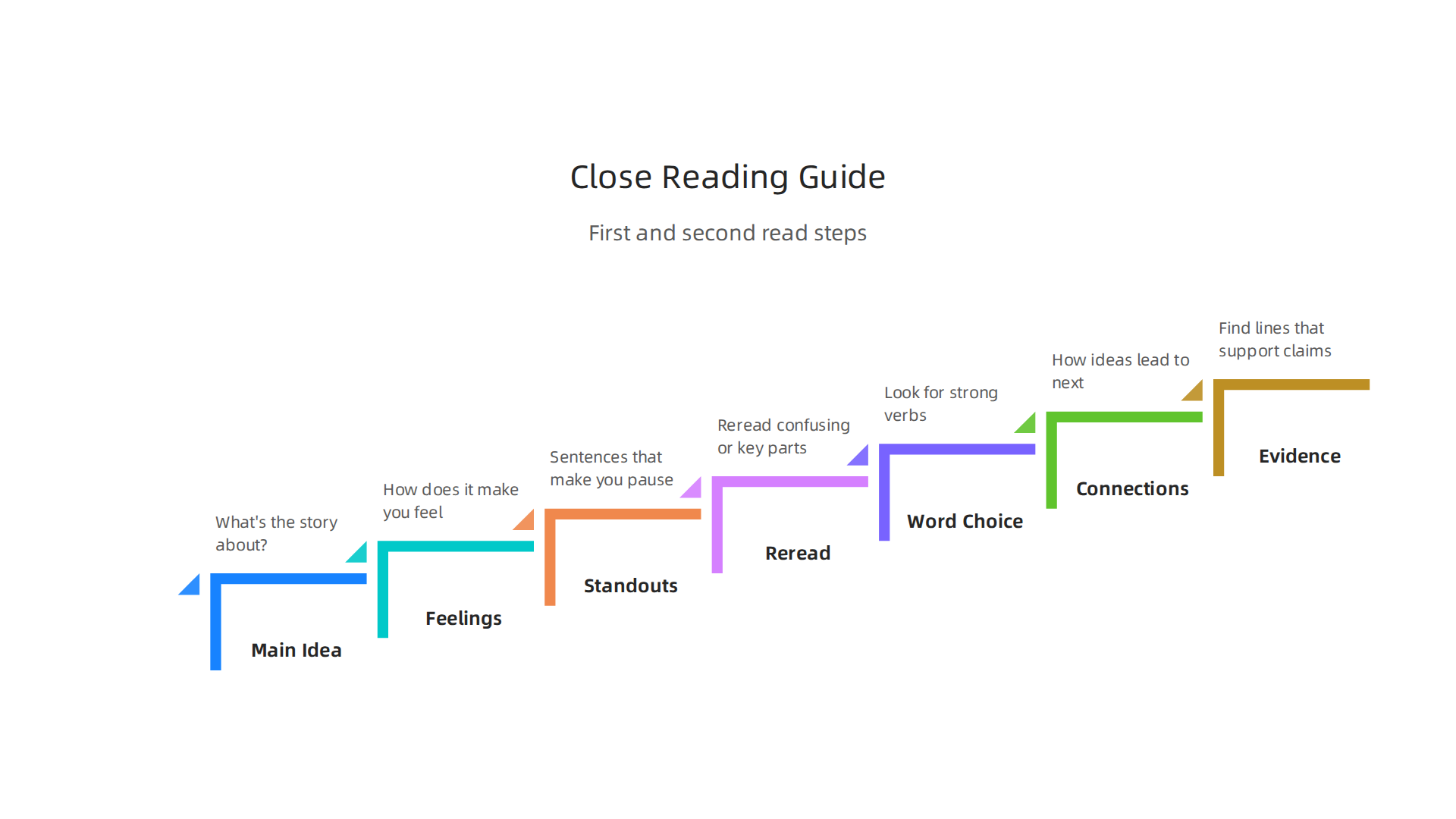
- Read for the main idea. What is the story generally about? Who are the main people or characters? What happens at the beginning, middle, and end? Think of it like watching a movie for the first time; you’re just enjoying the plot. Experts suggest reading for a general sense of what the text is about, noting anything that catches your eye SUPPORTING STUDENTS IN CLOSE READING.
- Notice your feelings. How does the story make you feel? Happy, sad, confused, excited? These feelings are very important. Write them down in a quick note. This is your first emotional response.
- Mark what stands out. Did a certain sentence make you pause? Did a character say something surprising? Put a light pencil mark next to it or make a quick mental note. Even if you don’t know why it stands out, it’s worth remembering for later.
Your Second Read: Diving Deeper
Now that you have the big picture, it’s time to go back and really look closely.
This is where you find the clues for your writing a book review.
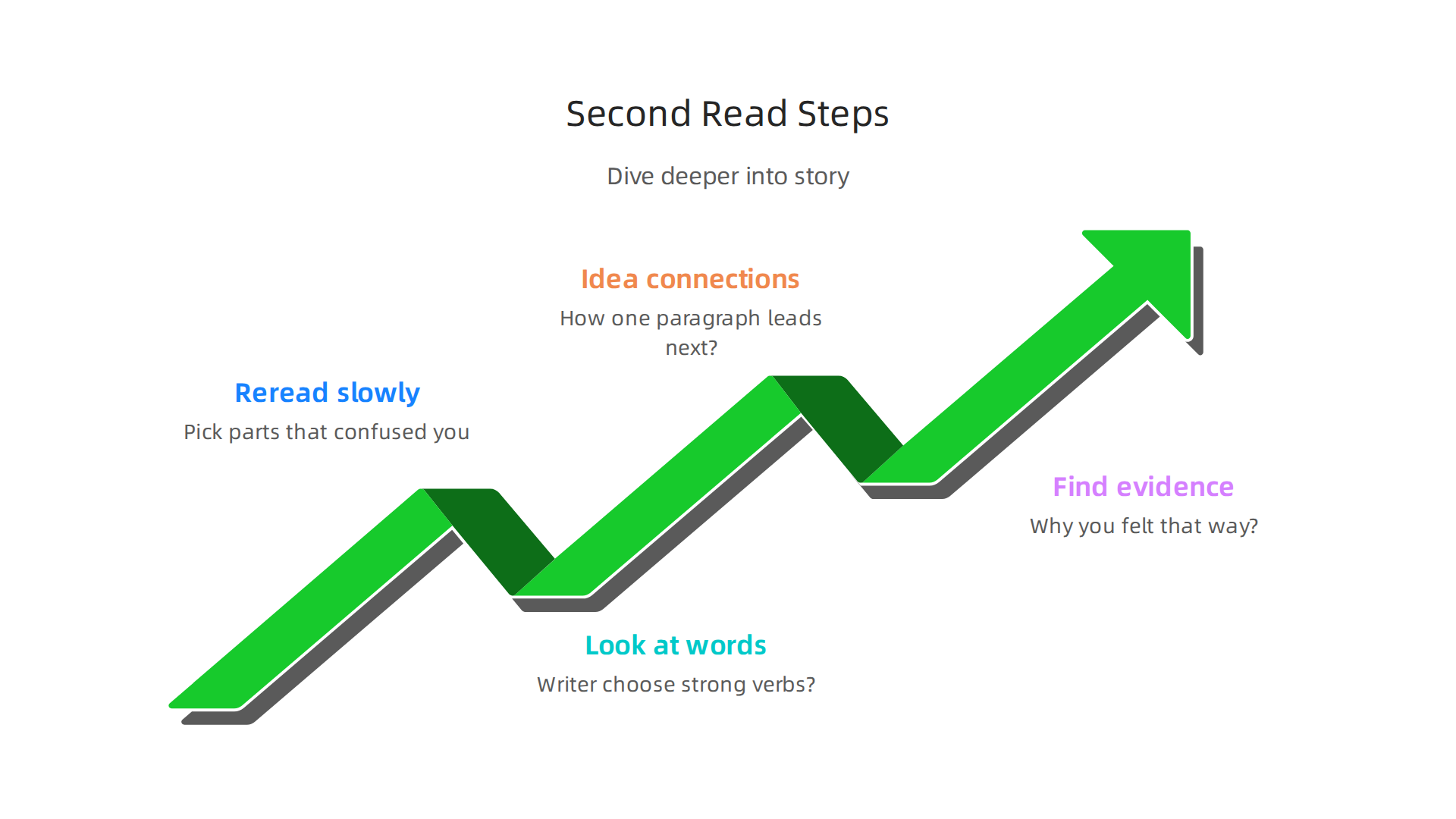
- Reread slowly. Pick out parts that confused you or made you feel strongly. Read those parts again, maybe even out loud.
- Look at the words. Which words does the writer choose? Do they use strong verbs or interesting adjectives? Sometimes, a single word can change the whole meaning of a sentence.
- See how ideas connect. How does one paragraph lead to the next? Does the writer repeat certain ideas or images? Finding these patterns helps you understand the story better. This technique is sometimes called "noticing" and "explaining" as part of demystifying literary analysis How to Teach Close Reading: Demystifying Literary Analysis for ….
- Find evidence. Remember those feelings you had during the first read? Now, try to find why you felt that way. What specific words or sentences in the story made you feel happy, sad, or confused? This is called finding objective evidence.
Annotation Strategies: Marking Your Thoughts
To help with your second read and to remember your discoveries, it’s great to mark up your book.

- Underline key sentences. If a sentence feels very important or gives you a strong feeling, underline it.
- Write notes in the margins. Ask questions. Write down your feelings. Connect ideas from different parts of the story. For example, you might write "This reminds me of what the character did earlier." Taking notes as you read and marking anything interesting helps a lot Steps for Writing a Close Reading – Guides at University of Guelph.
- Use different colors (optional). If you like, you can use one color for feelings and another for important facts or questions.
Balancing Feelings and Facts
A good long short story review needs both your heart and your head. Your emotional response to a story is very important. It tells you what kind of impact the story had. But for a review to be helpful, you also need to show why you felt that way.
For instance, if a story made you feel sad, don’t just say "This book was sad." Instead, you could say, "This book made me feel sad because the writer described the main character’s loneliness so clearly when he sat by himself, looking out the window, just like it says on page 42." That way, you’re using objective evidence from the story to explain your emotional response. This mix makes your review strong and useful for other readers looking for their next book of the month.
By taking the time to read in these steps, you’ll not only understand stories better but also grow as a reader and reviewer. You might even find ideas for your own fiction writing prompts along the way.
Ready to put these reading techniques into practice? Find a story that sparks your interest and challenge yourself to look closer. Join An Experiment and see how much more you can get from your reading.
After learning how to read a story closely, the next step in writing a good long short story review is to understand how stories are built and how fast they move. This is called structure and pacing. It’s like looking at the blueprints of a house and how quickly you walk through it.
How Stories are Put Together: Structure
Every story has a backbone, a way it’s put together. This is its structure.
Think of it as a journey with a beginning, middle, and end, and special stops along the way.
- Story Arc: This is the path the story takes, like a hill your characters climb. It usually starts quietly, builds up with some problems, reaches a big moment, and then winds down. Experts say that a story’s structure often follows a three-act system, guiding the reader through the journey How Perfect Does Your Story’s Structural Timing Have to Be?.
- Turning Points: These are moments where something big changes, pushing the story in a new direction. In a short story, these points often happen quickly. You might meet the main character and see the main problem right away. For example, in novellas, which are longer than short stories but shorter than novels, the main problem or "inciting incident" often comes early on, within the first 25% of the story Pacing And Structure.
- Scene Economy: This means how carefully a writer uses each scene. In short stories, there’s not much room for extra details. Every scene, every word, needs to count. Longer stories, like novels, can take their time to build up the world and characters. But even then, introducing key details about the main character and their problem early helps readers understand the story better How to Structure a Novella.
If you want to dive deeper into how stories are put together, check out these 10 story elements every novel and short story needs.
How Fast a Story Moves: Pacing
Pacing is all about how fast or slow a story feels. It’s not just about how long the book is. A long book can have fast pacing, and a short story can feel slow if the writer focuses on small details.
- Momentum: Short stories and novellas often need to keep a steady speed, always pushing forward. They avoid too much background information and use strong beginnings and endings for each part to keep you reading How to Write a Novella: Word Count & Structure Guide.
- Language Choices: The words a writer picks, how long their sentences are, and how they build paragraphs can all change the pace. Short, punchy sentences make a story feel fast. Long, detailed sentences can slow things down, inviting you to think more deeply. Also, the length of chapters can make a big difference in how fast or slow readers feel the story is going Pacing Within the Narrative Arc.
- Tools for Reviewing Pacing: When you’re writing a book review, you can think about how the writer controls the speed. Does the story zip along or take its time? One way to really get a feel for the rhythm of a story is to read it aloud. This helps you notice if some parts drag or if others rush by too quickly 4. Make Use Of Language To…. You can also look at how much new information is given and how emotions change throughout the story to judge its momentum Mastering Narrative Pacing: Advanced Techniques to Control Your …. If you want to see a clear explanation, you can watch how to Master Pacing in Writing.
Knowing about structure and pacing helps you give a much deeper writing a book review. Instead of just saying a story was "fast" or "slow," you can explain how the writer made it feel that way. This helps other readers decide if it’s the right book of the month for them.
Now that you know about the structure and speed of a story, let’s talk about the heart of it: the characters, their unique way of speaking, and the big ideas the story shares. These parts are super important when you’re writing a good long short story review.
Character, voice, and theme: what to probe in your review
When you write a review, looking at characters, their voice, and the story’s main ideas helps you talk about the book in a much deeper way.
Seeing Characters Grow
Characters are the people (or creatures) in a story. How they change and grow from beginning to end is called character development.
- In Short Stories: Short stories don’t have a lot of space for characters to change slowly. Instead, you often see quick, sharp moments that show you who they are and how they feel. A small event can reveal a lot about them, making them feel real even with fewer words. You might see a character face a problem and make a big decision right away, which tells you a lot about them without a long explanation. When you’re writing a book review, think about if these quick peeks into the character’s heart feel real and make sense.
- In Longer Stories: In longer books, characters usually have more time to grow and change. You get to see many sides of them and watch them develop over a longer journey. When you review a long short story review, consider if the characters felt "full" or if they just seemed to do things without much reason. Experts say that how characters speak and what they say can show their true depth and help connect to the story’s bigger ideas UNVEILING CHARACTER DEPTHS: A THEME ANALYSIS OF LANGUAGE AND SPEECH PORTRAITS IN LITERATURE.
Finding the Story’s Voice
Every story has a voice. It’s like the personality of the book. This voice can come from the author, the person telling the story (the narrator), or even the characters themselves.
- Author’s Voice: This is the writer’s own unique way of telling a story. It’s their style, their way of thinking about the world, and how they choose their words.
- Narrator’s Voice: This is the voice of whoever is telling the story within the book. Are they a character in the story, or someone outside looking in? Are they funny, serious, or mysterious? The narrator’s voice greatly changes how you feel about the story How Is Narrative Voice Understood By Literary Critics?. To understand this better, you can Unlock Literary Voice by paying close attention to language, tone, and style.
- Character’s Voice: This is how each character talks and thinks. Do they use certain words? Do they have a special way of saying things? A strong character voice makes them feel more real. When you’re doing a writing a book review, think about if the voices felt different from each other and if they fit the characters.
Understanding the Theme
The theme is the big idea or message that the story wants you to think about. It’s not just what happens, but why it matters.
- How to Find Themes: Themes often appear as ideas that come up again and again. Look at what the characters do and why they do it. Think about the lessons they learn or the problems they face. For example, a story might be about love, loss, courage, or growing up. Finding these themes helps you really understand the story Themes In Style: Literary Devices & Criticism | Vaia.
- Coherence: This means if all the parts of the story work together to support the main theme. Does the ending make you think back to the main idea? Does the voice fit the theme? In your long short story review, you can point out if the theme felt clear and strong, or if it got lost along the way. A story that successfully weaves character, voice, and theme together often leaves a lasting impression.
By paying attention to these three areas, your review will offer much more than just a summary. You’ll give readers a real sense of the book’s heart and soul, helping them decide if it’s their next book of the month.
Do you feel inspired to try reviewing a story or even writing your own, focusing on these elements?
Join An Experiment
After you understand the characters, their unique way of speaking, and the big ideas a story shares, the next step is to put it all together in a fair and helpful review. This means having a clear way to measure what you’re reading.
Crafting balanced reviews: criteria, rubrics, and ethical notes
When you’re ready for writing a book review, it helps to have a plan, like a checklist, to make sure you look at all the important parts. This helps your review be balanced and useful for others.
A Practical Guide for Your Review
A helpful way to evaluate a story is to use something like a rubric. Think of a rubric as a scorecard that helps you weigh different parts of a book, like its plot, characters, and ideas. This is especially good for both a long short story review and longer novels. Many places offer instructions for reviewers to help them be fair and thorough, and some even provide a book review rubric. A good rubric helps you focus on what really matters.
Here’s how to think about different story parts:
-
For Short Stories: These are like a quick, powerful punch.
- Structure and Pace: Does the story get to the point quickly? Does it keep you hooked? A strong short story often has a focused plot and a clear ending.
- Character and Voice: Since there’s not much room, characters need to feel real right away. Their voice should be distinct.
- Theme and Impact: The main idea should be clear and leave you thinking. A short story aims for a big impact in a small space.
- You might find that for short stories, the way the plot moves and the immediate feeling it gives you are very important. Think about how well the author uses 10 Story Elements Every Novel And Short Story Needs.
-
For Longer Stories: These are more like a long journey.
- Structure and Pace: Does the plot make sense over many chapters? Does the story have ups and downs that feel right?
- Character and Voice: Characters should grow and change in believable ways. Their voices should stay true to who they are through the whole book.
- Theme and Impact: A novel can explore many big ideas, showing them in different ways through the characters’ journeys. The ending should tie these ideas together.
- For longer works, you often give more weight to how characters develop and how complex the themes become over time. Experts suggest using a literary analysis framework to systematically explore these elements.
Remember, a fair review will look at how well the book works as a whole, considering its specific type.
Playing Fair: Ethical Notes for Reviewers
Being a good reviewer also means being fair and honest.
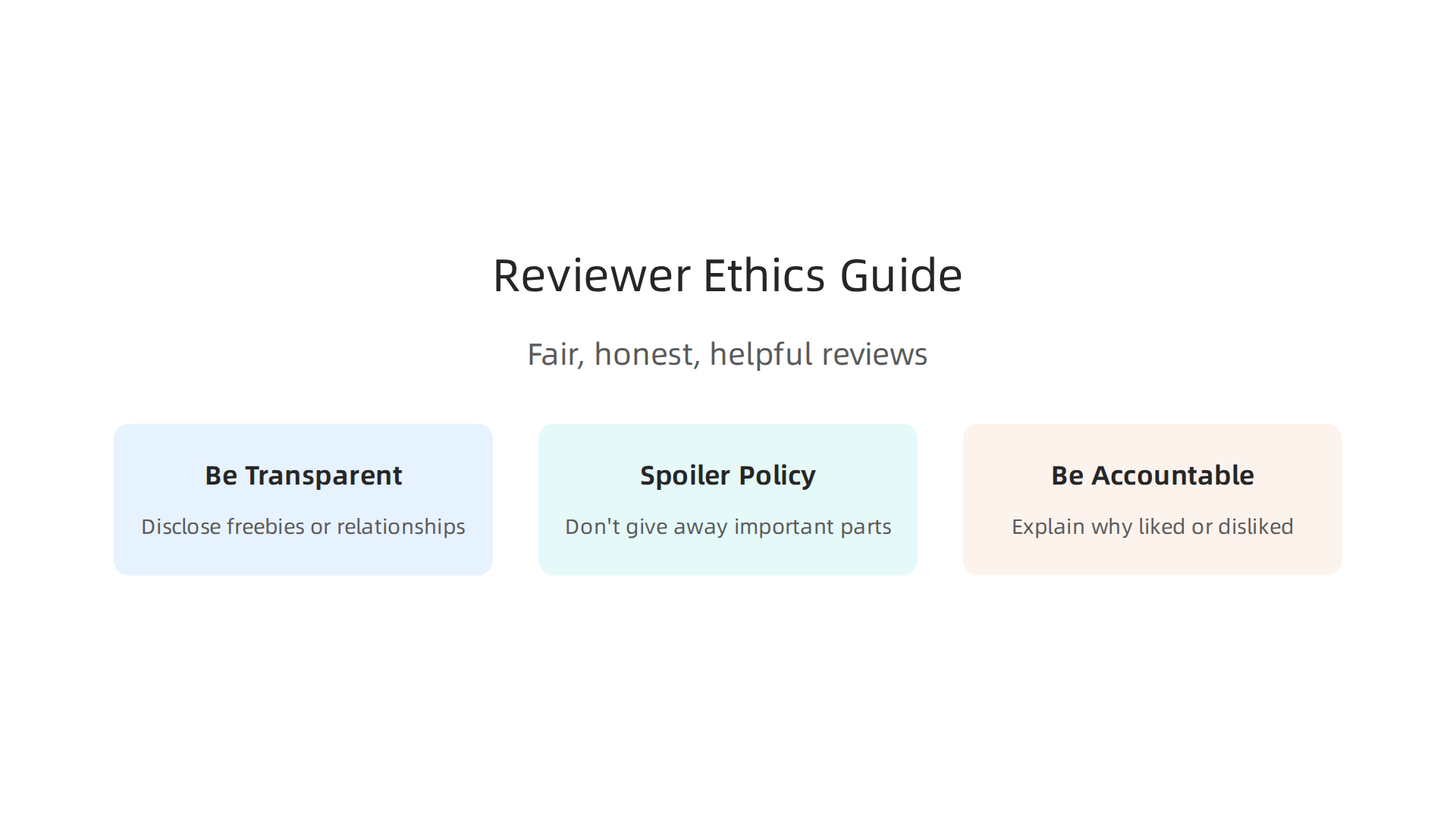
Reviewer guidelines from different organizations often talk about these important rules, like those for the 2026 Reviewer Guidelines or general guidelines for book reviewers.
- Be Transparent: Always let your readers know if you got the book for free, or if you know the author. This helps everyone trust your opinion.
- Spoiler Policy: Don’t give away important parts of the story, especially the ending. People want to discover the twists and turns for themselves. If you have to mention a spoiler, give a clear warning first.
- Be Accountable: Your review should be thoughtful and constructive. This means explaining why you liked or disliked something, instead of just saying "it was bad." Being fair and balanced helps everyone, including the author. According to some publishing ethics, editors must ensure the review process is fair, unbiased, and timely.
By using a clear set of ideas for what to look for and by being honest, your reviews can truly help readers find their next great read. Whether it’s a short story or a long novel, a well-thought-out review can guide someone to a new favorite for their personal book of the month.
Do you want to stay in the loop on new books, fun experiments, and ways to get creative?
Join The Newsletter
Now that we’ve talked about what makes a good review and how to be fair, let’s look at some real examples. This will help you see how to put all those ideas into practice. We’ll show you how to write a sample review for a short story and then for a longer story, like a novella.
Step-by-Step for a Short Story Review
When you’re writing a book review for a short story, remember it’s all about making a big impact quickly.
Sample Short Story Review: "The Silent Watchman" by Alex Chen
-
Your Notes During Reading:
- Quick start, pulled me right in.
- Main character, Elara, felt real and sad, but brave. Her voice was strong.
- The setting (a foggy, old lighthouse) really added to the mood.
- Ending felt complete, but left me thinking about hope.
- Pacing was fast when needed, slowed down for feelings.
-
Translating Notes into a long short story review:
"Alex Chen’s ‘The Silent Watchman’ grabs you from the first page and doesn’t let go. The story starts right away with Elara, a lighthouse keeper who feels very real and carries a quiet sadness, yet shows amazing strength. Chen does a great job making you feel like you’re right there in the foggy lighthouse, a perfect setting that adds to the story’s spooky, hopeful feel. The way the story moves, called its pacing, helps you feel the rush of danger and the quiet moments of thought just right. Experts say that how a story’s pace changes can really change how a reader feels, keeping them interested from start to finish. You can learn more about this by checking out tips for Story Pacing: 4 Techniques That Help Manage Your Plot’s Timeline. By the end, the story ties up nicely but leaves you with big thoughts about hope and how we face hard times. It’s a powerful little read that delivers a strong message in a small package. For those who like to explore the onyx storm book or similar intense fiction, this short story is a must-read."
Annotated Review of a Longer Story (Novella)
For a longer story, like a novella, you have more room for characters to change and for ideas to grow.
Sample Novella Review: "The Whispering Woods" by Maya Singh
-
Your Notes During Reading:
- Slower start, but good details about the world.
- Main character, Finn, really grows from scared to brave over time.
- The plot had a few twists that kept me guessing, not just one simple problem.
- Themes about nature and family got deeper as the story went on.
- Ending was satisfying, brought everything together well.
-
Translating Notes into a Review:
"Maya Singh’s novella, ‘The Whispering Woods,’ takes its time to pull you into a world filled with old secrets and magic. While the beginning is a bit slower, it builds a rich picture of the setting and its people. We follow Finn, who isn’t brave at first but truly changes and grows through his adventures, showing how important character development is in longer stories. The plot isn’t a straight line; it has smart twists that keep you guessing and make the journey exciting. Novellas, like longer novels, need careful planning to keep the reader invested in a story’s structure. You can read more about How to Structure a Novella – WriteAtlas to understand how authors build these longer tales. The book also dives deep into big ideas about how we connect with nature and the ties that bind families, letting these themes unfold and become richer with each chapter. The ending feels earned and brings all these ideas to a thoughtful close. If you enjoy stories that make you think, like how the great gatsby book reveals hard truths, this novella will surely give you plenty to ponder."
These examples show how your notes can turn into a helpful review, whether you’re looking at a quick short story or a more detailed novella.
Learning how to write a good book review is just the first step. The next important part is sharing your thoughts with others.

Doing this helps build a community of readers and gives valuable support to the writers whose books you enjoy.
Sharing Reviews to Build Community and Support Creators
After you’ve crafted a thoughtful review, like a detailed long short story review or a quick opinion on social media, where should you share it? The best places depend on how long and detailed your review is.
Where and How to Share Your Reviews
There are many great spots to share your book reviews and connect with fellow book lovers:

- Book Review Sites: Websites like Goodreads or StoryGraph are perfect for any length of review.
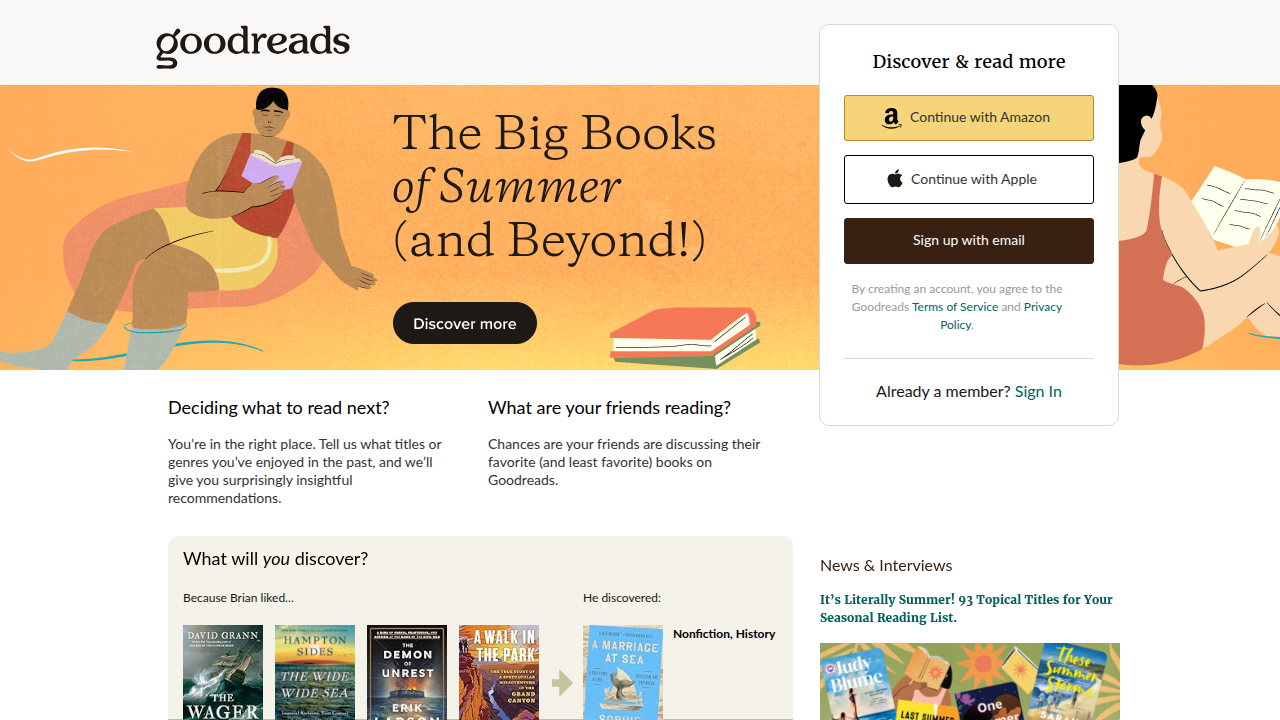
They let you track your reading, see what your friends are reading, and discover new books. These sites are a core part of the reading community.
- Your Own Blog or Website: If you love writing a book review often, a personal blog gives you full control. You can write long, detailed posts and really go deep into your thoughts.
- Social Media: Platforms like Instagram, TikTok, or X (formerly Twitter) are great for short, catchy reviews. You can use hashtags to reach a wider audience and spark quick chats. For example, a short video review can be very engaging.
- Online Book Clubs and Forums: Joining groups focused on specific genres or authors lets you share your reviews with people who already love similar books. This is a fantastic way to find your tribe. Many communities run "book of the month" discussions, where your review can fit right in.
- Libraries and Retailer Websites: Leaving reviews on sites where you bought or borrowed the book directly helps other shoppers decide if they want to read it. These reviews are often very helpful for people looking for their next read or checking out book deals.
In 2026, reading is less of a lonely hobby and more about sharing. For example, a big trend in Korea is "participatory reading," which connects people online and offline to enjoy books together. You can read more about this in an article called "Reading Alone Is Boring!" Korea Is Now in the Middle of a ‘Participatory Reading’ Challenge. This shows how important it is to share your reading journey and reviews.
How Creators Use Your Feedback
Your reviews are super important for authors and other creators. They use your words to:
- Improve Their Craft: Honest feedback helps writers see what works and what doesn’t. Even a critical review can be helpful if it’s fair and points to specific parts of the story. For example, reviewer guidelines often stress providing thoughtful reviews that show real engagement with the work rather than just generic comments, as noted in the 2026 Reviewer Guidelines. This kind of input can inspire new fiction writing prompts for future projects.
- Understand Their Audience: Reviews tell creators who their readers are and what they care about. This helps them write books that connect even more deeply.
- Gain Visibility: Good reviews are like word-of-mouth advertising. They encourage new readers to pick up a book, which is vital for an author’s success. Many publishing policies highlight the importance of fair and unbiased reviews for articles and books alike, ensuring quality and trust in the literary world. You can learn more about this through the Guidelines for Book Reviewers from Springer Nature.
Reviewing isn’t just about sharing your opinion; it’s about being part of a bigger conversation. It helps build a community where everyone benefits. If you want to connect with more readers and writers, and be part of a vibrant literary community, there are many opportunities to get involved.
Ready to dive deeper and share your thoughts in a broader community? You might enjoy exploring new ways to connect and share your unique perspective.
Join The Newsletter
Summary
This article explains why thoughtful reviews for short stories and longer works matter, and gives practical steps to move from passive reading to engaged, helpful criticism. It shows how to read in stages—first for the big picture, then with close-reading techniques and targeted annotations—so you can collect emotional responses and objective evidence. You’ll learn how to judge structure and pacing, probe character development, voice, and theme, and use a simple rubric to craft fair, useful reviews. The piece also covers ethical rules (disclosures and spoiler policy) and smart places to share reviews to support authors and build reading communities. By following the methods here, readers will be able to write clearer, more balanced reviews that help others choose books and give writers constructive feedback.