
Have you ever wanted to start writing but felt stuck before you even began? It is a common feeling. You know you want to improve, but the blank page can feel huge and scary. Many people struggle with knowing where to begin. That is where a workbook comes in.
A good workbook gives you a clear path to follow. It breaks the big job of learning to write into small, doable steps. You get simple instructions and space to practice right away. Workbooks let you learn at your own pace and work on your own. They help fill in gaps and build skills step by step. There are even 10 surprising benefits to using workbooks that make learning feel less stressful and more fun.
This guide is here to help you find the best start. We will look at what makes a quality workbook for beginners. You will save time and avoid frustration. Whether you are looking for a my first learn-to-write workbook for a child or for yourself, knowing what to look for makes all the difference.
So, are you ready to turn that blank page into something amazing? Taking the first small step with a workbook builds confidence.

And once you get started, you might want to share your journey with others who are doing the same. If you are looking for a fun way to take action, reduce that lonely feeling of learning alone, and turn your new writing habit into a real win, Join An Experiment. It is a community built on laughter and action where your small steps lead to big results.
Why You Need a Learn-to-Write Workbook as a Beginner
Starting to write without any guidance can feel like trying to build a house without a blueprint. You might know you want to end up with a finished piece, but the steps in between are fuzzy. That’s where a well-designed learn-to-write workbook changes everything.
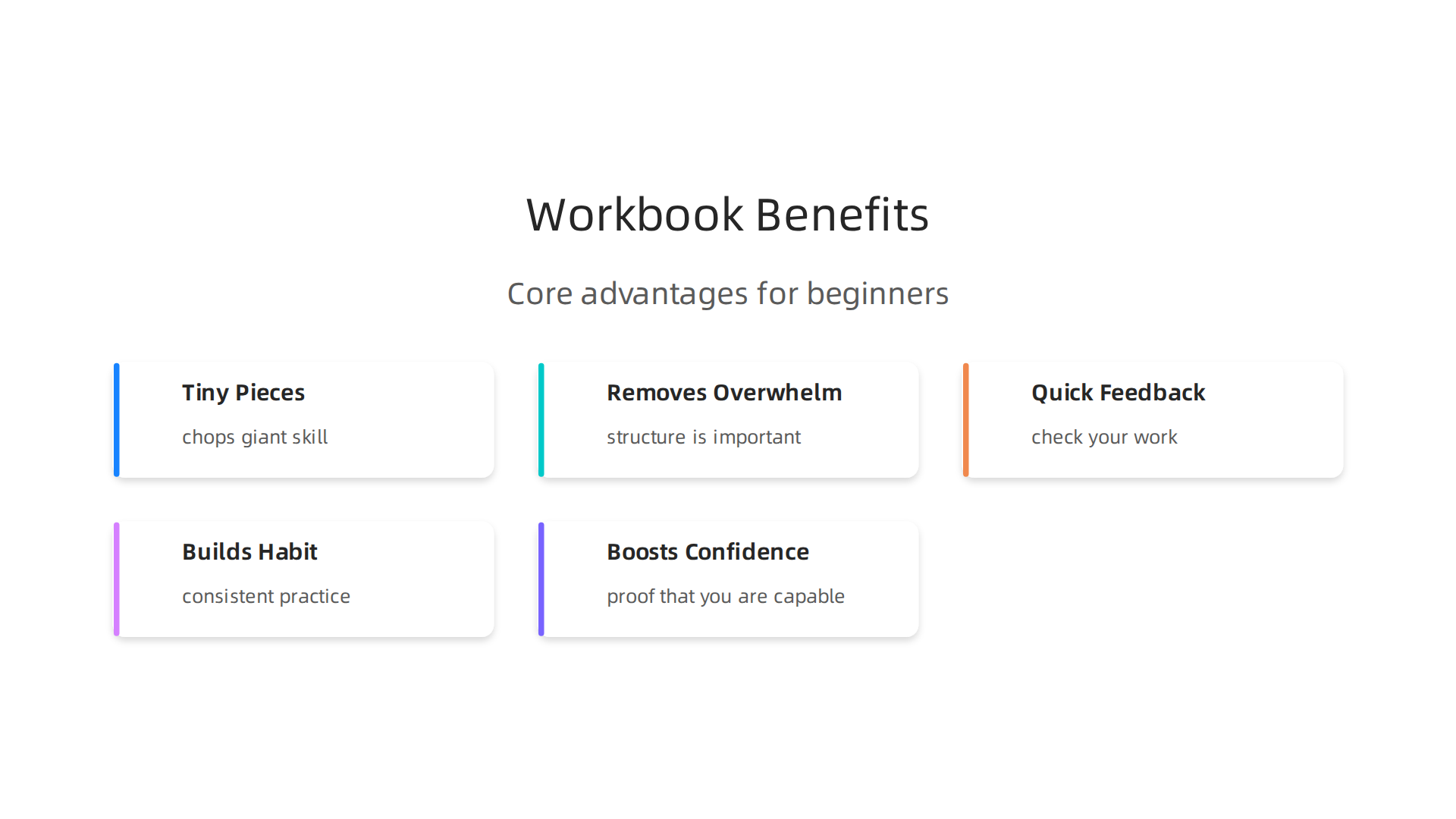
A good workbook does one big thing well: it chops the giant skill of writing into tiny, bite-sized pieces. Instead of staring at a blank page and thinking "I need to write a story," you start with a simple exercise. Maybe it’s tracing letters, then writing single words, then filling in a sentence prompt. Each small win builds momentum. You are not guessing what to do next. The workbook tells you.
This structure is especially important for beginners because it removes the overwhelm. You don’t have to decide what to practice or how hard to push yourself. The workbook already made those choices for you. This is one of the biggest benefits of using workbooks for learners. They let you work at your own pace and fill in any gaps in your knowledge naturally.
But it is not just about having a plan. Workbooks also give you something to check your work against. Many include answer keys, model sentences, or simple prompts that let you see if you understood the skill. That kind of quick feedback is gold for learning. You know right away if you got it right or need to try a different approach.
Over time, using a workbook builds two things that every writer needs: a consistent habit and real confidence. When you practice a little bit every day, writing stops feeling scary. It becomes something you just do. And each completed page in the workbook is a small proof that you are capable. That proof stacks up.
If you are serious about getting better at writing, a workbook is one of the most practical tools you can grab. It gives you direction, practice, and proof of progress. And if you want ongoing writing tips, fresh prompts, and a community of people cheering each other on, Join The Newsletter to stay connected and keep your momentum going strong.
Key Features to Look for in a Quality Workbook
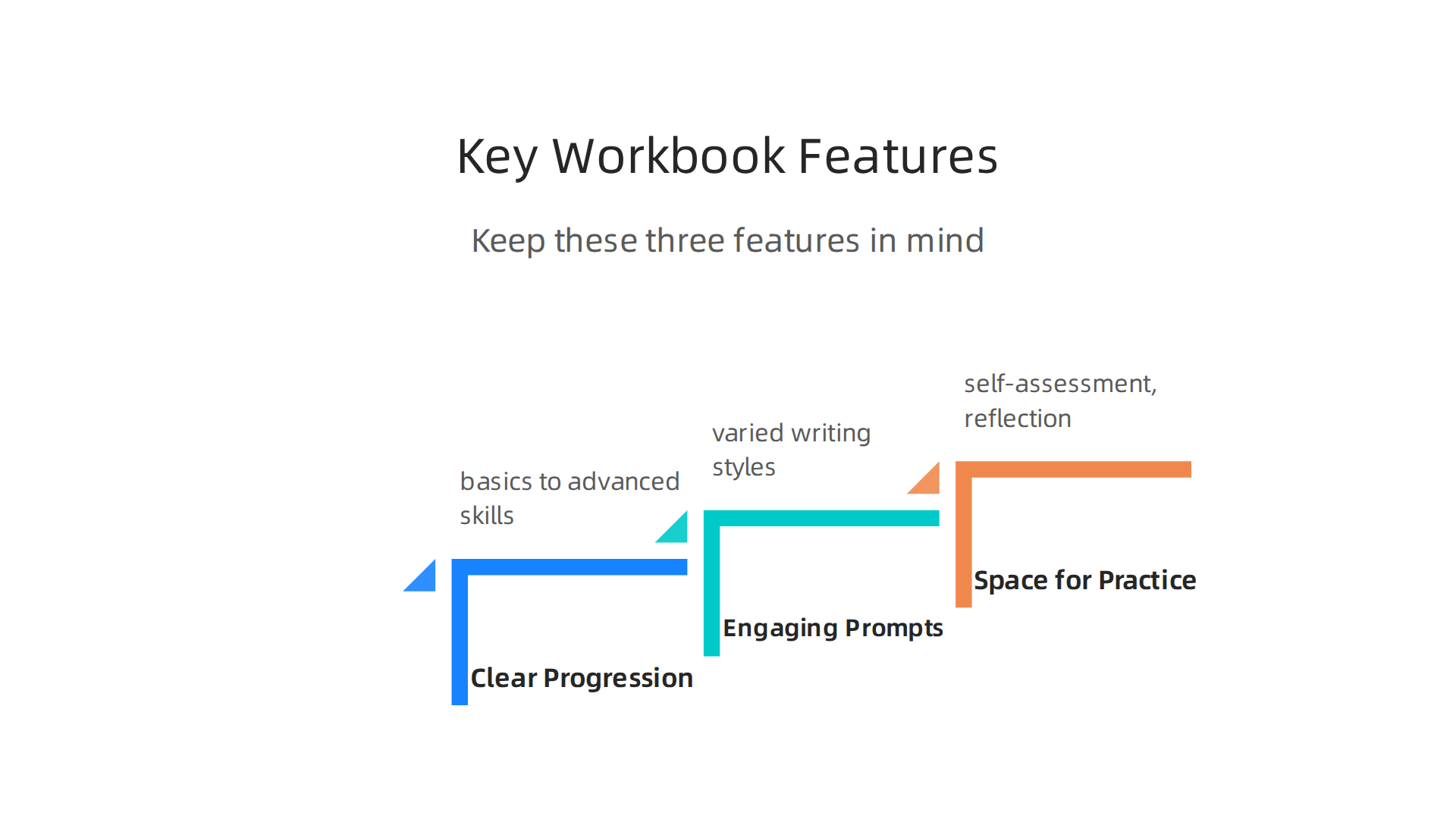
Now that you know why a workbook can help you build a writing habit, the next step is choosing the right one. Not every workbook is built the same. Some skip steps. Others are too advanced. When you are looking for my first learn-to write workbook, keep these three features in mind.
They will make the difference between a workbook you finish and one you toss aside.
Clear Progression from Basics to Advanced Skills
A quality workbook does not throw you into the deep end. It starts with the fundamentals: letter formation, simple words, basic sentence structure. Then it slowly moves you toward harder tasks like writing paragraphs or short stories. This gradual climb keeps you from getting frustrated.
Good writing relies on strong foundations like grammar, spelling, and sentence construction. The best workbooks teach these basics first, just like the advice in a guide to improving writing skills that suggests starting with easy fixes before tackling bigger changes. When you master the small pieces, the bigger ones feel manageable. Look for a workbook that shows you a clear ladder of skills, not a random list of exercises.
Engaging and Varied Prompts
The second thing to check is the variety of prompts. A workbook that only asks you to fill in blanks gets boring fast. The best workbooks mix things up. They include easy writing prompts about everyday topics, creative story starters, descriptive exercises, and even opinion-based questions. This variety helps you explore different writing styles and find your own voice.
When prompts are fun and varied, you want to keep going. You might write a silly poem one day and a serious journal entry the next. That range builds flexibility in your writing. Look for a workbook that offers prompts for different genres, so you can discover what you enjoy most. If you are wondering how do you learn how to write well, trying different kinds of writing is one of the best answers.
Space for Practice, Self-Assessment, and Reflection
A great workbook does not just give you exercises. It gives you room to write your answers directly on the page.

It also includes checkpoints where you can review your own work. For example, it might ask you to underline your topic sentence or count how many adjectives you used. This self-assessment is how you improve. You learn to spot your own mistakes.
Some workbooks include a short checklist at the end of each section. You can mark whether you understood the skill or need more practice. This reflection step turns passive filling-in into active learning. The same idea appears in writing workshops that encourage writers to set work aside and come back with fresh eyes. Having space for notes and revisions makes the workbook a tool you can return to again and later.
Your Next Step
Picking the right workbook sets the stage for real progress. But a workbook is just one tool. If you want to turn your new writing skills into something bigger, try joining a community that challenges you to create and share. Even a small experiment can build confidence faster than working alone.
If you are ready to move past passive learning and start taking action, Join An Experiment to connect with others who are building their writing skills through fun, shared challenges.
Types of Workbooks That Work Best for Beginners
Now you know what features to look for. But what type of workbook is right for you? The best choice depends on where you are in your writing journey. Beginners often benefit from starting with one type and then mixing others later. Here are three types of workbooks that work best for beginners, each targeting a different skill.
Grammar and Style Workbooks Build a Technical Foundation
If you feel unsure about punctuation, sentence structure, or word choice, a grammar and style workbook is a smart start.
These books focus on the rules that make writing clear and easy to read. They cover topics like subject-verb agreement, comma placement, and active versus passive voice. When you master the basics, everything else becomes easier.
Good writing depends on solid grammar. As noted in an article about the characteristics of good writing, grammar and style are two of the eight key qualities that separate average writing from strong writing. A workbook that drills these rules gives you a reliable foundation. You can then break the rules later for effect, but only after you know them well. For a complete beginner, spending a few weeks on a grammar workbook is a great way to answer the question "how do you learn how to write" with confidence. It gives you the tools to express your thoughts clearly.
Creative Prompt Workbooks Unlock Imagination
Maybe you already understand grammar but freeze when you face a blank page. That is where creative prompt workbooks shine. They give you easy writing prompts like "Describe your favorite memory using all five senses" or "Write a short conversation between two strangers on a bus." These prompts take the pressure off. You do not have to come up with an idea from scratch. You just follow the instruction and start writing.
Creative workbooks often include prompts for different genres: fantasy, realistic fiction, opinion pieces, and even silly stories. This variety helps you explore your voice without judgment. When you practice with fun prompts, you begin to see how learn to write becomes less about fear and more about play. The goal is not perfection. The goal is getting words on the page. Over time, your confidence grows, and you can move on to longer projects.
Journaling and Reflection Workbooks Support Personal Growth
Some beginners want to write for themselves, not for an audience. Journaling and reflection workbooks are perfect for that. They guide you through daily or weekly prompts that ask about your feelings, goals, and experiences. You might answer questions like "What made you smile today?" or "What is one thing you learned this week?" These prompts feel safe because no one else will read them.
Journaling workbooks also include space for gratitude lists, habit tracking, and mood check-ins. They turn writing into a self-care practice. When you write regularly in a journal, you build the habit without worrying about grammar or style. The focus is on honesty and growth. Many beginners find journaling workbooks to be the gentlest way to start. They answer the question "how do you learn how to write" by simply doing it every day, even if only for five minutes. The habit itself teaches you more than any rule book.
How to Choose Among Them
You do not have to pick just one. Many beginners start with a grammar workbook to build skills, then add a creative prompt workbook for fun, and later try a journaling workbook for reflection. The order depends on your biggest struggle. If you feel lost about rules, start with grammar. If you feel blocked creatively, start with prompts. If you want a low-pressure way to write daily, start with journaling.
The important thing is to pick a workbook that matches your current need and commit to using it for a few weeks. Each type moves you forward in its own way.
If you want to turn your new writing habit into something bigger than a workbook, staying connected with a community can keep you motivated. Join The Newsletter to receive updates, creative challenges, and ways to share your progress with others who are also building their writing skills.
How to Choose the Right Workbook for Your Writing Goals
You now know the main types of workbooks. The next step is picking one that fits your personal goals. The right workbook will keep you motivated and help you build skills faster. The wrong one might frustrate you and slow you down. Here is a simple framework to make the right choice for your first learn-to write workbook.
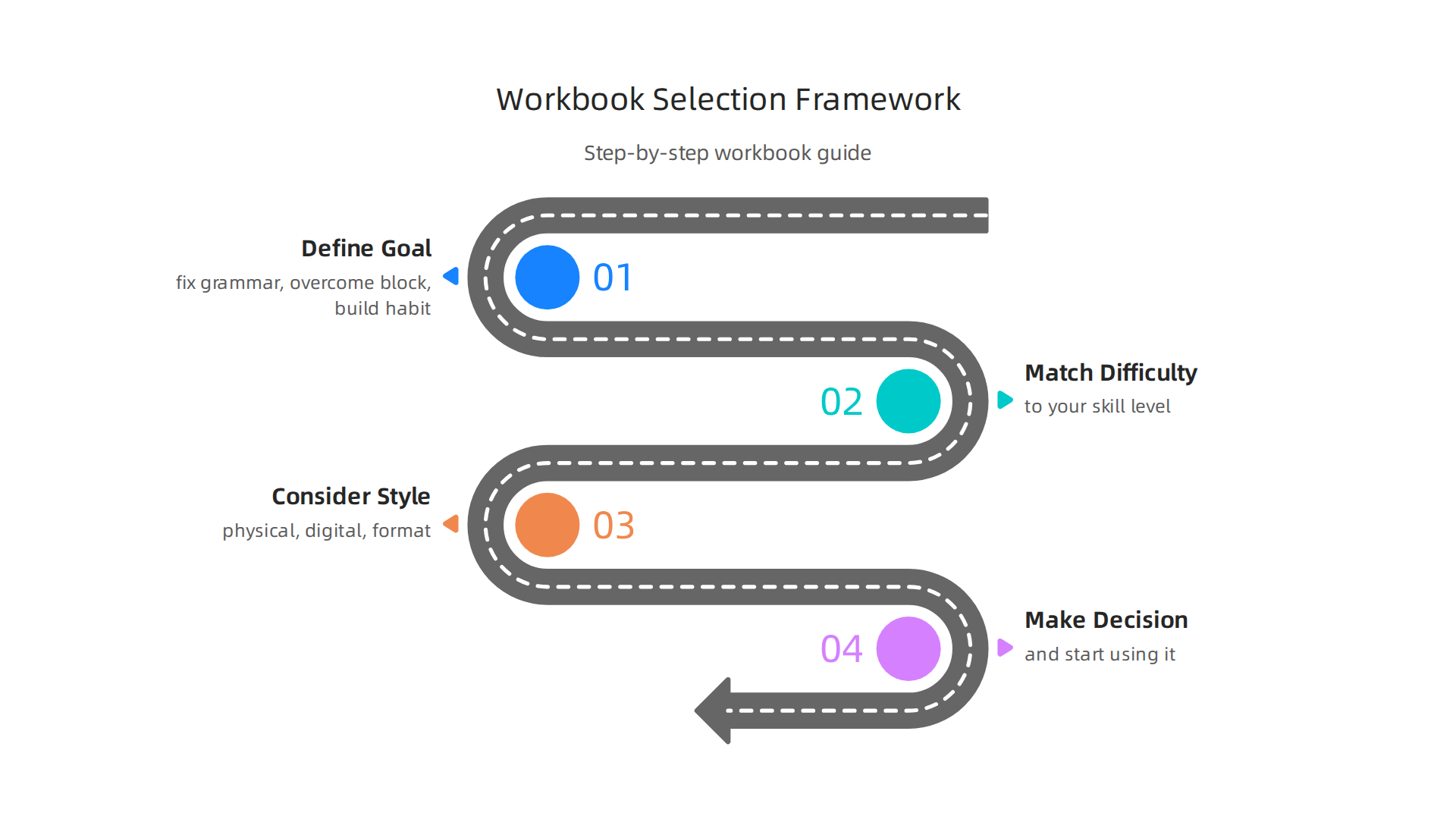
Step 1: Define Your Primary Goal
Why do you want to write? Your answer points you to the best workbook type.
- If your goal is to fix grammar and punctuation: Choose a grammar and style workbook. It will teach you the rules and give you practice exercises. You will feel more confident in your technical skills.
- If your goal is to overcome writer’s block and have fun: Pick a creative prompt workbook. It provides easy writing prompts so you never have to start from zero. The focus is on play, not perfection.
- If your goal is to build a daily writing habit: Go with a journaling or reflection workbook. It asks you simple questions about your day and feelings. You only need five minutes, but you do it every day. Before long, asking how to learn to write becomes less important than actually writing.
Many beginners have more than one goal. That is fine. You can start with one workbook and later add another. The key is to pick one now and commit to it for a few weeks.
Step 2: Match the Difficulty to Your Skill Level
Workbooks come in different challenge levels. A true beginner should avoid workbooks that assume you already know advanced concepts like story structure or dialogue techniques. Look for workbooks labeled "for beginners" or "for absolute beginners." Some workbooks include a skill self-assessment on the first page. That is a good sign. It helps you see if the book matches where you are.
If you have some writing experience maybe you took a class in school or kept a diary in the past you can try workbooks labeled "intermediate." They will push you without feeling overwhelming.
Step 3: Consider Your Learning Style
Think about how you learn best. Do you like writing on paper with a pen? Then a physical workbook is for you. Some people love the feeling of flipping pages and crossing out mistakes. Others prefer digital workbooks that they can type into or use on a tablet. Digital workbooks are easier to edit and save. You can also use a separate notebook if you want to keep your workbook clean.
Another factor is format. Some workbooks are spiral bound so they lay flat. Others are paperback or PDF. Pick the format that you will actually use. As one writer noted, building a regular writing practice is the first thing to fix before anything else. The best format is the one that removes barriers and makes it easy to write.
Step 4: Make a Decision and Start
Do not overthink this. Read the description of a few workbooks online. Check the table of contents. Look at a sample page if available. Then pick one and use it for two weeks. If it feels wrong, try another type. The goal is to find what works for you.
Once you have your workbook, you are ready to take the next leap. Instead of working alone in silence, you can join a group that makes writing fun and rewarding. If you are ready to turn your writing experiments into something bigger, Join An Experiment and become part of a community that celebrates action, creativity, and shared progress.
Expert Tips for Getting the Most Out of Your Workbook
You picked your workbook. You have it in your hands. Now what? Many people buy a workbook, use it for two days, and then let it sit on a shelf. That is normal, but you can avoid it. These expert tips will help you actually finish the book and grow as a writer.
Set a Consistent Schedule
The biggest mistake beginners make is waiting for motivation. Motivation fades. A schedule does not. Pick a time each day and stick to it. Even 15 minutes is enough. That is one page of exercises or one short prompt. Do that every day for a week and you will have written seven pages. Do it for a month and you will have a solid habit.
The author Stephen King sets a daily writing goal of 1000 words. That might feel too big for you right now. That is fine. Start with 100 words or 15 minutes. The point is not the word count. The point is showing up. As many writing experts agree, improving your writing skills starts with regular practice. A consistent schedule turns your first learn-to write workbook from a one time experiment into a lasting skill builder.
Combine Workbook Exercises with Real Writing
Workbooks teach you the rules. But you learn to write by actually writing. Do not keep your practice trapped inside the workbook forever.
Here is a simple method. Do one exercise from your workbook. Then take what you learned and apply it to a real writing project. Maybe the workbook teaches you how to write a strong opening sentence. After the exercise, write the first sentence of a short story or a letter to a friend. The workbook gives you the skill. The real project makes it stick.
If you are not sure what to write, try a short story based on an easy writing prompt from your workbook. Write it in a notebook or a document. Then compare it to the workbook examples. You will see your own progress. You will also learn what it means when people ask how do you learn how to write. The answer is always the same: by writing a little every day.
Seek Feedback from a Writing Community
Workbooks are private. They give you exercises and answers. But writing is meant to be read by others. At some point you need to share your work and get feedback. This is where other people help you grow faster than you could alone.
Find a writing group online or in your area. Share one paragraph you wrote using your workbook.

Ask for honest thoughts. Did your sentence land the way you wanted? Did your description make sense? Other writers will see things you missed. They will also encourage you when you feel stuck.
A writing community also keeps you accountable. When you know someone will ask about your workbook next week, you are more likely to finish the exercises. It turns a solo activity into a shared experience.
Many writers also use apps and tools to support their practice. For example, the 9 best writing tools for 2026 include things like distraction free editors and plotting software. These tools can help you move from workbook exercises to full drafts.
Make the Workbook Yours
Workbooks are guides, not rules. Write in the margins. Skip exercises that feel too easy or too hard. Repeat the ones you love. If a prompt sparks a bigger idea, follow it and ignore the next three pages. The workbook works for you, not the other way around.
The goal is not to finish the workbook perfectly. The goal is to become a better writer by using it as a tool. When you finish one workbook, you will know what kind of writer you are. Then you can choose the next one with more confidence.
And if you want ongoing inspiration and connection, you can stay in touch with a community that keeps writing fun. If this article made you think about how learn to write in a new way, Join The Newsletter for regular updates, book news, and creative challenges that keep you moving forward.
Free vs. Paid Workbooks: What’s Worth Your Money?
When you start looking for my first learn-to write workbook, you will face a big choice. Should you pick a free version or pay for one? Both can help you become a better writer. But they serve different needs. Understanding the difference will save you time and frustration.
What Free Workbooks Offer
Free resources give you a lot of options. You can download easy writing prompts, basic exercises, and short guides without spending a cent. They are great for getting started. You can try different styles and see what feels right. Many free workbooks offer a wide range of topics, from fiction to poetry to nonfiction.
But here is the catch. Free workbooks often lack structure. They may give you a collection of prompts without a clear path forward. You might jump from one topic to another without building skills step by step. This can make it harder to learn how to write effectively. You end up with breadth but not depth.
Free tools also tend to limit volume. For example, a 2026 comparison of free vs paid writing tools compared for 2026 found that free plans give you good quality but often limit how many chapters or exercises you can access each month. This is fine if you are just exploring. But if you want to build a real habit, you may hit a wall.
What Paid Workbooks Offer
Paid workbooks usually offer curated content. Someone with experience has put the lessons in a logical order. You do not have to figure out the path on your own. Each exercise builds on the last one. This makes it easier to see your progress.
Many paid workbooks also include extras. You might get access to a private community, feedback from the author, or bonus video lessons. This turns the workbook into a complete learning experience. You are not just doing exercises. You are getting support from people who want you to succeed.
Money also changes your mindset. When you spend money on something, you are more likely to stick with it. You show up for your daily writing because you want to get your money’s worth. That simple shift can make the difference between finishing a workbook and letting it collect dust.
How to Decide
So how do you decide which is right for you? Ask yourself two questions.
First, what is your budget? If money is tight, start with a free workbook. It gives you a low risk way to test the waters. If you find yourself hungry for more structure, upgrade later.
Second, how committed are you? If you are not sure you even like writing, a free workbook is a smart first step. If you know you are serious about improving, a paid workbook can help you stay on track and skip the trial and error.
The truth about how do you learn how to write is simple. You learn by writing regularly with a tool that fits your life. Free or paid, the workbook is just the tool. You are the one who makes it work. Choose the option that gets you to open the book and start writing today.
Common Mistakes to Avoid When Using a Writing Workbook
You picked up your my first learn-to write workbook. You are excited. You want to write something great. But there is a trap. Many people make the same mistakes when they start. Knowing these mistakes will save you hours of frustration and help you actually improve.
Mistake 1: Skipping the Foundation Exercises
It is tempting to jump straight to the fun stuff. Maybe you want to write a full story right away. You skip the easy writing prompts at the beginning and go for the advanced chapters. Big mistake.
Foundation exercises teach you the basics. They build your confidence step by step. When you skip them, you miss key skills. Later, you get stuck on something simple. Frustration builds. You may even quit.
Think about learning a sport. You would not try a trick shot before learning how to hold the bat. Writing works the same way. The best book writing software of 2026 often includes structured blueprints for a reason. Structure helps you grow without getting lost.
Take your time. Do every exercise in order. Even the simple ones. They are there to help you.
Mistake 2: Treating the Workbook as a One-Time Read
Another common error happens when you finish a page and think, "Cool, I get it." And you move on. You never come back. You treat the workbook like a novel instead of a gym.
A writing workbook is a practice tool, not a book. You have to use it actively. Write in it. Scribble notes. Do the exercises more than once. The goal is not to finish. The goal is to build a habit. How do you learn how to write? By writing over and over again.
If you treat your workbook as a checklist, you miss the real value. Each exercise gets easier the second or third time. Repetition locks in the skill.
Mistake 3: Not Tracking Your Progress
You finish a chapter. You close the workbook. A week later, you cannot remember what you learned. This happens when you do not track your progress.
Keep a small log. Write down the date, the exercise, and one thing you learned. When you look back, you see how far you have come. That keeps you motivated.
Also, go back and redo old exercises sometimes. You will be amazed at how much better you are. This is how you turn practice into real improvement.
These three mistakes are easy to avoid once you know about them. Now you know. So do not rush. Use your workbook as a tool. Write in it. Repeat the work. Track your growth. That is the path to becoming the writer you want to be.
Ready to put these tips into action? Join An Experiment and turn your writing practice into a fun, rewarding experience with a community that cheers you on.
Building a Supportive Writing Practice Around Your Workbook
Now that you know the mistakes to avoid, let’s flip the script. How do you actually build a writing habit that sticks? The answer is simple: you do not do it alone.
Using a my first learn-to write workbook is a great start. But a workbook alone is not enough. You need a support system around it. Think of it like going to the gym. You can have the best equipment at home, but having a workout buddy or a class keeps you showing up.
Join a Writing Group or Online Community
Sharing your workbook progress with others changes everything. When you tell someone, "I finished chapter three today," you feel proud. When you get stuck, you can ask for help. A writing community gives you accountability and encouragement.
According to the Writer’s Digest article on writing community, groups like "Shut Up & Write" provide built-in accountability. You show up, write together, and share what you worked on. Even just knowing others are writing at the same time pushes you forward.
You can find these groups on Meetup, Facebook, or Discord. Some libraries even host free writing meetups. The key is to pick one and show up weekly.
Read and Analyze Good Writing
Your workbook teaches you the basics. But real growth comes from seeing how great writers put words together. Read books, articles, or blogs in the style you want to write. Pay attention to how they start sentences, build paragraphs, and end chapters.
After you read a passage, ask yourself: "Why did this work?" Then try to copy that technique in your workbook. This practice fills your brain with good examples. Over time, your own writing will naturally improve.
One helpful guide, this 10-step book writing guide, recommends setting SMART goals and tracking your progress. Reading it alongside your workbook can give you a bigger picture of the writing journey.
Set Small Milestones and Celebrate Them
Big goals like "write a book" can feel overwhelming. Instead, break them down. Think in chapters, pages, or even daily word counts. For example, "finish one easy writing prompt today" is a great milestone.
Every time you hit a milestone, celebrate. It does not have to be big.

Take a break. Treat yourself to a coffee. Share your win with your writing group. Celebrating small wins keeps your motivation high and makes writing feel rewarding, not like a chore.
Bring It All Together
Your my first learn-to write workbook is your training ground. But the community, the reading, and the celebrations are what turn that training into real skill. You do not have to figure this out alone.
If you want ongoing tips, updates, and new ways to stay engaged, Join The Newsletter. It is a simple way to keep your writing practice fresh and stay connected with a community that supports your growth.
Summary
This article explains why a learn-to-write workbook is one of the simplest, most effective tools for beginner writers and how to choose and use one well. It covers what makes a quality workbook—clear progression, varied prompts, and space for reflection—then outlines three types beginners benefit from (grammar, creative prompts, and journaling). You’ll find a step-by-step framework to match a workbook to your goals and skill level, practical tips to build a daily habit, and guidance on free versus paid options. The guide also warns against common mistakes like skipping fundamentals or treating the book as a one-time read, and it shows how to pair workbook practice with real writing and community feedback. After reading, you’ll know which workbook type fits your needs, how to use it consistently, and how to turn short daily practice into real writing progress.