
Introduction: Why Mental Health America Matters More Than Ever
Millions of Americans face mental health challenges every year. Maybe you have felt the weight of stress, anxiety, or sadness yourself.

Or you know someone who has. The numbers are staggering: more than 1 in 5 adults in the US lives with a mental health condition. Yet too many people still struggle in silence, unsure where to turn for real help.
That is where Mental Health America comes in. For over a century, this nonprofit has been working to bridge the gap between people in need and the care they deserve. Founded in 1909 by a patient who survived terrible abuse in mental institutions, Mental Health America fought to change attitudes, improve services, and prevent mental illness before it starts. You can read more about their legacy in the About Mental Health America page.
In 2026, the need for accessible, evidence-based mental health resources is more urgent than ever. Stigma is finally fading, and more people are speaking up. But the demand for support has surged. Waiting lists for therapists are long. Costs can be high. That is why organizations like Mental Health America, along with local affiliates and community programs, are so vital. They offer education, screening tools, and advocacy that reach people where they are.
Whether you are looking for help for yourself or a loved one, or you just want to understand what mental health means today, this is a good place to start. We will explore what Mental Health America does, how mental health affects all of us, and what you can do to take the first step toward feeling better. Because your mental health matters, and you do not have to navigate it alone.
If you want to stay connected to a community that supports wellness and personal growth, consider joining a movement built on laughter and action. Join The Newsletter for ongoing updates and ways to participate.
What Is Mental Health America? History, Mission, and Core Values
Mental Health America (MHA) is the oldest community-based mental health nonprofit in the United States. It was founded in 1909 by Clifford Beers, a former patient who survived terrible abuse inside mental institutions. After his release, Beers wrote a book about his experiences and started a movement. With help from philosopher William James and psychiatrist Adolf Meyer, he created the National Committee for Mental Hygiene. That group later became Mental Health America. You can read more about the journey in the About Mental Health America page.
So what does MHA actually do? Their mission is simple but powerful: promote mental health as a key part of overall wellness, prevent mental illness before it starts, and improve care for people who need it. They focus on education, early screening, and pushing for better laws. They work with over 200 local affiliates across the country to reach people where they live.
MHA’s core values set them apart. First, they center the voices of people with lived experience. That means people who have dealt with mental health challenges themselves help shape the organization’s work. Second, they fight for equity. They know that race, income, and location affect who gets care. Third, they base everything on evidence. They use research to decide what works and what does not.
One of their biggest achievements? In 1949, MHA started Mental Health Awareness Month. That May tradition now reaches millions of people each year. Another win: MHA helped pass the Mental Health Parity Act in 2008, which required insurance companies to treat mental health coverage the same as physical health coverage. These victories show how a nonprofit can change the system when it stays true to its values.
MHA is not just a historical organization. In 2026, it continues to offer free online screening tools, support for advocates, and resources for schools and workplaces. If you want to understand where mental health care in America stands today, MHA is a good place to start.
MHA’s Flagship Programs: Screening, Support, and Education
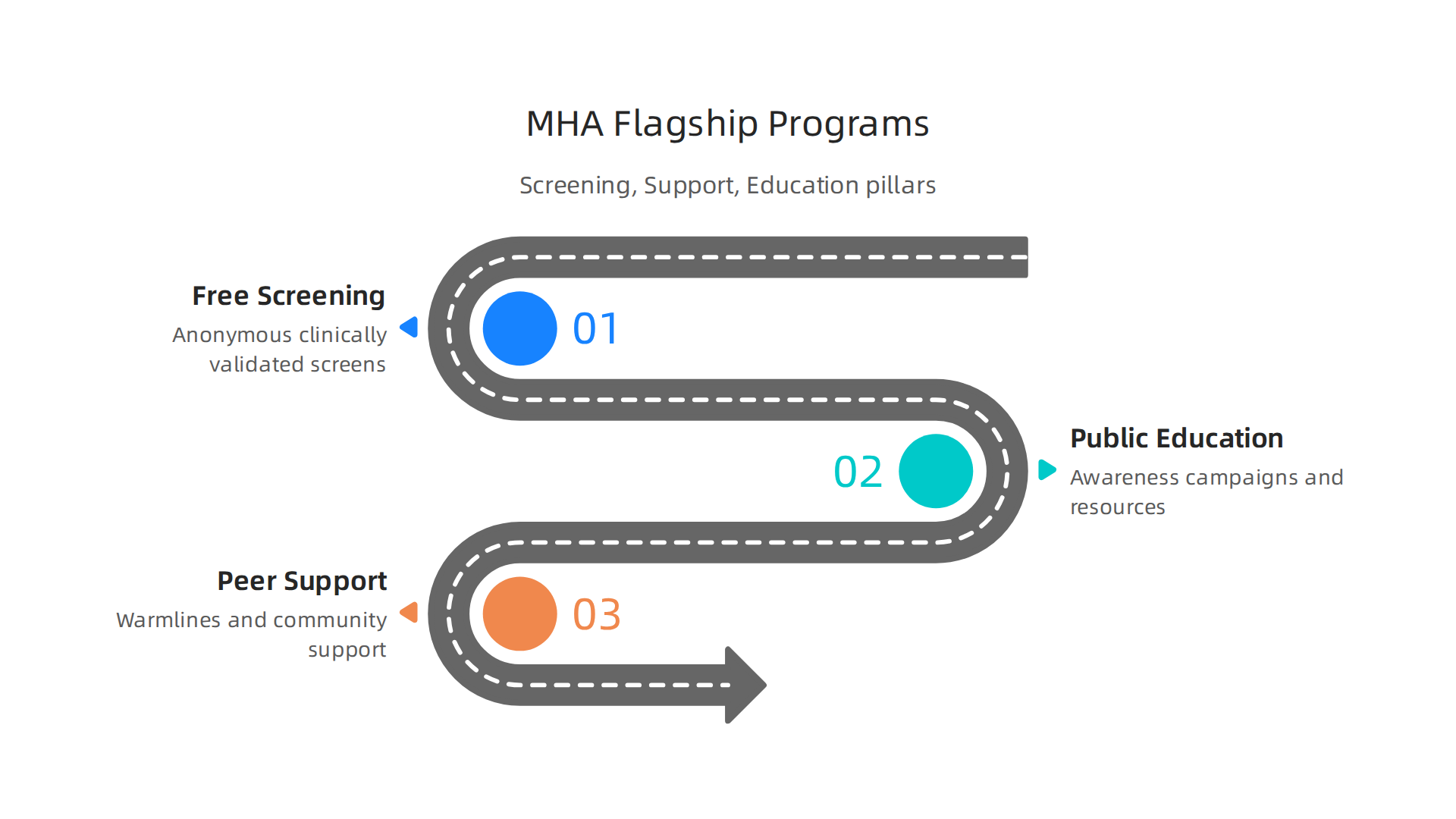
MHA’s flagship programs show how the organization turns its mission into real-world help. The most famous one is the free online screening program. In 2014, MHA created a collection of 10 free, anonymous, and clinically validated screens. Today, more than a dozen screens are available for conditions like depression, anxiety, PTSD, ADHD, addiction, and more. It is the largest program of its kind anywhere. The data collected from over 7.1 million users gives researchers and policymakers a clear picture of what people are struggling with before they ever walk into a clinic. You can learn more about how this data drives mental health policy on the Mental Health America data policy page.
The screening program is not just about numbers. It saves lives. For many people, taking that first anonymous test is the step that gets them to reach out for help. MHA also provides immediate referral resources after each screen, so you do not get left wondering what to do next.
Beyond screening, MHA runs large public education campaigns that reach millions of people every year. Mental Health Awareness Month in May is the biggest one. It started in 1949 and now includes toolkits, social media campaigns, and local events across the country. MHA also has a Back to School campaign that helps students, parents, and teachers spot warning signs early. These campaigns bring mental health conversations into everyday life, which reduces stigma and encourages people to seek support.
MHA also offers peer support and warmlines. A warmline is different from a crisis hotline. It is for people who are not in immediate danger but just need someone to talk to. MHA’s network of over 200 local affiliates runs support groups, mentorship programs, and housing services. These community-based programs help people feel less alone. You can find your local affiliate through the MHA affiliate directory.
The combination of screening, education, and support makes MHA a complete resource.
Whether you are checking your own symptoms, learning about mental health, or looking for a community, MHA has something for you.
Taking a small step can make a big difference in how you feel. If you are ready to turn curiosity into action and build connections, you can Join An Experiment today. It is a simple way to move from passive scrolling to real participation.
The MHA Screening Program: How It Works and Why It Matters
Imagine waking up feeling heavy, anxious, or just not yourself. You know something is wrong, but you are not sure if it is bad enough to call a doctor. Maybe you do not have insurance, or you feel embarrassed to ask for help. That is exactly where MHA’s free online screening program steps in.
The process is simple. You go to the MHA website and pick a screen that matches how you feel.
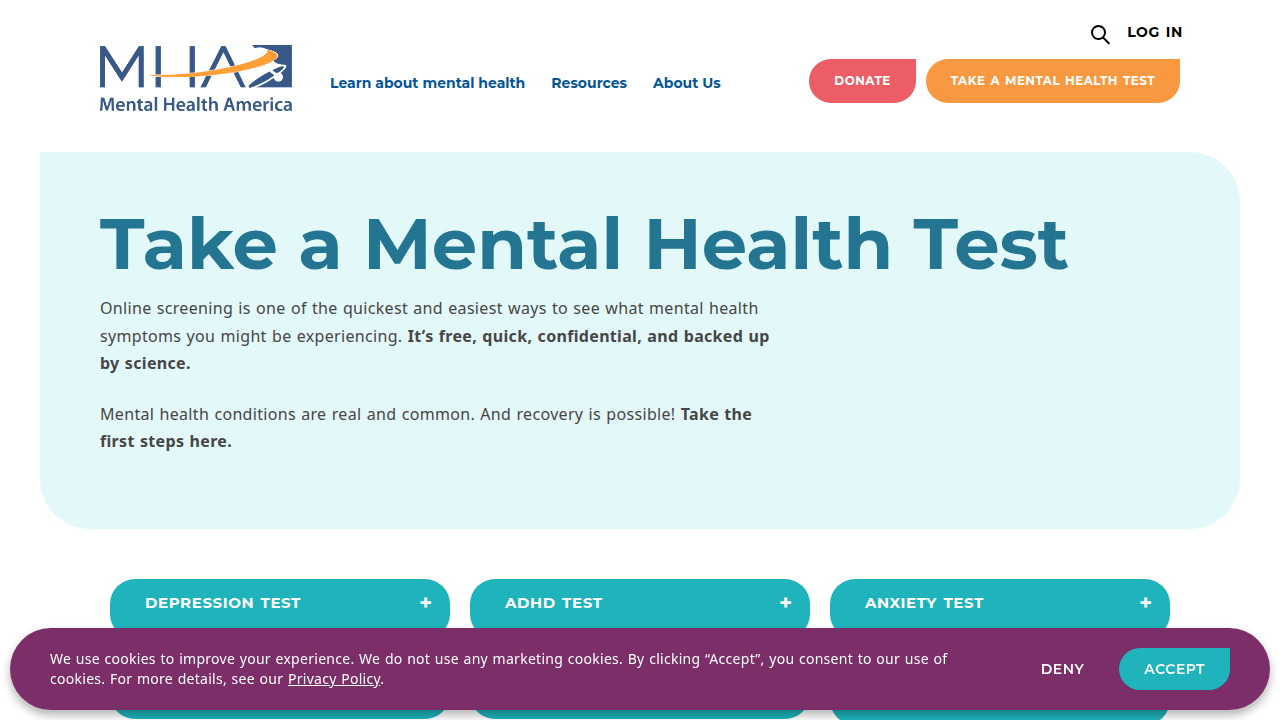
There are screens for depression, anxiety, PTSD, bipolar disorder, and more. Each one is a clinical tool like the PHQ-9 for depression or the GAD-7 for anxiety. These are the same questionnaires that doctors use in their offices. They are evidence-based and validated, which means they are backed by years of research. You answer a short set of questions honestly, and within minutes you get instant results and a score.
But the results are not just a number. You also get tailored resources based on your score. If your results suggest mild symptoms, you see tips for self-care, a list of self-help books, and links to support groups. If your results are more serious, you get crisis hotline numbers and guidance on how to talk to a professional. Research shows that online mental health screening tools can actually influence help-seeking behavior and even reduce suicidal intent when they include proper referrals. That is a big deal, and it shows why MHA’s approach is so important.
Every screen is completely anonymous and free. You do not need to create an account, share your email, or give your name. This anonymity removes a huge barrier for people who are worried about privacy or stigma. For many, especially young people and men, that first quiet step is the hardest. MHA makes it safe to take that step.
And here is the thing, the screening program does not just help individuals. It also helps entire communities. MHA collects the anonymous data from every screen and uses it to track mental health trends in real time. This data shows what people are struggling with long before they ever enter a doctor’s office. MHA publishes annual reports and shares this information with policymakers and researchers. The goal is to spot rising needs early and push for better mental health funding and programs. You can explore the latest findings in the yearly MHA screening reports to see what communities across the country are reporting.
When you take a screen, you are not just checking in on yourself. You are also contributing to a larger movement that uses real data to demand real change. Whether your score is low or high, you walk away with a clearer picture and a next step. That is how MHA turns uncertainty into action.
Mental Health Advocacy: How MHA Shapes Policy and Reduces Stigma
Screening is just the first step. Real change happens when that data turns into laws, funding, and better access for everyone. That is where the advocacy work of Mental Health America really shines.
MHA fights on many fronts. One of their biggest battles is for parity in insurance coverage. That means making sure insurance companies treat mental health care the same way they treat physical health care.

If you break your leg, your insurance helps pay for the doctor. If you have depression, it should work the same way. But too often, insurers still find ways to limit counseling health mental coverage. MHA pushes back hard on this. They also fight for more funding for mental health services and for reforming the criminal justice system, where too many people with mental health conditions end up in jails instead of treatment centers.
Every year, MHA releases the State of Mental Health in America report. This report is a goldmine of data for policymakers, researchers, and advocates. It shows how many adults and youth have a condition, how many go without treatment, and what the biggest gaps are in each state. This data drives real decisions. When a senator sees that their state ranks low for access to care, it creates pressure to act. The MHA 2026 priorities include expanding access to care, protecting youth mental health, and promoting whole person health. You can explore all the current advocacy goals in the full list of MHA’s 2026 policy priorities.
But MHA does not just work from the top down. They also build power from the ground up. Their grassroots advocacy network gives everyday people a way to contact their legislators directly. You do not need to be a policy expert to make a difference. MHA provides toolkits, talking points, and action alerts that make it simple. You can send an email, make a phone call, or attend a local meeting. In 2025, MHA and their network generated more than 15,000 calls, letters, and meetings with congressional offices. You can see the full breakdown of those policy wins on the MHA advocacy wins page. That is the power of people showing up.
This combination of hard data and real voices is how stigma starts to fade. During Mental Health Awareness Month and Men’s Mental Health Month, MHA amplifies these messages even further. They also point people to practical tools like self help books and local resources. The goal is to make mental health a normal part of everyday conversation.
Getting involved with advocacy is one way to turn passive concern into active change. Another way is to try something simple and unexpected. If you are ready to move beyond scrolling and into meaningful action, you can Join An Experiment that turns curiosity into real participation and connection.
Finding Help Nearby: MHA Affiliates and Local Support Networks
All that national advocacy work only matters if it reaches people where they live. That is where MHA’s local affiliates come in. Mental Health America runs a network of over 200 affiliate organizations spread across more than 40 states. These are independent nonprofit groups that bring mental health support straight into your community.
Imagine you are feeling overwhelmed and do not know where to start. An MHA affiliate can be your first call. They offer public education, support groups, rehabilitation services, and help finding a counselor. Many also run family advocate programs for parents of children with serious emotional challenges. Some provide mentorship or peer support for adults who are working on recovery. The goal is to meet you right where you are. You can learn more about the full range of services from MHA’s nationwide network of affiliates.
What makes affiliates special is how local they are. They know the schools, the clinics, the housing options, and the legal aid in your area. That means their referrals are actually useful. If you live in a rural county with few therapists, an affiliate will know the telehealth options. If your family speaks a language other than English, they can point you to culturally tailored services. This local knowledge is a huge advantage over a generic hotline.
Finding your closest affiliate is simple. Just visit the MHA website and search the affiliate directory online.

Type in your state or city, and you will get contact information for the affiliate near you. Some affiliates even have their own websites with calendars of events, support group times, and links to self help books and other tools. During Mental Health Awareness Month and Men’s Mental Health Month, many affiliates run special programs open to the public.
If you want to stay connected to this kind of helpful, community-focused content beyond one article, there is an easy way. You can Join The Newsletter to get updates on mental wellness, creative participation, and ways to connect with others. It is a simple step toward making mental health support a regular part of your life.
Mental Health America for Young Adults and Students
While affiliates support everyone in your community, Mental Health America also builds programs designed specifically for young adults and students. If you are a teen, a college student, or a parent trying to help a child, MHA has tools you can use right now.
The numbers make it clear why this focus matters. According to a 2026 teen mental health update, 40% of high school students report persistent feelings of hopelessness, and 60% of teens with depression get no treatment at all. That is a huge treatment gap. MHA works to close it through programs that meet young people where they already are: at school.
One of the most powerful tools is the Screening for Schools program. It gives schools a way to offer anonymous mental health screenings to students. The idea is simple. A student takes a quick, private check-in online. The results show whether they might be dealing with anxiety, depression, or other concerns. From there, school staff can connect them to help before things get worse. MHA also offers college mental health toolkits. These are practical guides for campus leaders, faculty, and students who want to build a healthier school environment. You can find guides on starting peer support groups, running awareness campaigns, and training staff to spot warning signs.
Another key part of MHA’s youth work is the Young Adult Leadership Council. This group puts the voices of young people directly into MHA’s decision making. Members help shape the resources and messages that go out to thousands of schools and youth organizations nationwide. If you are a young adult who wants to make a real difference, this council is one way to step up. It turns passive concern into active leadership.
MHA also releases Back-to-School toolkits each year. These are for educators and parents who want to support student mental health from day one. The toolkits include conversation starters, classroom activities, and tips for spotting early signs of distress. They are free and updated regularly to reflect the latest research.
If you are a young person looking for a way to move from worry into action, this is a good starting point. You can get involved with MHA’s youth programs, or take a small step toward personal growth on your own. Sometimes the best way to break out of a rut is to try something new and playful. That is why you might want to Join An Experiment designed to turn curiosity into real connection and laughter. It is a light way to build confidence and meet others who care about mental wellness too.
How to Get Involved: Volunteer, Donate, Advocate, or Take a Screening
You have read about what Mental Health America does. Now you might be wondering how you can help or get support for yourself. The good news is there are many ways to get involved. Whether you have ten minutes or ten hours, MHA makes it easy to make a difference.
One of the simplest things you can do is take a free online screening. MHA offers a quick, private check-in that helps you understand your own mental health. The screening covers depression, anxiety, bipolar disorder, and more. It only takes a few minutes, and the results show you what steps to take next. No insurance required. No judgment. Just a clearer picture of where you stand. You can find the screening tool on the MHA website.
If you want to go a step further, consider becoming an advocate. MHA works hard to change laws and policies that affect mental health care. In 2025, MHA’s advocacy team helped secure funding for youth peer support research and protected Medicaid access for people with mental health conditions. You can read more about their wins in their summary of mental health policy wins. By signing up for advocacy alerts, you can join thousands of other people who email, call, or meet with lawmakers to push for better mental health laws. Your voice genuinely matters.
Volunteering is another powerful way to help. MHA has more than 200 local affiliates across the country. Each one runs its own programs, such as support groups, awareness events, and education workshops. You can offer your time to an affiliate near you. If you are in Indiana, for example, you can check out the advocacy opportunities at Mental Health America of Indiana. Even a few hours a month can make a real impact.
If you are able, donating to MHA supports all of their work. Your money goes toward free screenings, school programs, policy advocacy, and public education campaigns. You can also start a fundraiser or ask your employer about corporate matching.
Finally, if you want to stay connected to a community that cares about mental wellness and creative action, you can Join The Newsletter. It is a simple way to get updates on new experiments, projects, and ways to participate in something bigger. You will receive practical tips and invitations to challenges that turn passive scrolling into real connection. No pressure, just a warm invitation to stay in touch.
Summary
This article explains what Mental Health America (MHA) is, why it remains vital in 2026, and how its programs help people find support. It covers MHA’s origins and values, the free anonymous online screening tools (like PHQ-9 and GAD-7), and how those screens give instant, tailored next steps and referrals. The piece also describes MHA’s public education campaigns, grassroots advocacy for insurance parity and funding, and the annual State of Mental Health in America reports that use screening data to drive policy. Readers will learn how to find local affiliates, access peer support and warmlines, and use school-based screening and toolkits for young people. The article highlights practical ways to get involved—taking a screen, volunteering, donating, or joining advocacy efforts—and why those small steps can lead to real change. Overall, it shows how anonymous screening, local networks, and data-driven advocacy work together to reduce stigma and expand access to care.