
Introduction
Have you ever tried to describe how you are feeling but the words just would not come out? You are not alone.

Many of us struggle to find the right language when talking about our inner world. That struggle matters because the words we choose shape how we see ourselves and how others see us. When it comes to mental health, language can either build understanding or accidentally push people away.
Think about the term mental health synonym itself. A synonym is a word that means the same thing, but in this space, it is so much more than that. Having a variety of words to talk about emotional well-being gives you the power to be clear, accurate, and kind. For example, instead of saying “I feel bad,” you might say “I feel anxious” or “I feel overwhelmed.” That small shift helps others understand what you really need.
Why does this matter so much? Because mental health matters for every single person. When we have a rich vocabulary, we can talk about tough topics like personality disorders or bpd symptoms with less fear and more clarity. Stigma lives in silence. The more words we have, the more we can speak up and connect with others who feel the same way.
Learning mental health synonyms is not about using fancy words. It is about building a bridge between what you feel and what you can say. It makes conversations easier, whether you are talking to a friend, a therapist, or writing about your experience online. And when you share those words, you help normalize the conversation for everyone.
Ready to grow your mental health vocabulary and stay inspired? You can keep learning and connecting with a community that values clarity, humor, and real talk. Join The Newsletter to get ongoing insights, experiments, and stories that make mental wellness a little lighter.
Why Language Shapes Our Mental Health Awareness
The words you choose do more than describe feelings. They actually shape how you and others understand mental health. When you say "I’m struggling" versus "I’m feeling anxious right now," you give people a clearer picture of what is going on. That clarity changes everything.
Think about it this way. If someone says they are "crazy," that word carries a heavy load of judgment and fear. But if they say they are "living with a personality disorder" or "managing bpd symptoms," the conversation shifts toward understanding and support. Research shows that using accurate, respectful language can reduce stigma and improve how people with mental health conditions are treated. The National Institutes of Health has pointed out that language can reduce mental health and addiction stigma when we choose our words carefully.
Stigma often sticks around because of old or incorrect terms. Words like "junkie" or "psycho" create distance between people and the help they need. They make people feel ashamed before they even ask for support. That is why awareness campaigns in 2026 focus more and more on inclusive language. Organizations are moving toward person-first phrases like "a person with depression" instead of "a depressed person." This small change puts the human being first, not the diagnosis.
Here is the thing. When you use a wider range of mental health synonyms, you give yourself permission to be specific. You stop hiding behind vague words. You start naming what is really happening. That is a powerful step toward breaking down the walls that stigma builds.
And it is not just about talking to others. The language you use with yourself matters just as much. When you replace self-critical thoughts like "I am broken" with "I am going through a tough time," you change how you feel inside. Your inner voice becomes kinder. That shift in perspective can make a real difference in how you handle hard days.
If exploring new ways to think and talk about mental health sparks your curiosity, you might enjoy a humorous perspective shift through fiction. The Ridiculous book series blends sci-fi comedy with real questions about connection and resilience. Explore The Books for a fun, fresh take on what it means to keep going.
Exploring Mental Health Synonyms: A Comprehensive List
Now let’s get specific about the words themselves. When you start looking for the right language, you quickly see there is no single perfect term. The phrase "mental health" covers a lot. But nuance matters. Here is a breakdown of common synonyms, when to use them, and how new ones keep appearing.
Common Mental Health Synonyms
You have probably heard these before: emotional well-being, psychological health, and mental wellness. Each one shifts the focus a little. Emotional well-being highlights feelings and moods. Psychological health brings in how your mind works, like thinking and coping. Mental wellness points to a state of thriving, not just surviving.
There are also more clinical terms. "Behavioral health" is often used in medical settings. It covers habits and actions that affect your mind, like sleep and substance use. "Psychiatric health" is another term, but it usually refers to diagnosable conditions. Choosing the right synonym depends on who you are talking to and why.
For specific conditions, synonyms can be tricky. For example, when discussing personality disorders or bpd symptoms, using accurate and respectful terms is crucial. Words like "emotional dysregulation" or "interpersonal sensitivity" offer a clearer picture than vague labels. This precision helps both the person experiencing the symptoms and the people around them.
Context Is Everything
The setting changes which synonym works best. Here is a quick guide:
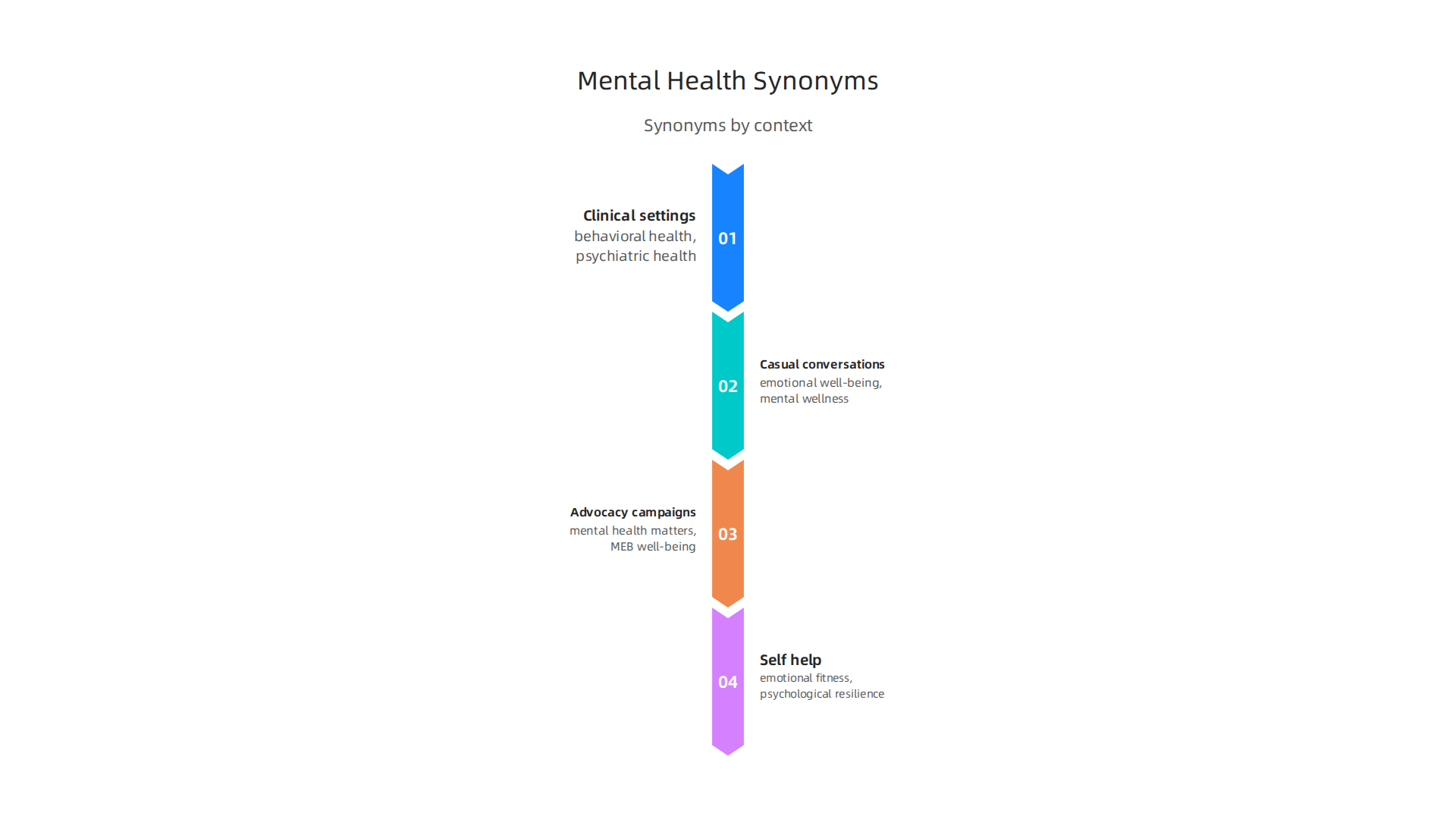
| Context | Good Word Choices |
|---|---|
| Clinical settings | behavioral health, psychiatric health, mood disorder |
| Casual conversations | emotional well-being, mental wellness, having a rough time |
| Advocacy campaigns | mental health matters, whole-person care, MEB well-being |
| Self-help and growth | emotional fitness, psychological resilience, inner well-being |
In a casual conversation with a friend, you might say "I am struggling with my mental health." In a therapy session, you might use "mood disorder" or "anxiety symptoms." In advocacy, inclusive language like "mental health matters" works because it invites everyone into the conversation.
According to major health organizations, the way we talk about mental health is evolving. Some sources now use the broader term "mental, emotional, and behavioral well-being (MEB well-being)" to capture the full picture. This shift shows that the mental, emotional, and behavioral well-being language is becoming more common as we recognize that mental health is not separate from physical or social health.
New Synonyms Keep Emerging
Language changes as society learns more. In 2026, you hear "emotional fitness" and "psychological resilience" more often. These terms focus on building strength rather than fixing problems. "Inner well-being" is another one gaining ground, especially in wellness circles.
The key takeaway? There is no wrong synonym as long as you are being thoughtful. The best word is the one that helps you connect, express yourself, and get the support you need.
If you want to keep learning about ways to improve your mental health vocabulary and stay connected with a community that values growth, you can Join The Newsletter for ongoing insights and updates.
Clinical Terms vs. Everyday Language: When to Use What
Picture this. You are at a dinner party and a friend says they have been "feeling off." You get it. That phrase is warm and inviting. Now imagine a doctor saying the same thing to a patient. That would be confusing and unhelpful. The setting changes everything.
Clinical terms like "major depressive disorder," "generalized anxiety disorder," or "borderline personality disorder" have one big advantage: precision. According to the official DSM-5 definition of mental disorders, these labels follow strict criteria that help professionals agree on what someone is going through. When you say "major depressive disorder" instead of "feeling really sad," you are talking about a specific pattern of symptoms that lasts at least two weeks and affects daily life. That accuracy is critical for treatment.
But here is the trade-off. Clinical language can feel cold and distant. If you are struggling and a friend says, "It sounds like you are experiencing a major depressive episode," that might push you away instead of inviting you in. The words feel like a textbook, not a hug.
Everyday language like "having a rough time," "feeling anxious," or "going through a lot" builds connection. It says, "I see you, and I am not labeling you." That warmth matters. But it can be too vague. "Feeling anxious" does not tell anyone if you are dealing with a full-blown panic disorder or just nervous about a job interview. The lack of detail can delay getting the right help.
That is why mental health professionals often recommend code-switching. Code-switching just means changing your language based on who you are talking to and why.
With a doctor, use clinical terms like "bpd symptoms" or "personality disorders" to get an accurate diagnosis and proper care. With a friend, say "I am struggling with my emotions right now" to invite support without the clinical wall.
The trick is knowing when to use each tool. Clinical terms are for professionals, medical records, and times when you need precise answers. Everyday language is for connecting with people who care about you. Both have a place. The best communicators learn to switch between them smoothly. Next time you talk about mental health, ask yourself: "Am I here to get help or to connect?" Let that guide your word choice.
Synonyms for Specific Mental Health Conditions
Let’s get even more specific. How you answer that question depends a lot on which synonym you pick for your experience. The words you choose for depression or anxiety can either invite support or push people away.
Depression: From "The Blues" to Clinical Depression
Depression has a surprising number of names. On the casual side, people say "the blues," "feeling down," or "in a slump." On the professional side, doctors use "major depressive disorder" or "clinical depression." These two groups are not the same thing.
The thesaurus lists for depression from Merriam-Webster include mild words like "sadness" and "melancholy" right next to heavy words like "despair" and "hopelessness." That range is helpful until someone uses a light word for a serious situation. If a person has not gotten out of bed in two weeks and cannot eat, calling it "the blues" completely misses the point.
The World Health Organization on depressive disorder explains that depression is a real medical condition. It involves a depressed mood or loss of interest that lasts a long time and changes how you function. Using a precise mental health synonym like "clinical depression" tells people this is serious. It is not just a rough day.
Anxiety: More Than Just Stress
Anxiety follows the same pattern. Everyday words include "stress," "nervousness," and "worry." Clinical terms include "generalized anxiety disorder," "panic disorder," and "social anxiety."
The problem is that "stress" has become a catch-all word. When you say "I am so stressed," people might nod along without realizing you are dealing with a full anxiety disorder. The Anxiety and Depression Association of America offers tools to tell the difference between normal worry and a condition that needs treatment. Using the right mental health synonym changes the level of support you receive.
Why Word Choice Reduces Stigma
Using accurate language for mental health matters because it teaches people how to respond. If a friend says they have "bpd symptoms" or a specific diagnosis, you can learn what that means and offer informed support instead of awkward silence.

The same goes for broader terms like "personality disorders." When people understand what these words mean, they stop assuming the worst. Precise language educates everyone around you. It builds empathy instead of judgment.
A Simple Practice for Better Conversations
Start paying attention to the words you use for your own feelings. If you are struggling, ask yourself: "Is this a bad day, or is this something more?" Then choose the synonym that matches the truth. That honesty helps you get the right support and helps others understand you better.
Improving how we talk about mental health matters for everyone. It breaks down stigma and builds real connection. If you want to keep learning about mental wellness and connect with others on a similar journey, consider joining a community focused on growth and laughter.
How Inclusive Language Can Reduce Stigma
The words you choose do more than describe your feelings. They shape how other people see mental health conditions. When you use inclusive language, you help tear down the walls of stigma that keep people from getting help.
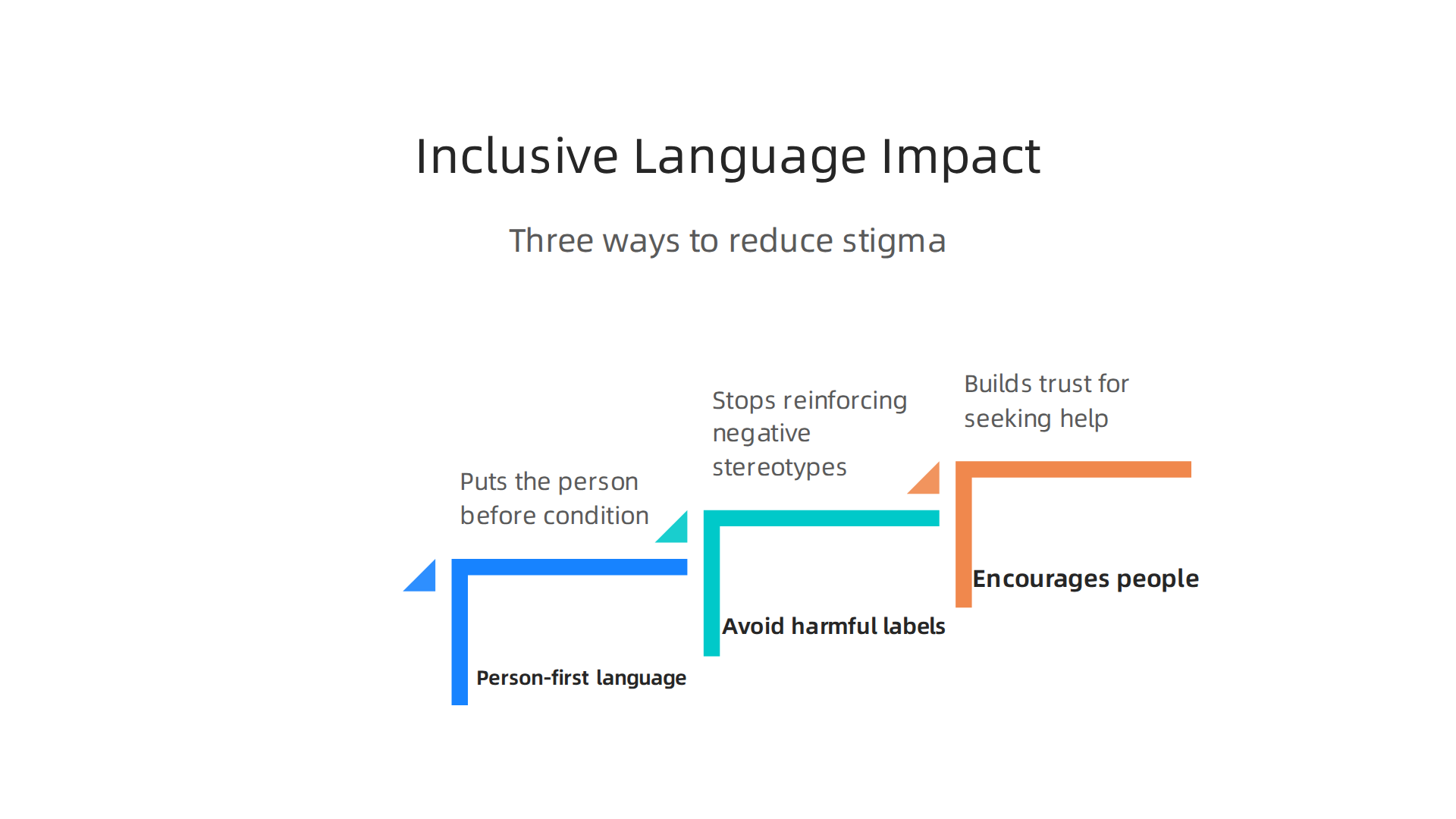
Person-first language puts the person before the condition.
Instead of saying "a schizophrenic," you say "a person with schizophrenia." Instead of "a bipolar," you say "a person with bipolar disorder." This small shift matters. It reminds everyone that a diagnosis does not define someone. The person is still a person first. Research shows that using scientifically accurate language like this is a key part of reducing stigma. Leaders from the National Institutes of Health explain that how language can reduce stigma and improve how people with these conditions are treated.
Avoid harmful labels in everyday conversation.
Words like "crazy," "psycho," and "insane" get thrown around casually. You might hear someone say "that test was crazy" or "my boss is psycho." This careless language reinforces negative stereotypes about mental illness. It makes real conditions feel scary or shameful. Even professionals can fall into this trap. Studies show that stigma by mental health providers is common and leaves patients feeling devalued and dismissed. If we want to reduce stigma, we need to start with the words we use every day.
Inclusive language encourages people to seek help.
When someone hears respectful language about mental health, they feel safer. They believe they will not be judged for speaking up. That trust is crucial. If a person worries that others will call them "crazy," they will hide their struggles instead of reaching out. But when the community uses person-first language and avoids slurs, it signals that help-seeking is welcome and normal.
The change starts with you. Pay attention to your own words. Replace "that’s so OCD" with "I like things organized." Replace "he’s bipolar" with "he has bipolar disorder." Every time you choose inclusive language, you make the world a little safer for someone who needs support.
Ready to put this into action? Join a community designed to help you build confidence, connect with others, and turn good intentions into real habits. Join An Experiment
Practical Tips for Creators and Brands Using Mental Health Terms
If you create content or run a brand, your words reach hundreds or thousands of people. That gives you a real responsibility. Using mental health terms carelessly can hurt your audience and spread misinformation. But when you get it right, you help reduce stigma and build trust with your community.
Tip 1: Avoid trivializing clinical terms for engagement.
It might be tempting to use words like “depression,” “OCD,” or “bipolar” to describe everyday sadness, neatness, or mood swings. But these terms describe real, often severe conditions. When you apply them casually, you minimize the experience of people who actually live with these diagnoses. Research shows that influencers who use clinical terms without care can confuse their audience. One study found that while some people feel clinical terms help raise awareness, many worry creators use them incorrectly. A participant explained, “words can get thrown down like I’m depressed or I’m anxious […] But they might actually just be sad.” Following best practices for safe conversations about mental health can help you avoid these mistakes.
Tip 2: Align with awareness campaigns by using empathetic language.
Audiences respond well when mental health content feels respectful and accurate. In recent years, television and film have begun to shift toward more responsible portrayals. One study from the Norman Lear Center found a 39% increase in mentions of mental health keywords and a 15% decrease in derogatory language in scripts. The same study showed that viewers who watched storylines that followed best practices had greater knowledge and lower stigma. You can follow this lead by using language that focuses on symptoms and recovery rather than labels. Highlighting the human experience rather than the diagnosis makes your content more relatable and trustworthy.
Tip 3: Use style guides and expert resources to keep your content accurate.
You do not have to figure this out alone. Organizations like JED Foundation and NAMI provide clear guidelines for creators. For example, they recommend saying “died by suicide” instead of “committed suicide” and “living with schizophrenia” instead of “a schizophrenic.” Wildflower LLC offers a guide to navigating mental health content that reminds you to check credentials, cross-reference sources, and avoid buzzwords. These resources make it easy to produce content that is both engaging and responsible.
By following these tips, you can use your platform to normalize helpful conversations about mental health. And if you want to stay inspired and keep learning alongside a supportive community, you might enjoy joining the newsletter for ongoing ideas and updates.
Building Your Personal Vocabulary for Better Self-Understanding
Have you ever tried to explain how you feel but could not find the right words? That is a common struggle. Building a personal vocabulary of mental health terms can help you name what is really going on inside. And that is the first step toward getting better.
Journal with intention. When you write about your day, try using a different mental health synonym each time. Instead of always saying “I am stressed,” try “I feel overwhelmed,” “I am anxious,” or “I am struggling to focus.”

Over time, this habit helps you spot patterns in your emotions. Research shows that using accurate language about your feelings can improve your self-awareness and even reduce stigma. One study on the role of social media influencers found that people who use precise clinical terms often feel more understood. So grab a notebook and experiment with new words. Your mental health matters, and finding the right label is part of understanding yourself.
Learn synonyms to talk with your therapist. When you have a therapy session, you want to get the most out of it. Using a richer vocabulary helps you describe your symptoms clearly. For example, instead of saying “I feel bad,” you might say “I feel hopeless” or “I feel detached from others.” If you are dealing with conditions like personality disorders or specific bpd symptoms, knowing the right terms helps your therapist give you better support. The more precise you are, the more targeted the help.
Join community conversations. Talking with other people who have similar experiences normalizes a wider range of mental health words. When you hear someone else use a term that fits your situation, you learn something new. These discussions make it okay to use words like “dissociation” or “emotional dysregulation” in everyday talk. You start to feel less alone and more confident in your own self-expression.
If you are ready to put these skills into practice and join a community that values active participation and growth, you might want to Join An Experiment.
Summary
This article explains why having a wider, more precise mental health vocabulary matters and shows how the words we choose shape understanding, stigma, and help-seeking. It defines common synonyms (emotional well-being, psychological health, behavioral health) and contrasts clinical terms with everyday language, advising readers to ‘code-switch’ depending on context. The piece gives specific examples for conditions like depression, anxiety, and personality disorders, shows how person-first and inclusive language reduce stigma, and offers practical tips for creators to avoid trivializing diagnoses. You will learn when to use clinical labels versus casual phrases, how to improve conversations with friends or therapists, and simple habits—journaling, community talk, and style guides—to build a clearer, kinder mental-health vocabulary.