
Why ‘book review speak’ matters right now
Have you ever read a book review and felt like it used a secret language? That special way of talking about books, full of certain words and phrases, is what we call "book review speak." It’s the unique vocabulary reviewers use to share their thoughts and opinions on a story. Think about it: a good review doesn’t just say "this book is good." It tells you why it’s good, or what made it special.
In 2026, with so many books coming out every day, clear and helpful "book review speak" is more important than ever. It’s like a map for readers. Without it, you might feel lost trying to pick your next adventure, whether you’re looking for a thrilling science fiction story like The Martian book or a classic tale like The Great Gatsby book.

Sometimes, reviews can be vague. They might use fancy words that don’t truly help you understand the book. Or they might fall back on common phrases that don’t say much about what makes a book unique. This can be super frustrating for readers who are just trying to find their next favorite read. You might wonder, for example, "can novels be non-fiction?" and a clear review would help explain the genre right away.
The main job of a book review is to describe and thoughtfully look at a book. It helps you see the good parts and the parts that might not be for you Book Review | Definition, Structure & Examples – Lesson.

When reviewers use precise language, they help you figure out if a book matches what you like. This also helps authors, because it means their stories are more likely to find the right audience.
When "book review speak" is clear, it makes discovering new stories much easier. It helps everyone from new readers to seasoned book lovers find exactly what they’re looking for. Knowing how to use and understand this language can truly make every story count. If you’re curious about how to share your own thoughts on books, you might enjoy learning how to write a book review that makes every story count.
Want to stay updated on all the latest books, creative experiments, and community challenges?
Join The Newsletter for ongoing updates from The Ridiculous universe.
"Book review speak" isn’t just a fancy way of talking about books. It’s actually a set of common terms and ideas that reviewers use to help readers understand a story better. Think of it like a special guidebook that helps you make sense of new books. Let’s look at what these key terms are and why they show up in reviews.
What’s in Book Review Speak?
When you read a book review, you’ll often see different kinds of language, each with its own job. Here are some main parts:
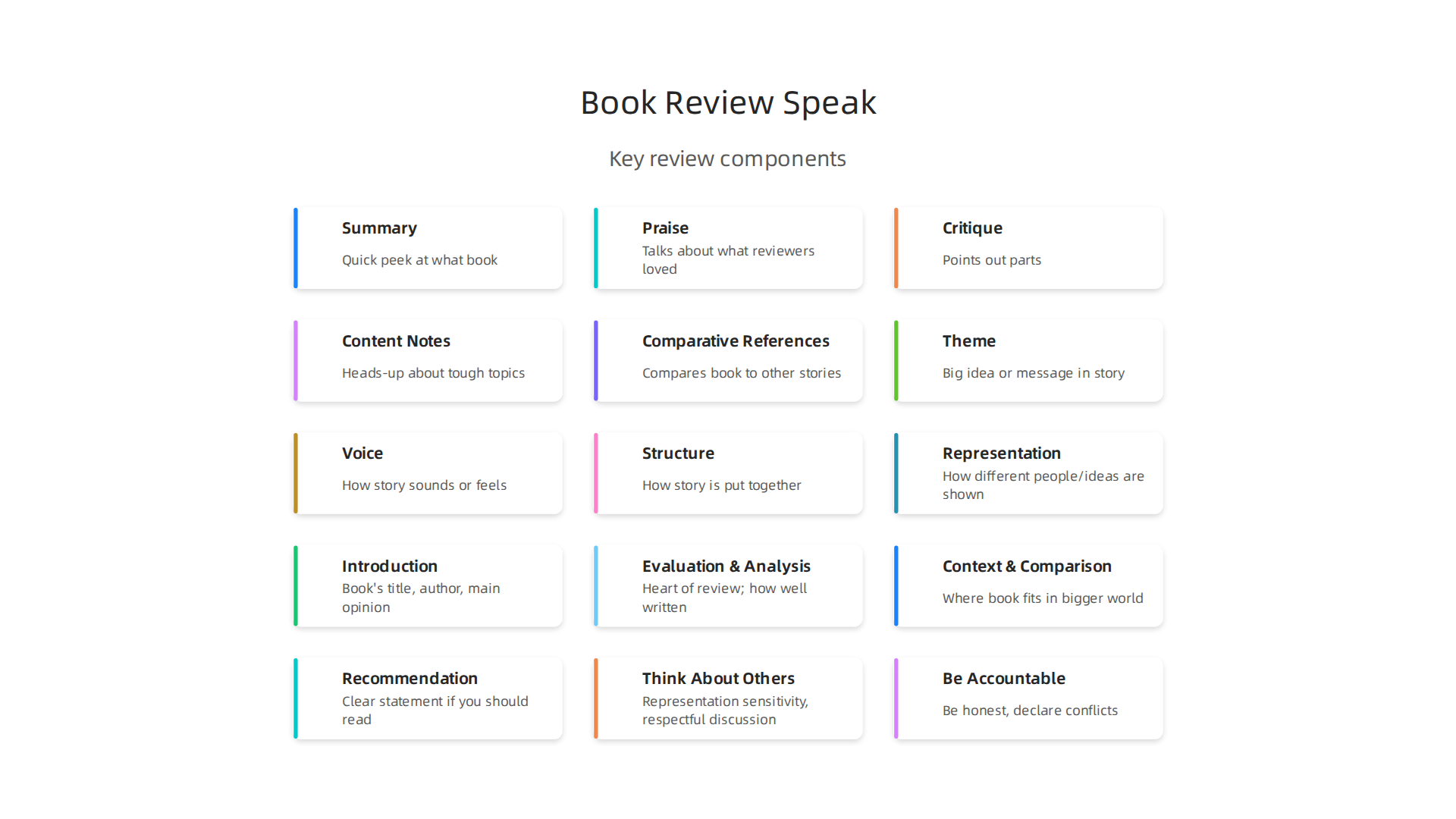
- Summary: Every good review starts with a quick peek at what the book is about. This isn’t spoiling the ending. Instead, it gives you just enough information, like the main topic, characters, and ideas, so you know the basic story without giving away all the surprises. This helps you discover if the book’s core idea sparks your interest What Is a Book Review? Definition, Types, Uses. It also helps answer questions like, "can novels be non-fiction?" by laying out the book’s type.
-
Praise: This is where reviewers talk about what they loved. They might use words like "captivating characters," "beautifully written," or "a masterful plot." When you see these positive words, it helps you figure out if the book has the qualities you enjoy. If a review highlights a story’s "thrilling pace," you know it’s probably an exciting read, much like The Martian book.
-
Critique: Reviews don’t just share good things. They also point out parts that might not work for everyone. A reviewer might say the story was "a bit slow to start" or that "some characters felt undeveloped." This isn’t always a bad thing. It gives you an honest look at the book’s weaker points, helping you decide if those things matter to you. This part is helpful for validation, meaning it might confirm feelings you had about a similar book, or act as a warning if you know certain elements bother you.
-
Content Notes (or Trigger Warnings): Sometimes, a book deals with tough or sensitive topics. A good review will include a heads-up about these, like mentioning "scenes of intense conflict" or "themes of loss." These notes are there to help readers prepare for what’s inside, or to choose a different book if they’re not ready for certain subjects.
-
Comparative References: Reviewers often compare a book to other well-known stories. They might say a book is "like The Great Gatsby book but with a modern twist" or "will appeal to fans of classic sci-fi." This is super helpful because it connects a new, unknown book to stories you already know and love (or perhaps didn’t enjoy). These comparisons help you analyze where a book fits in the bigger picture of literature, guiding your next choice. Knowing these different parts of book review speak makes it easier to find stories that truly resonate with you.
Understanding these elements helps you find the right books for you, whether you’re looking for something exciting or a deep, thought-provoking read.

If you’re interested in all the building blocks that make up a good story, you might want to learn about 10 story elements every novel and short story needs.
Understanding book review speak is just the first step. To truly read like a reviewer, you need special tools or "lenses" to help you see deeper into a story. Think of these like different colored glasses that help you spot new details. This way, you can make smarter notes that will help you later if you want to write your own review.
How to Read Like a Reviewer: Practical Reading Lenses and Note-Taking Tactics
Reading like a reviewer means you’re not just reading for fun, though that’s important too. You’re also paying close attention to how the story is built and what it’s trying to say. This active reading is sometimes called "close reading," where you slow down and look at the details Learn Close Reading Skills for Academic and Lifelong Success.
Here are some reading lenses and simple questions to guide your thinking:
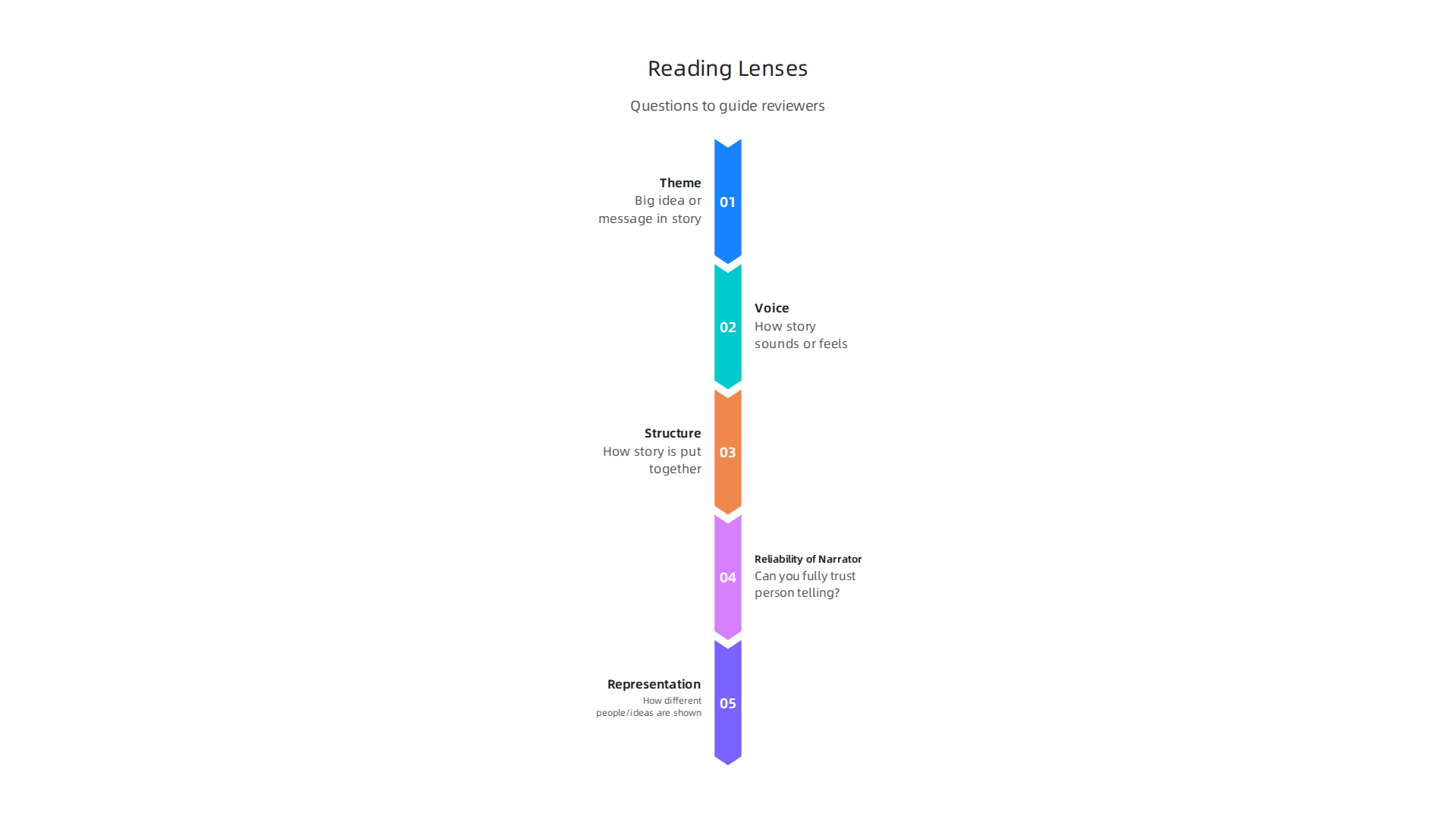
- Theme: This is the big idea or message in the story. Books often talk about things like love, courage, losing someone, or finding your way. For example, The Martian book has themes of human cleverness and survival against all odds.
- Ask yourself: What big ideas does this book make me think about? What message is the author trying to share?
- Voice: This is how the story sounds or feels. Is it funny, serious, mysterious, or wise? The voice comes from the narrator or the author’s writing style.
- Ask yourself: How does the book’s writing make me feel? Does the narrator sound trustworthy, or like they’re keeping secrets?
- Structure: This is how the story is put together. Does it follow a straight line from start to finish? Does it jump between different times or different people’s points of view? A book might even play with how you get information, like reading the diary of a main character.
- Ask yourself: Does the story jump around, or is it told step-by-step? How does that change how I understand what’s happening?
- Reliability of Narrator: Can you fully trust the person telling the story? Sometimes, a character might not know everything, or they might even try to trick you. This adds a fun puzzle to solve as you read.
- Ask yourself: Is the narrator always telling me the full truth? How does knowing this (or not knowing) change how I feel about the story?
- Representation: This lens looks at how different people, places, or ideas are shown in the book. Does the book include a wide variety of characters and experiences? Is it fair and thoughtful in how it shows them? This is a key part of understanding a book’s impact, especially when thinking about stories that might push the boundaries of what can novels be non-fiction or explore sensitive topics.
- Ask yourself: Does this book show different kinds of people, cultures, or ways of thinking? How well does it do that?
When you read with these lenses, you’re building up your understanding of book review speak without even realizing it. You’re training your brain to spot the details that reviewers talk about.
Smart Note-Taking Tactics
To make the most of your reading, jot down your thoughts as you go.

You don’t need a fancy system. Here are some simple ways to take notes:
- First Read, Then Re-read: Read the book once for enjoyment. Then, if you want to dive deeper, go back and re-read parts with your reviewer lenses in mind. Many expert readers suggest this approach to truly understand a text Close Reading! – Student Learning Center – UC Berkeley.
- Highlight and Underline: Mark sentences or ideas that stand out. Use different colors for different lenses. For example, yellow for theme, blue for voice.
- Quick Notes in the Margins: Write down questions that pop into your head, or quick thoughts about a character’s actions or a surprising plot twist. These small notes help you remember your first reactions.
- Focus on Key Parts: If a paragraph or a page feels super important, zoom in on it. What specific words or phrases make it powerful? Looking at these "key fragments" can help you later The 17 Best Engaging Reading Activities for High School.
By using these simple tricks, you’ll gather valuable observations for understanding books better or even writing a great review. If you’re interested in refining your skills, learning how to write a book review that makes every story count can be a wonderful next step.
Ready to put these reading lenses into practice? Try picking up your next book with these tips in mind.
Join an experiment. Join An Experiment
Now that you know how to look at a book with special "lenses," let’s talk about how reviewers put their thoughts together. Understanding the common patterns in book reviews, or what we call book review speak, will help you make sense of what they’re saying and why. Reviewers often follow a certain recipe to make sure their thoughts are clear and helpful to you.
Common Book Review Structures and Rhetoric (plus what they actually communicate)
Most book reviews, whether they are short or long, have a similar shape. They usually start with some basic information about the book and then move into deeper thoughts. Knowing this structure helps you quickly find the parts you care about most. A good book review isn’t just a summary; it’s a careful look at the book’s good and bad points, offering a clear opinion Book reviews Structure and language.
Here are the typical parts you’ll find:
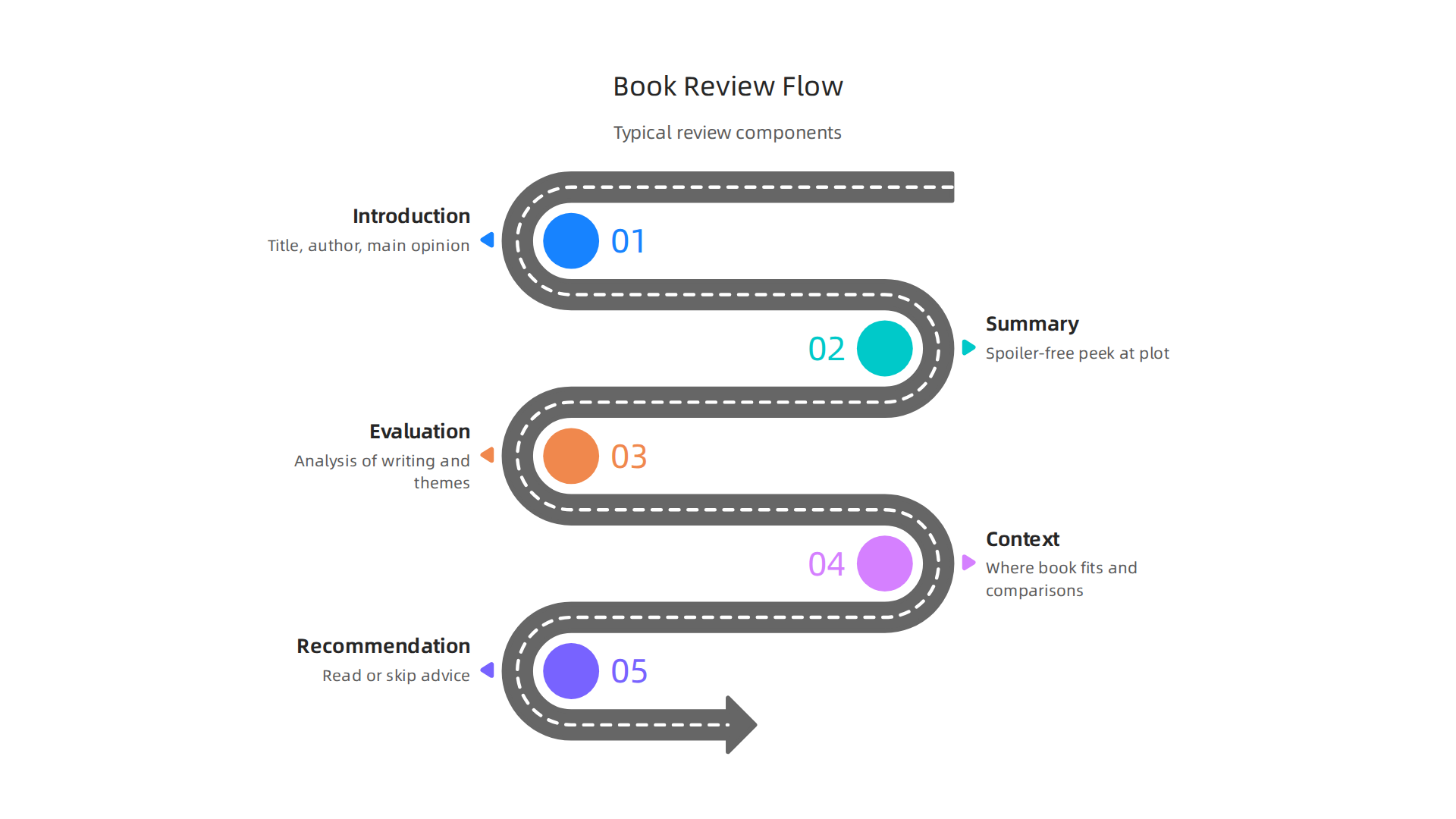
- Introduction and Book Information: This is where the reviewer tells you the book’s title, author, and maybe a little about what type of book it is (like if it’s a thrilling science fiction novel or a deep historical tale). Sometimes, they’ll give their main opinion right away, like a quick thumbs up or down Writing a Book Review – Organizing Your Social Sciences ….
- Spoiler-Free Summary: After the intro, reviewers give a quick peek into what the book is about, but without giving away any big surprises. They’ll tell you the main idea or the setting, and introduce a few key characters. This part is important because nobody wants a story ruined! Reviewers try hard to avoid plot spoilers, though sometimes a small one might slip in if they’re reviewing an older book How to Avoid Spoilers.
- Evaluation and Analysis: This is the heart of the review. Here, the reviewer talks about how well the book is written. They might discuss the author’s writing style, how strong the characters are, if the story makes sense, and how it made them feel. This is where those reading lenses we talked about really come into play. They might explain if the themes were powerful or if the narrator’s voice was unique. This critical analysis helps you see if it’s a good book How to Write a Book Review: 3 Main Elements of a Book ….

- Context and Comparison: Sometimes, reviewers will talk about where the book fits into the bigger world of books. They might compare it to other books by the same author or to similar stories. For example, they might say if a new science fiction story is as exciting as The Martian book, or if a new classic has the depth of The Great Gatsby book (which you can often find as a great gatsby pdf online). This helps you understand the book better if you’ve read those other works.
- Recommendation: Finally, most reviews end with a clear statement about whether they think you should read the book. They might say who the book is best for. Perhaps it’s a must-read for fans of a certain genre, or maybe it’s only for those who like really thought-provoking books.
A good review tries to give a balanced view, recognizing that not every book is for everyone, even if the reviewer didn’t personally love it 6 Elements of a Good Book Review.
The Art of Rhetoric: How Reviewers Persuade You
Reviewers don’t just state facts; they use special ways of writing called "rhetoric" to share their opinions and help you trust their judgment. These choices shape how helpful and honest their review feels.
- Hyperbole: This is when a reviewer uses very strong language to make a point, like saying a book is "the most mind-blowing story ever written!" This makes the review exciting, but sometimes you might wonder if it’s really that good. If used too much, it can make a reviewer seem less trustworthy.
- Hedging: On the flip side, hedging means using softer language, like saying "it seems that" or "one might argue." This can make a reviewer sound more thoughtful and careful, building trust, especially when talking about tricky topics or when discussing if can novels be non-fiction and how they handle real-world issues. It shows they’ve thought about different viewpoints.
- Comparative Framing: This is when reviewers talk about a book by comparing it to others. For instance, "If you liked [Book A], you’ll love [This Book]." This is super helpful because it gives you a quick way to decide if a book is for you, based on your past reading tastes. It helps you see the book through a familiar lens, making the review feel more relevant.
By paying attention to these structures and the language reviewers use, you’ll not only understand what they’re saying but also how they’re trying to influence your reading choices. It helps you become a smarter reader of reviews, ready to pick out your next great read with confidence. For more deep insights into storytelling, consider exploring 10 story elements every novel and short story needs to really appreciate a reviewer’s perspective.
Now that you know how to understand the special language of reviews, let’s talk about how you can write reviews that are clear, kind, and truly helpful. It’s about putting your thoughts together in a way that makes sense to others and helps them decide what to read next.
Writing clearer, kinder, more useful reviews: templates and ethics
Writing a great book review is like telling a friend about a book you just finished. You want to share what you liked, what you didn’t, and why someone else might enjoy it. But sometimes it helps to have a plan. We’ll look at different ways to write reviews, depending on what you want to achieve, and talk about important rules to follow so your reviews are fair and respectful.
Simple Templates for Different Review Goals
Not all reviews are the same. Sometimes you just want to quickly recommend a book, other times you want to dig deeper. Here are some simple ideas for how to structure your thoughts:
- For Discovery Reviews (Quick Recommendations):
- Goal: Help someone find their next favorite book, especially if they like similar stories.
- Template idea: "If you loved [Book A] because of [Reason X], then you absolutely must read [This Book]! It has [Similar Quality Y] and [New Exciting Thing Z]. I couldn’t put it down!" This style quickly links a new book to known favorites, helping readers discover new authors and genres.
- For Critical Analysis Reviews (Deep Dives):
- Goal: Share a thoughtful look at how the book was written, its messages, and how it made you feel.
- Template idea: Start with the book’s main idea and your overall feeling. Then, talk about one or two things the author did really well, like creating amazing characters or a surprising plot. Next, mention one or two things that could have been better, like confusing parts or a slow start. End with who you think the book is best for. This helps readers who want more than just a quick opinion; they want to know the "why" behind your
book review speak. - Example: "This story really made me think about [Theme]. The author’s writing style was [adjective], making it easy to [feeling]. However, I wished [Character] had [action]. Overall, a powerful read for anyone interested in [topic]." If you want to dive deeper into making your reviews count, learn how to write a book review that makes every story count.
- For Content Warning Reviews (Sensitive Topics):
- Goal: Inform readers about tough subjects in a book so they can decide if it’s right for them, without spoiling the story.
- Template idea: "This book talks about [Sensitive Topic A] and [Sensitive Topic B]. It does so in a [Thoughtful/Difficult/Raw] way. While it is not a spoiler to mention these topics, please be aware before reading if you are sensitive to them." Always try to be factual and neutral here. You can also explore can novels be non-fiction when considering how real-world issues are handled.
- For Community Recommendation Reviews (Sharing with Friends or Groups):
- Goal: Get your friends or reading group excited about a book, share your thoughts, and start a discussion.
- Template idea: "Hey bookworms! I just finished [Book Title] and it was such a [Adjective] read. I loved [Specific Element] and it made me think a lot about [Big Idea]. What did you all think about [Character/Plot Point]?" These reviews are great for sites like Goodreads or in online book clubs, which have become a huge part of reading culture in 2026, offering community infrastructure and intellectual development for many participants Reading Clubs: A Comprehensive Analysis of Structure, Value Proposition, and Market Dynamics. You can even find many opportunities to join an experiment and turn your reading and review passion into shared action.
Important Rules for Reviewers: Being Fair and Thoughtful
Writing reviews also comes with some important rules, often called "ethics." These rules help make sure your reviews are honest, respectful, and truly helpful to everyone.
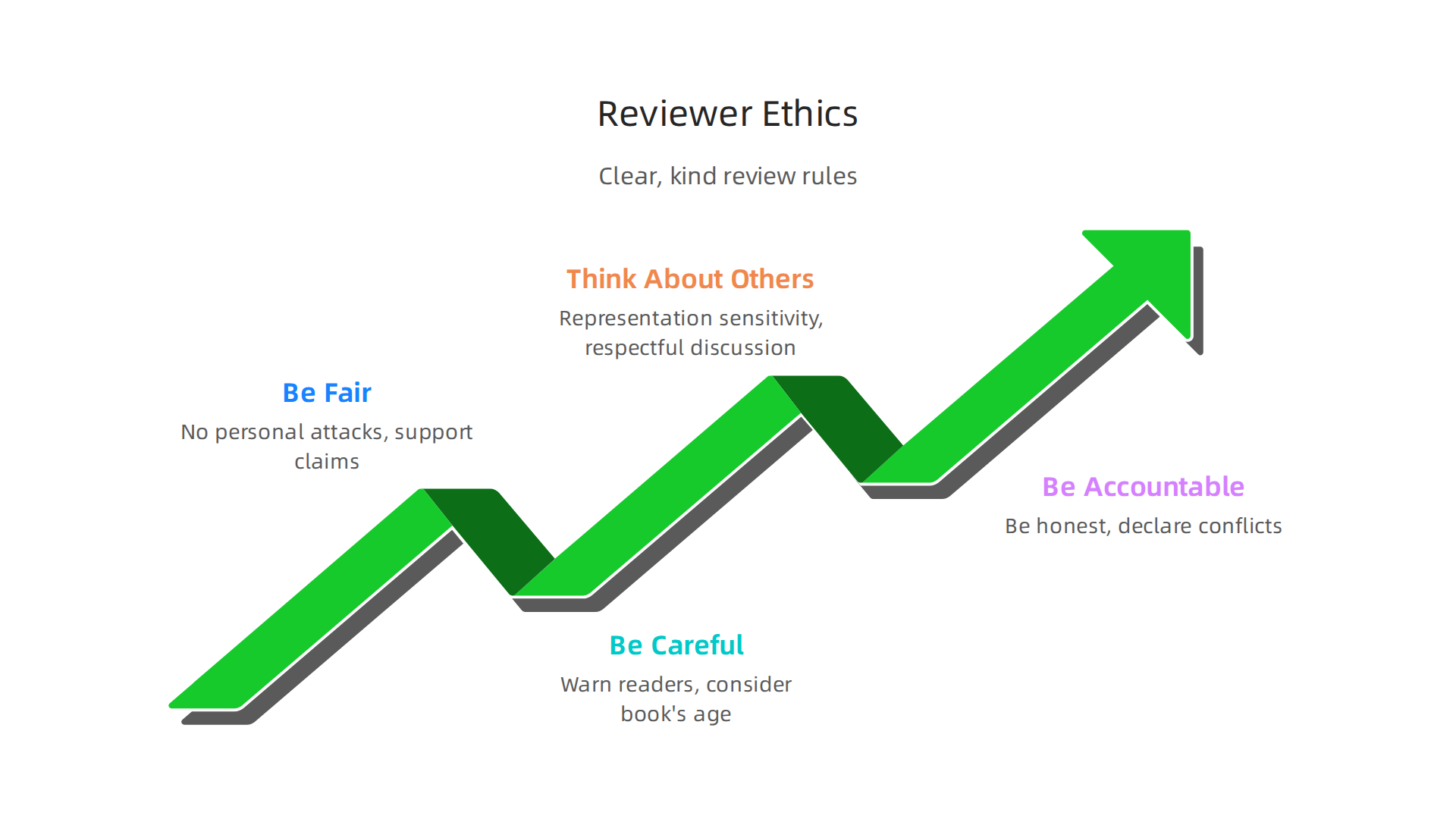
Many organizations have ethical guidelines for reviewers, even for scholarly articles, emphasizing objectivity and professionalism Publishing ethics | Elsevier policy.

- Be Fair and Objective:
- No personal attacks: Judge the book, not the author. It’s okay to dislike a book, but don’t be mean about the person who wrote it. Your views should be expressed clearly with facts and arguments, not personal criticism Publishing ethics | Elsevier policy.
- Support your claims: If you say something is good or bad, explain why. Give examples from the book.
- Be Careful with Spoilers:
- Warn your readers: Always say "spoiler alert" if you’re going to give away important plot points. Some people even suggest creating ways for readers to skip spoiler sections if they want The rights and wrongs of putting spoilers in reviews.
- Think about the book’s age: It’s generally less harmful to spoil an older book than a brand-new one that many people haven’t read yet A Proposed Guide To Spoiler Ethics.
- Think About How You Talk About Others:
- Representation sensitivity: Books often feature different kinds of people and experiences. Be thoughtful and respectful when discussing these elements, especially if they are different from your own.
- Be Accountable (Take Responsibility):
- Be honest: Share your true opinion.
- Declare conflicts: If you know the author, or if you got the book for free, it’s good to mention that. This helps readers trust your review more. Reviewers should always declare any potential conflicts of interest The ethics of peer review.
By following these tips, you can write reviews that are not only helpful but also create a positive space for everyone to share their love of reading.
It’s clear that writing good reviews helps other readers, but what about creators and brands? Actually, the same ideas of clear, kind, and useful "book review speak" can help them build strong connections and trust with their audience. In 2026, using review language in smart ways is a key part of growing a community.
How Creators Can Use Review Language
For people who create content online, like bloggers, YouTubers, or social media influencers, using good book review speak can make a big difference.
- Publishing Reading Guides: Creators often make lists or guides to help their followers find new books. By using the "discovery review" style we talked about earlier, they can quickly tell their audience, "If you liked [Book A], you’ll love [This Book]!" This helps people trust their recommendations. A creator might, for example, recommend a book like
the martian bookby clearly stating what kind of reader would enjoy its scientific accuracy and humor. - Building Trust: When creators are honest and clear about what they liked and disliked in a book, their audience sees them as real and trustworthy. This transparency helps people feel more connected to the creator. Many find that having great website tools for creators in 2026 helps them manage and share these guides effectively.
How Brands Use Review Language for Community and Challenges
Businesses and organizations also use the spirit of book review speak to connect with people.
- Running Reading Challenges: Many brands, libraries, and schools put together reading challenges. These challenges encourage people to read more and share their thoughts. By setting clear goals and talking about the books in an inviting way, they can get more people to join. For example, a challenge might focus on classic literature, asking readers to tackle books like
the great gatsby pdfor similar works. Companies like Goodreads use fun game-like features to keep people reading and talking about books, which builds a strong community spirit Goodreads Case Study: The Impact of Gamification on Retention …. - Making Communities Stronger: When brands ask for honest feedback or encourage discussions using transparent review methods, it makes people feel heard. This helps build a loyal community around their product or service. Running monthly reading challenges with simple rules can boost motivation and participation Reading Challenge Ideas for Your Community: Year …. Tools that let users track their reading and join buddy reads also help create active reading communities Shared book reading communities. You can even find many exciting options for free books to read online in 2026 to make these challenges more accessible.
Authors and Discoverability
Even authors themselves can use review principles. When they write descriptions for their books, they can use language that helps readers understand what the book is truly about. This helps the right readers find their books and makes sure people know what to expect. For instance, if you loved the martian book, you might be interested in reading about Why Project Hail Mary book is the sci-fi novel everyone is talking about as it shares a similar scientific adventure style.
Boosting Engagement and Reducing Misunderstanding
By using clear and ethical book review speak, creators and brands can:
- Increase Engagement: When people know they will get honest, helpful information, they are more likely to participate and share their own thoughts.
- Reduce Misunderstanding: Transparent reviews set proper expectations. This means fewer surprises for readers and less chance of people feeling tricked or disappointed. It helps everyone enjoy the reading journey more.
Understanding and using transparent book review speak isn’t just for individual readers. It’s a powerful way for creators and brands to build trust, create active communities, and make sure everyone can find their next great read.
Want to stay in the loop about new books, creative experiments, and ways to join our growing community? Join The Newsletter.
Understanding and using clear book review speak helps everyone. It’s not just for sharing opinions. It’s also a great way to help people read better and connect with others. We can turn quiet readers into active participants through fun lesson plans and group challenges. These activities make reading a shared journey, helping to reduce loneliness and build up new creative energy.

Helping Readers Become Reviewers
Imagine moving from just reading a book to really thinking about it and sharing your ideas. We can make this happen with small, easy steps, like "micro-experiments" and simple lesson plans.
1. Try Close Reading Exercises:
"Close reading" means looking at a small part of a book very carefully. It’s like being a detective with words. You look for special words, repeated ideas, or how characters change. These kinds of exercises help readers see deeper meanings in a text Three Quick and Easy Close Reading Exercises to Use Every Day. For example, you might pick a short paragraph and ask:
- What is the main feeling here?
- What words make you feel that way?
- What questions do you have after reading just this part?
By doing this, readers learn to find the important parts of any story, even complex ones where you might wonder, for instance, can novels be non-fiction. This practice helps them understand how to put their thoughts into clear book review speak. Learning how to think deeply about books is the first step toward writing a review that truly helps others how to write a book review that makes every story count.
2. Turn Thoughts into Shared Ideas:
Once readers practice close reading, they can easily share their insights. Instead of just saying "I liked it," they can say why they liked it. This moves them from being passive readers to active reviewers.
Running Low-Barrier Community Challenges
Reading challenges are a fantastic way to bring people together. They make reading feel less lonely and help create a sense of shared purpose. In 2026, many communities are finding success with simple challenges that don’t feel like a chore.
1. Simple Reading Goals:
Instead of hard rules, focus on fun goals. For instance, a challenge might be to read "one book you’ve always wanted to read" or "a book set in a different country." These challenges can inspire people to pick up new stories. The White House even has a summer reading challenge where kids track books and share reflections SUMMER READING CHALLENGE. A major challenge for 2026 is already underway, checking in on readers’ progress mid-year The 2026 Read Harder Challenge: A Mid-Year Pulse Check on Literary Engagement.
2. Focus on Sharing, Not Judging:
The goal is to talk about books, not to critique them perfectly. Encourage readers to share:
- A favorite quote from their latest read.
- One new thing they learned.
- How the book made them feel.
- What type of reader would enjoy it.
These low-pressure sharing moments help people connect over books and build a sense of community. Challenges can also reduce feelings of isolation, giving people a reason to talk and share their creative journey. They help readers feel like they are part of something bigger, turning individual reading into a shared adventure.
Ready to connect with others, try something new, and turn your reading into a shared adventure?
Join An Experiment
Summary
This article explains what