
Introduction — A short, human-first framing: Leviathan then and now
Have you ever felt like you’re missing something important in life? Maybe you want to find more meaning, connect with others, or take action toward your goals. In 2026, many people feel a bit lost in all the noise. Sometimes, looking back at older ideas can actually help us move forward. That’s where a book like Leviathan comes in.
You might think that reading a very old book, like the classic Leviathan book, sounds hard. Many people feel that old writings are thick and don’t speak to our lives today. They can seem disconnected from how we feel and what we go through. But what if we told you that the ideas in the Leviathan book are still very much alive and can help you think about your own community and how you fit into the world?
Thomas Hobbes wrote the Leviathan book way back in 1651. It’s all about how people can live together without chaos and why we need rules and leaders to keep things peaceful. Even though he wrote it a long time ago, in a world very different from ours, the big questions he asked are still important today. Questions like: How do we build a good society? What makes people get along? And what happens when things fall apart?
This article will help you look at the Leviathan book not as a dusty old text, but as a map for understanding our world.

We’ll explore practical and fun ways to dive into this important work, showing how it can spark your own thoughts about meaning, community, and how to take action in 2026. Learning how to truly connect with challenging books can be a great way to grow and build new skills, much like you might learn to unlock deeper reading with a book journal. Hobbes’s work was a direct response to the English Civil War, a time of great upset, and it pushed readers to think about how to avoid such conflict again by creating a strong government 1.
By making this classic text easier to understand, we hope to show you how its lessons are still useful. You might even find that reading this famous political book gives you new ideas for facing modern challenges. If you’re looking for more ways to engage with fascinating content and join a community that encourages action and learning, consider staying connected.
Why Leviathan Still Matters: Power, Fear, and Collective Life
The Leviathan book, though written centuries ago, still helps us think about big ideas today. It looks at how humans behave, the role of leaders, and the power that holds society together.
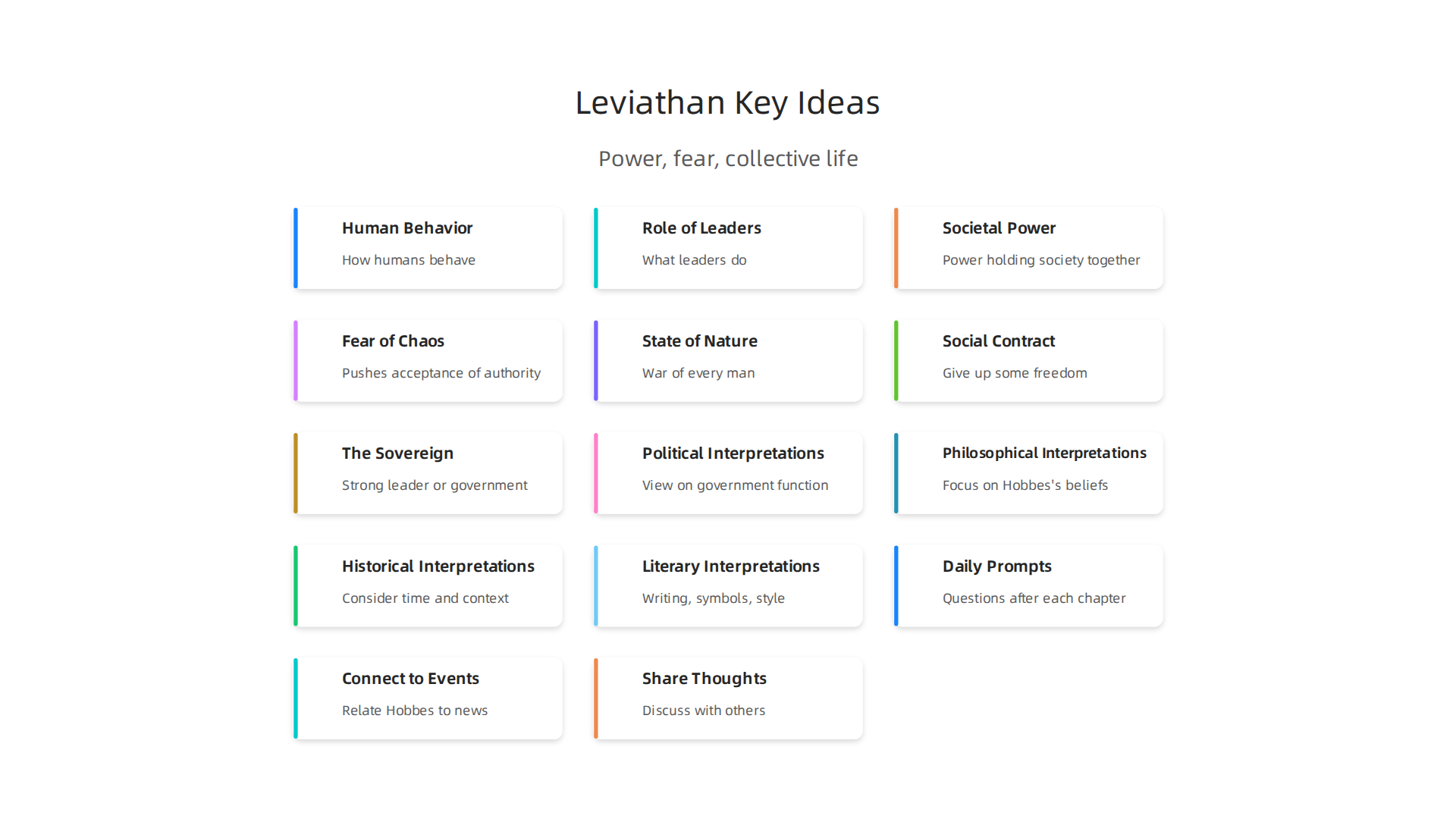
Thomas Hobbes, who wrote the Leviathan book in 1651, talked a lot about things like authority, human nature, and fear. Actually, these are still very important feelings and ideas in 2026, guiding how people live and interact.
Think about it. We all want to feel safe, right? Hobbes believed that without strong rules and a clear leader, life would be "solitary, poor, nasty, brutish, and short." He felt that fear of chaos pushes people to accept a strong government. This idea about how fear shapes our choices and keeps order still makes sense when we look at our world. From local communities dealing with new rules to larger global challenges, the need for agreement and safety is always there.

The Leviathan book focuses on social and political theory, showing how people form a commonwealth to avoid a state of war 1.
The themes in the Leviathan book also help people who are looking for deeper meaning in their lives. When you understand why societies are set up the way they are, you can better understand your own place in them. It makes you think about what kind of community you want to be a part of and how you can act to make things better.
For creators, like writers, artists, or even brands, these ideas are a rich source of stories. They can explore characters dealing with power struggles, human weaknesses, or the choices people make when they’re afraid. Stories that dive into these deep parts of life often connect strongly with audiences. Thinking about the arguments in the leviathan book can spark new ways to tell tales about society, personal struggles, and the constant search for a peaceful way to live together. It’s a great way to think about how ideas from history can still inspire us and help us understand the world around us. You can explore complex topics like this through shared reading, which is why book clubs offer true connection in a busy digital world.
Let’s take a closer look at some of the main ideas and famous parts of the Leviathan book. When you read this important work, you’ll see a few big ideas come up again and again. Thinking about these themes can help you understand the book’s message about how society works.
Here are some of the main ideas you will find in the Leviathan book:
- The State of Nature: Hobbes believed that without any rules or government, humans would live in a "state of nature." In this state, everyone would be free to do whatever they wanted, leading to a constant "war of every man against every man." He famously said that life in this state would be "solitary, poor, nasty, brutish, and short." This idea is explored in research about the "wolfish tendencies" of human nature found in Hobbes’s philosophy 1. It’s a scary thought, but it helps explain why he thought strong leaders were so important.
- The Social Contract: To escape the terrible "state of nature," people would naturally agree to give up some of their freedom. This agreement is called the "social contract." By agreeing to follow common rules and respect a powerful authority, people gain safety and a more peaceful life. It’s like everyone in a group agreeing to follow traffic laws so that driving is safer for everyone.
- The Sovereign: For the social contract to work, there needs to be a very strong leader or government, which Hobbes called the "sovereign." This sovereign has total power to make laws and enforce them. The idea is that this great power is needed to keep order and prevent society from falling back into chaos. Think of the sovereign as a giant protective force, much like the sea monster Leviathan itself. Understanding how governments gain their authority is still a topic of study in 2026, as people continue to "disentangle Leviathan" and its ideas 2.
Reading the Leviathan book helps us see these powerful ideas in action. Just like how the Leviathan book helps us understand society, other great books such as the invisible man book, the atonement book, the blood meridian book, or the hyperion book also make us think deeply about human nature and the world. These books, though very different, push us to think about big questions. To get the most out of such deep texts, it can be helpful to use practices like open book thinking unlock your deeper reading experience.
Understanding these themes in Hobbes’s Leviathan book can change how you look at the world around you in 2026. It makes you think about the balance between freedom and safety, and the role of leadership in our lives.
If you enjoy exploring big ideas from books, you might like to stay connected with other readers and creators. You can discover more content about classic literature, modern fiction, and creative projects.
Join The Newsletter for ongoing updates from The Ridiculous ecosystem, including books, experiments, creator opportunities, partner news, and ways to participate beyond a single article.
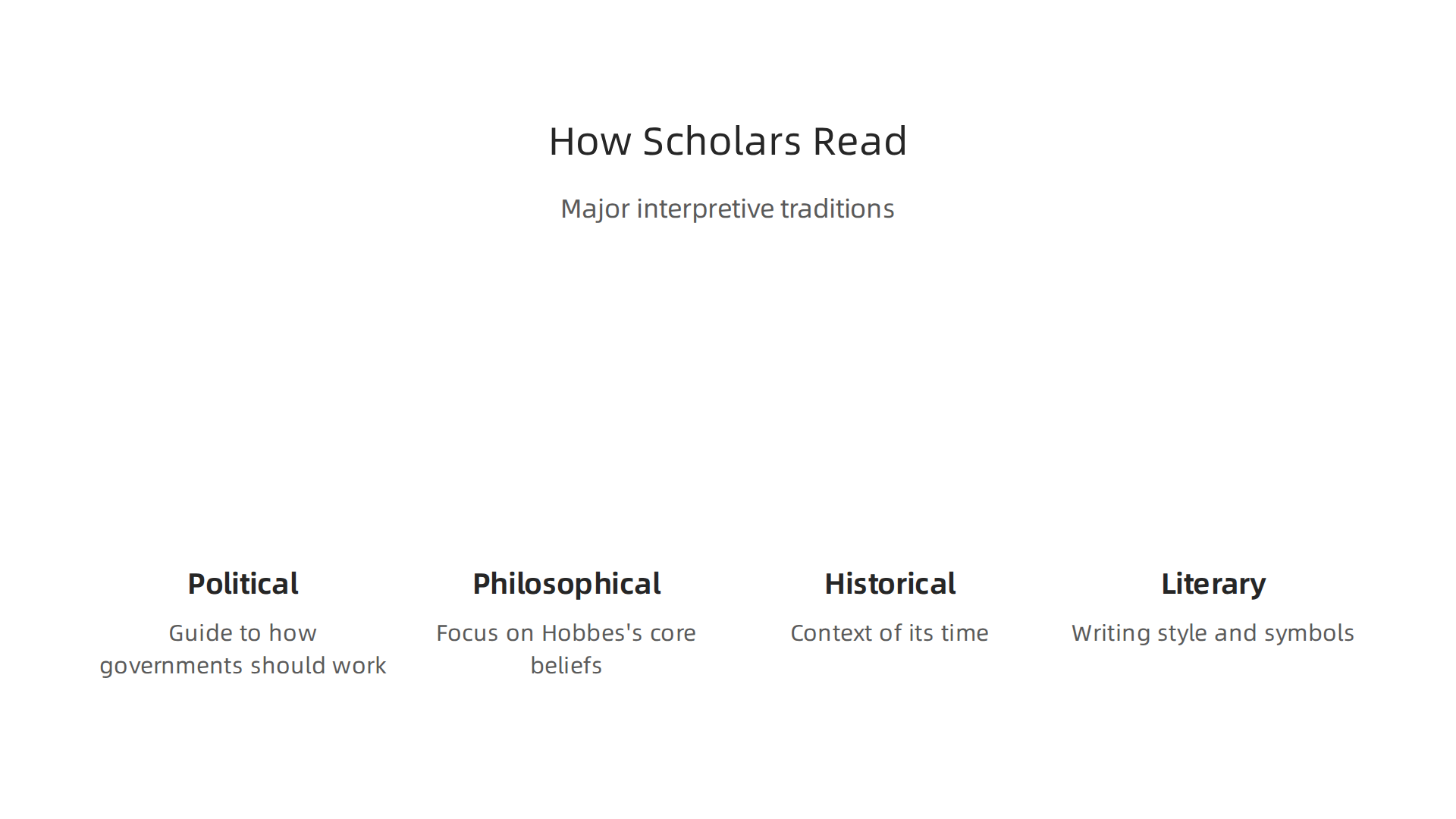
When people study the Leviathan book, they often look at it in different ways. These different views, called interpretive traditions, help us understand the book’s deep messages about society and power. How a scholar or a reader approaches the Leviathan book can change what they learn from it.
Here are some of the main ways people read and understand Thomas Hobbes’s famous work:
Political Interpretations
Many scholars read the Leviathan book as a guide to how governments should work. This view focuses on Hobbes’s ideas about the "sovereign" and how it needs to be very strong to keep peace. Readers who take this approach often look at how Hobbes’s ideas shaped modern political thought, including discussions on how states gain their authority. For example, some studies, like those found in the journal Leviathan: Interdisciplinary Journal in English, continue to explore these political angles in 2026 1. This way of reading the book helps us think about the rules and leaders in our own lives.
Philosophical Interpretations
Another common way to read the Leviathan book is through a philosophical lens. This means focusing on Hobbes’s core beliefs about human nature. Why do people behave the way they do? What is right and wrong? This reading looks closely at ideas like the "state of nature" and how people think and reason. These ideas are often seen as a big part of how we understand political philosophy today. Scholars study how different ways of understanding the Leviathan book can lead to major shifts in how we think about government and society 2.
Historical Interpretations
Some readers look at the Leviathan book by thinking about the time it was written. Hobbes wrote his book during a period of great trouble in England, like the English Civil War. So, historical interpretations connect his ideas to the problems and fears of his era. This helps us see why he thought a powerful government was so important. It’s like understanding a book such as the invisible man book better when you know about the social issues of its time.
Literary Interpretations
Finally, some scholars study the Leviathan book like they would any other great piece of literature. They look at Hobbes’s writing style, how he uses words to make his points, and his use of the sea monster Leviathan as a symbol. How does his language make his arguments feel stronger or more urgent? This view helps us see the Leviathan book not just as a book of rules, but as a powerful story with a distinct voice. Just as we might analyze the storytelling in the atonement book or the grand scope of the hyperion book, the literary style of Leviathan book also adds to its impact.
Understanding these different ways to read the Leviathan book can really change your experience with it. You might focus on its lessons about power, or its deep thoughts about humanity. Every approach helps unlock another layer of meaning in this important work. To get more out of reading complex texts, consider tools that help you focus and remember, like those that help you unlock deeper reading.
Beyond being a powerful book for study, the Leviathan book also lives on in movies, new books, and popular culture today. Its big ideas about power, people, and society still get talked about and shown in new ways.
Adaptations and New Stories
You might be surprised to learn how often the name "Leviathan" pops up in modern stories. Even though Thomas Hobbes’s Leviathan book was written a long time ago, people keep finding new ways to make its themes relevant. For example, some new versions of the original Leviathan book have been made to use easier, more modern English, so more people can read and understand it in 2026, just like The Essential Leviathan.
Many other books and films also use the name or idea of Leviathan. One popular example is Scott Westerfeld’s Leviathan trilogy of novels. These books imagine a steampunk world where the Leviathan is a flying whale airship. This series was even turned into an anime show that came out in 2025, bringing its story to many more viewers. You can learn more about the whole series, which starts with the Leviathan (Westerfeld novel), to see how classic ideas can inspire fresh science fiction adventures. If you enjoy sci-fi, you might also like to discover sci fi story books.
Leviathan’s Influence on Culture
The idea of Leviathan isn’t just about Hobbes’s political monster. It also goes back to older stories of huge sea creatures. Modern creators often use this ancient idea, mixing it with new thoughts about the world.

For instance, some writers have used the Leviathan myth to talk about today’s worries, like big changes to our planet or problems in how society works. This shows how ideas about the monster Leviathan keep getting Reinterpreting Leviathan Today in different kinds of stories.
Just as a book like the invisible man book or the atonement book leaves a lasting mark, the Leviathan book‘s image of a powerful, often scary force is used to talk about governments, big companies, or even nature itself. It helps creators make art that makes people think about who holds power and what that means for everyone. From big movies like the 2014 film Leviathan by Andrey Zvyagintsev to popular video games and comic books, the idea is everywhere, inviting people to engage and form their own opinions on modern challenges Transforming Leviathan.
For those who enjoy exploring how old ideas inspire new creative works, connecting with others who share this interest can be very rewarding. If you’d like to stay updated on how classic literature continues to influence new books, experiments, and creative projects, you can always Join The Newsletter for more insights.
While the Leviathan book inspires new tales and cultural forms, actually reading the original can feel like a big challenge. It’s a dense book with ideas that need some thought. But what if you saw reading it not just as a task, but as an exciting experiment? This way, you can make the classic text come alive for yourself and even boost your own wellbeing.
Reading Leviathan as an Experiment: Prompts, Micro-challenges, and Wellbeing
Don’t just read the Leviathan book passively. Turn it into an active journey. Think of it like a personal experiment. This means doing little tasks as you read to help you connect with the ideas more deeply. It’s similar to how some people engage with challenging books like the atonement book or even philosophical works like the blood meridian book.
Here are some simple ideas to try:
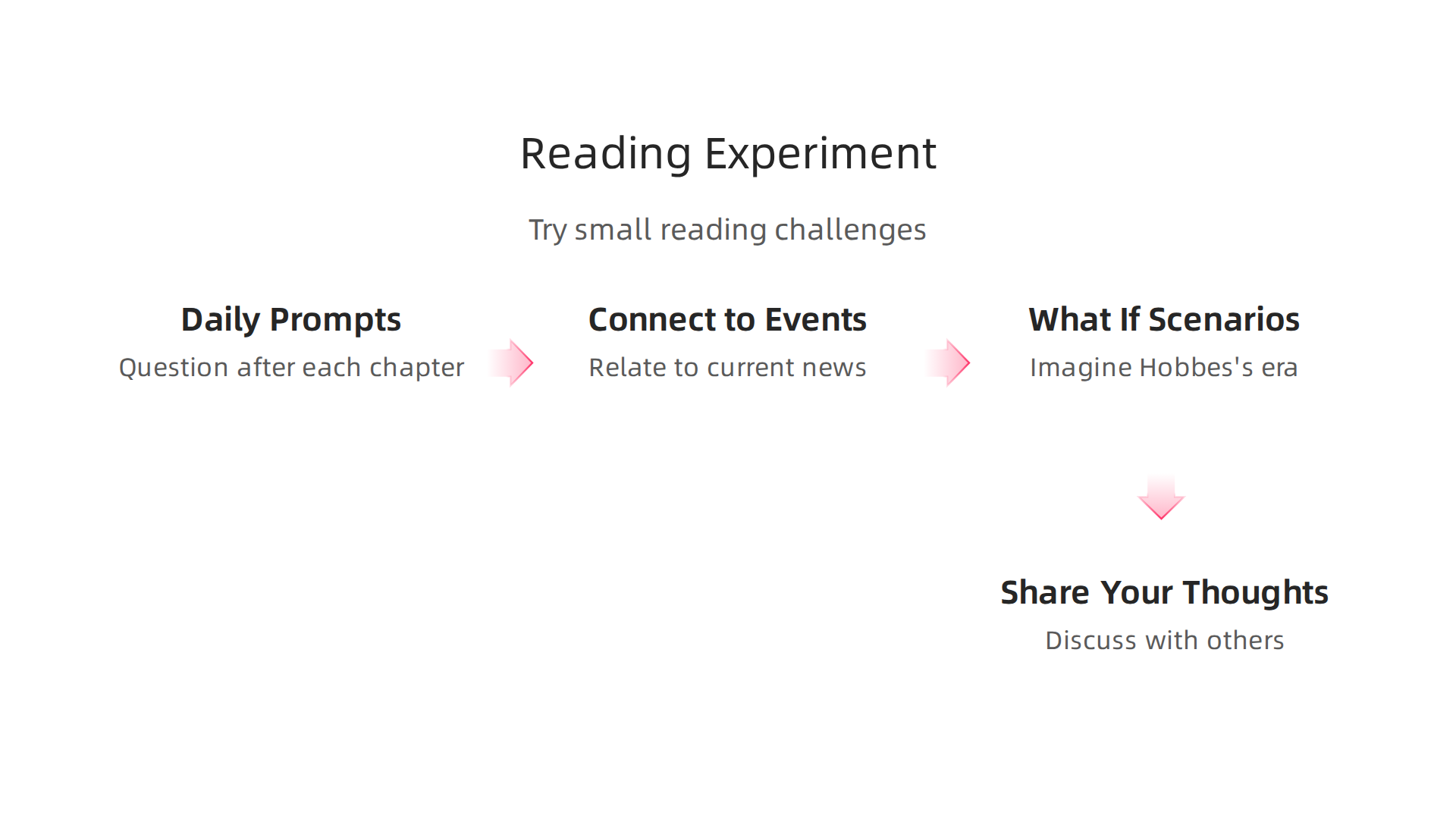
- Daily Prompts: After each chapter, ask yourself a question. For example, "What is one big idea Hobbes talked about today?" or "How does this part of the Leviathan book relate to how people act in my own life?" Writing down your answers in a book journal for focus and memory can help you remember more.
- Connect to Current Events: Hobbes’s ideas about government and human nature are still very important in 2026. Pick a news story and see how Hobbes might explain what’s happening. Does his idea of a powerful "Leviathan" government make sense for today’s world? You can explore more about how these ideas stay relevant in discussions like Leviathan Then And Now.
- "What If" Scenarios: Imagine you are living in Hobbes’s time. How would you feel about his ideas? What if his rules were fully put into place? These "what if" games help you think deeply and use open book thinking to explore different points of view.
- Share Your Thoughts: Talk about what you’re reading with a friend, family member, or even in an online community. Explaining Hobbes’s ideas to someone else can really help you understand them better. This kind of shared journey can make reading feel less lonely and more fun, much like when people discuss the hyperion book or the invisible man book.
These small, active challenges help you move past just reading words. They make you think, question, and apply the text to your own life and the world around you. This engagement is a great way to boost your wellbeing, turning reading into a mindful and rewarding activity. Instead of feeling overwhelmed by a classic, you’re making it your own.
If you’re ready to make reading more active and join others in a fun, insightful journey, we invite you to Join An Experiment.
It’s wonderful to explore a book like Leviathan on your own, but sharing the journey with others can make it even better. Think about book clubs or classroom settings. When you talk about big ideas together, everyone learns more. Group discussions can turn a tough read into a fun group adventure, much like how people connect over the invisible man book or the atonement book.
Here are some ways groups can dive into the Leviathan book:
Discussion Starters for Each Section
Start simple. After reading a part of the leviathan book, use these questions to get everyone talking:
- Main Ideas: "What was the biggest idea Hobbes talked about in these chapters?"
- Today’s World: "Can we see Hobbes’s ideas about power or human nature happening in the news today, in 2026?"
- Feelings Check: "How did reading this part make you feel? Did it surprise you?"
Using a Slaying Leviathan Group Study Guide can give groups ready-made questions and help lead the talk. Remember, good questions make for good talks, moving from simple ideas to deeper thoughts, as experts suggest for How Can I Lead Great Small-Group Discussions?
Role-Playing and Creative Fun
To make the leviathan book really come alive, try these activities:
- "Hobbes’s Council" Role-Play: Imagine your group is Hobbes’s closest advisors. You’ve just heard his ideas. What questions would you ask him? What concerns would you raise? One person could even pretend to be Hobbes and answer!
- "New Social Contract" Activity: Hobbes talks about people giving up some freedom for safety. What would your group’s "social contract" look like in 2026? What rules would you make for everyone, and why?
- Creative Responses: Instead of just talking, make something! Draw a picture of the "Leviathan" government, write a short poem about human nature, or create a quick scene. This helps everyone show what they learned in their own way. This is a great way to engage people with challenging texts, much like a group might approach the blood meridian book or the hyperion book.
Building Community Through Shared Learning
Brands and creators can use these ideas to bring people together. By designing fun, hands-on projects around the Leviathan book or its themes, they can help people feel more connected. Imagine an online challenge where people share their "New Social Contract" ideas, or a contest for the best "Leviathan" artwork. These kinds of activities don’t just teach; they build a sense of belonging and community. They show that reading can be an active, shared experience, far beyond simply scrolling through posts. If you want to create a space for deep talks and group learning, think about how book studies can guide your group to deeper meaning.
Want to stay in the loop about new experiments, community projects, and ways to participate? Join The Newsletter.
Building on the idea of shared learning, creators and brands have a special chance to make the leviathan book even more exciting for everyone. By creating fun projects, they can help people connect with deep ideas and each other. This is about making reading an active journey, not just something you do alone.
Here are some ways creators and brands can build projects around the leviathan book:
Fun Projects for Everyone
- Mini-Competitions: Challenge your community to think creatively about Hobbes’s ideas. You could ask them to:
- Design a "Leviathan" Symbol: What would the government Hobbes describes look like as a logo or drawing?
- Write a Modern "Social Contract": If we started fresh in 2026, what three rules would your group make for everyone to live safely? Explain why.
- Short Story Challenge: Write a quick story (100 words) showing human nature as Hobbes saw it.
- Reading with a Twist:
- Weekly Prompts: Read a few chapters of the leviathan book each week. Then, give a fun prompt, like "If you could ask Hobbes one question about his ideas, what would it be?" or "How do these old ideas still show up in the news today?" You can even share a video that helps explain complex topics, like The Leviathan Book by Thomas Hobbes Decoded for 2026 — Power, Safety & Stability.
- Collaborative Art: As a group reads, have everyone draw or write something inspired by a key idea. Put all the pieces together to create a big, shared artwork about the leviathan book.
- "Hobbes’s Hotline" Q&A: Imagine people could call a hotline and ask "Hobbes" a question about their daily lives. How would his ideas on power or safety help answer their problems? This can be a fun way to use his thinking in new situations.
Make Learning Engaging and Simple
The trick is to make these big, serious ideas from the leviathan book easy and fun to get into. Think about balancing deep thinking with playful activities. It’s like how some colleges help students tackle classic books with hands-on projects, making old texts feel fresh and new for today’s world. For example, some students get hands-on with a 17th-Century Classic to better understand it.
When planning, make sure your projects are:
- Easy to Join: Simple instructions mean more people will participate.
- Creative: Give people different ways to show what they’ve learned, whether through writing, art, or talking.
- Community-Focused: Make it easy for people to share their creations and talk about them with others. This helps build a strong group where everyone feels valued.
By using these ideas, creators and brands can turn a challenging read into an exciting shared adventure. They can build vibrant communities around meaningful content, helping people move from just scrolling to actively creating and connecting. If you’re looking for ways to foster engaging online communities, exploring some of the best websites for creators build community and monetize work in 2026 might give you more ideas.
Ready to turn curiosity into action?
Summary
This article reintroduces Thomas Hobbes’s Leviathan as a living tool for thinking about community, power, and meaning in 2026. It explains the book’s central ideas—the state of nature, the social contract, and the sovereign—and shows why these concepts still shape conversations about safety and authority. The piece surveys four common interpretive lenses (political, philosophical, historical, literary) and points to Leviathan’s influence across films, novels, and popular culture. Most importantly, it turns reading into action by offering concrete ways to engage: prompts, micro-challenges, discussion starters, role-play activities, and creative community projects. Writers, teachers, and creators will find practical formats for group study and ways to design accessible events or contests. By the end, readers should feel prepared to read Leviathan more actively, lead a shared discussion, or build a community project that brings the book’s ideas to life.