
Introduction
You know that feeling when you scroll through another book recommendation list and feel more lost than before? It happens to the best of us. There are just too many titles out there, and most recommendations don’t match the high energy we are actually looking for.
But here is the thing. If you love the running man book by Stephen King (writing as Richard Bachman), you already know what that energy feels like. That book is pure adrenaline. It throws you into a brutal game where a desperate man runs for his life on live television. The 2025 film adaptation starring Glen Powell brought a new wave of attention to the story, although as the 2025 Rolling Stone review notes, the book itself carries a much darker, grittier tone than any movie version has captured.
Books like this one do more than just entertain. They pull you out of your own head. When you are stuck in a cycle of digital fatigue and passive scrolling, a high stakes sci fi or adventure story gives your brain something active to hold onto. It offers escape and mental stimulation all at once. You stop consuming and start living through the characters.

That is exactly why I put together this list. I wanted to curate 9 must read titles for anyone who loves dystopian survival, high pressure games, and defiant characters who refuse to give up. These books carry the same relentless pace and emotional weight that made the original novel so unforgettable.
If you want more handpicked recommendations like this straight to your inbox, Join The Newsletter for ongoing book updates, reading challenges, and ways to participate in a community that actually loves the weird and wonderful stuff.
And if you are hungry for even more fast paced sci fi after this list, check out these sci-fi adventures you need to read for another set of recommendations built for the same kind of reader.
1. The Running Man (Stephen King) – The Original Adrenaline Rush
Let’s start at the source. If you haven’t read Stephen King’s novel yet (published under the pen name Richard Bachman), you are missing the blueprint for the entire dystopian survival genre. This is the book that everything else on this list is chasing.
The story follows Ben Richards, a desperate father living in a collapsed America. His daughter is sick. He has no money. So he signs up for "The Running Man," a brutal game show where contestants run for their lives while hired hunters try to kill them on live television. The longer you survive, the more your family gets paid. Survive 30 days, and you win a billion dollars. But nobody has ever come close.
What makes this book hit so hard even in 2026 is how real it feels. King wrote it in 1982, but he set it in a fictional 2025. And honestly? The world he imagined — a place where poverty crushes hope, the media manipulates everything, and desperate people become entertainment — does not feel that far from our present. That eerie accuracy is why readers still flock to it. On Goodreads, the book holds a strong 4.07 rating from over 175,000 reviews, proving its grip on new readers every year.
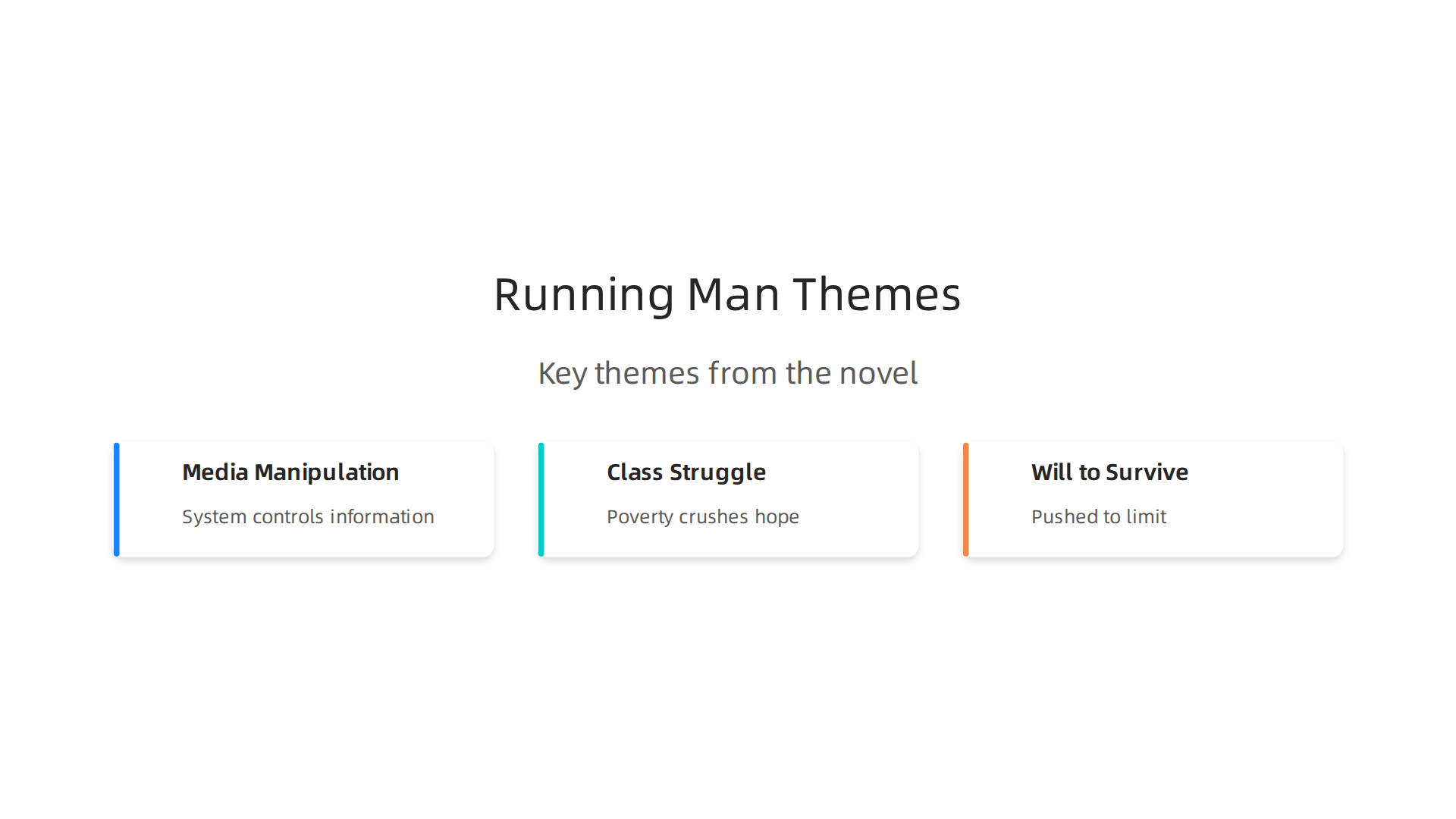
The themes are what stick with you. Media manipulation. Class struggle. The raw will to survive when the system is stacked against you.
Ben Richards is not a superhero. He is a normal guy pushed to his limit. That makes every page feel personal.

If you want a story that grabs you by the collar and does not let go until the final sentence, this is it. And if the active, participatory energy of this book inspires you to do more than just read, consider joining an experiment where engagement turns into real action and results. Join An Experiment to be part of a community that moves beyond passive consumption.
For another sci-fi read with that same relentless pace, check out Project Hail Mary — it is pure problem-solving adrenaline in space.
2. Battle Royale (Koushun Takami) – The Brutal Game of Survival
If The Running Man planted the seed for government-run death games, Battle Royale watered it with blood. Koushun Takami’s 1999 novel (translated to English in 2003) takes the premise of a sanctioned kill-or-be-killed contest and turns it into something even more terrifying. A whole class of junior high school students gets kidnapped, dropped on a deserted island, fitted with explosive collars, and forced to murder each other until only one remains.
Sound familiar? It should. This book is the direct ancestor of The Hunger Games, Squid Game, and pretty much every modern survival drama you love. But Battle Royale hits harder because it does not hold back. The kids are not trained fighters. They are ordinary teenagers. Some freeze. Some go crazy with power. Some try to form alliances that fall apart fast. You feel every loss.
The connection to Ben Richards in The Running Man is clear. Both stories feature a corrupt government using deadly games to control the population and entertain the masses. Both have reluctant heroes who did not sign up for slaughter. In Battle Royale, the main character Shuya Nanahara just wants to protect his crush. He is not a warrior. He is a scared kid.
This book changed pop culture forever. Video games, movies, and even your favorite TV shows borrow from it. If you want to understand where the whole "battle to the death" genre came from, start here. For more stories in the same vein, check out these books like the maze runner for another dose of high-stakes survival.
As one reviewer put it, the book is "a potent allegory of what it means to be young and (barely) alive in a dog-eat-dog world." That line comes from a list of Books Like ‘The Running Man’ by Stephen King, which also calls Battle Royale a must-read. And they are right. In 2026, this story still feels raw and urgent.
3. The Hunger Games (Suzanne Collins) – The Mainstream Dystopian Spectacle
If Battle Royale was the blood-soaked cult classic, The Hunger Games was the story that took the same idea and turned it into a worldwide phenomenon. Suzanne Collins crafted a trilogy that brought the survival game concept to a massive young adult audience. Katniss Everdeen volunteers to take her sister’s place in a televised fight to the death. The rules are simple: 24 kids enter, one leaves. The Collar you saw in Battle Royale? Here, the Capitol controls everything with tracking devices and hovercrafts.
The parallels with Ben Richards in The Running Man are impossible to miss. Both stories show a brutal government using deadly entertainment to crush rebellion. Both feature a reluctant hero who refuses to play by the rules. Katniss turns her survival into a political statement. She uses the cameras against the system, just like Ben used the studio audience. The difference is scale. The Hunger Games built an entire world around Panem, with a history of rebellion and a society so divided it hurts.
This trilogy changed how we talk about dystopian fiction. In 2026, its influence shows up everywhere from streaming series to video games. The themes of inequality, media manipulation, and resistance feel more urgent than ever. If you loved The Running Man, you will find the same ruthless spectacle in Collins’ world. One book list that recommends this series captures how it delivers that same mix of adrenaline and anger. Check out these books for fans of The Running Man for more options.
The lasting impact goes beyond plot. Katniss gave readers a new kind of hero. She is not a trained soldier or a quick thinker. She is a scared girl who makes mistakes and still fights. That realness hooked millions. For another modern classic that blends survival with deep questions about humanity, pick up the Annihilation book.
If you want to keep exploring books that challenge how you see the world, join The Ridiculous newsletter. You will get updates on the best dystopian reads, hidden gems, and the occasional challenge to shake up your reading routine.
4. The Long Walk (Stephen King) – A Bleak, Relentless March
If The Running Man is a sprint fueled by adrenaline, The Long Walk is a slow, agonizing journey into the darkest parts of the human mind. Stephen King wrote this one under his Richard Bachman pen name. In fact, it was the very first novel he ever completed as a college student, though it took years to find a publisher. The premise is terrifyingly simple. One hundred teenage boys start walking north. They cannot stop. If they drop below four miles per hour, they get a warning. Three warnings, and a soldier shoots them dead. The last boy standing wins an unlimited lifetime supply of wealth. Everyone else dies.
If you want to read free books online before committing to a purchase, you can find The Long Walk in many digital library collections. But a warning: this is not light bedtime reading. It is a psychological horror story about exhaustion, the slow breaking of the human spirit, and the strange bonds formed under impossible pressure.

Fans of the running man book will immediately recognize the hopelessness and the cold use of young lives by the government for entertainment. The 2025 film adaptation captured this perfectly. It earned an 88% critic score on Rotten Tomatoes by focusing on the internal struggle rather than just the violence. A comparison by ScreenRant notes that the movie succeeds as a gripping character drama in a way that the more action focused Running Man adaptation does not. You can read more in their breakdown of The Running Man vs. The Long Walk: differing tones, similar themes.
The walkers in the story are allowed to talk to each other. They share dreams, food, and fears, knowing full well they will likely have to watch each other die. It is this cruel intimacy that makes the book so haunting. The Long Walk is the kind of story that changes how you see the world. If you want to find more books that push your thinking, check out this guide on how to find an educated book that will transform your thinking.
The Long Walk asks a simple question: What is left of a person after surviving something completely senseless? The answer is not pretty, but the journey is unforgettable. If you are ready to move from passive reading to taking a step of your own in a creative community, consider joining a positive experiment. Join An Experiment and turn your curiosity into action.
5. Ready Player One (Ernest Cline) – A Quest for the Ultimate Prize
Ready Player One flips the script. Instead of running through abandoned cities, your battlefield is the OASIS, a massive virtual reality world where anything is possible. If you love the high stakes of the running man book, you will feel right at home here. The hero, Wade Watts, is poor, alone, and fighting a corrupt corporation called IOI. Sound familiar? Like Ben Richards in The Running Man, Wade has to outsmart a powerful enemy using nothing but his wits and determination.
The prize in Ready Player One is a hidden Easter egg left by the game’s creator. The first person to find it inherits his fortune and control of the OASIS. This treasure hunt is packed with 80s pop culture puzzles, from old arcade games to classic movies. Wade must survive deadly challenges inside the game while IOI throws real world threats at him. The 2025 film adaptation of The Running Man earned praise for its action and performances, with critics highlighting its themes of class divide and corporate greed as noted by IMDb reviewers. Ready Player One offers a similar thrill but with a hopeful twist: the hero fights not just to survive, but to save a digital world where anyone can be anyone.
The book appeals to anyone who loves fast paced adventure. It is immersive, creative, and full of surprises. If you want to dive deeper into similar stories, check out this list of books like The Maze Runner, another great choice for fans of high stakes sci-fi action.
Whether you are already a fan of the running man book or just discovering these worlds, Ready Player One offers a unique escape. And if you want to keep exploring stories and communities that challenge you, Join The Newsletter for more recommendations and updates delivered straight to your inbox.
6. The Maze Runner (James Dashner) – A Deadly Labyrinth with No Memory
Imagine waking up in a dark elevator with no memory of who you are. The only thing you know is your name. That is how Thomas starts his journey in The Maze Runner.
He arrives in the Glade, a small patch of grass surrounded by towering stone walls. Beyond those walls lies a maze that changes every night. If you loved the survival puzzles in the running man book, this series will grab you from page one.
The teenagers in the Glade have built a simple life. They farm, cook, and send their strongest runners into the maze each day to map it. But the maze is alive with danger. Grievers, half-machine half-monster creatures, patrol the corridors at night. Anyone caught outside after the walls close does not come back. The setup feels familiar: young people forced into a deadly game controlled by unknown adults who watch from above.
James Dashner builds suspense by giving you almost no information at the start. You learn alongside Thomas. Each clue raises more questions. Who built the maze? Why are these kids here? The slow reveal creates a tension that mirrors the atmosphere in Stephen King’s original novel. Many readers who enjoyed The Running Man also love The Maze Runner for this exact reason.
The book explores control, rebellion, and the price of hope. The characters realize their world is a laboratory experiment. They are subjects in a study designed to measure how people react under pressure. Sound familiar? Ben Richards faces the same manipulation. The difference is that Thomas and his friends must work together. There is no solo escape. Teamwork is the only way out.
The physical trials keep the pages turning. Every maze run is dangerous. Every Griever encounter could be the last. Dashner uses restricted information to make you feel as trapped as the characters. By limiting what the reader knows, he turns every chapter into a puzzle. If you like plotting your own path through dangerous worlds, check out these 10 story elements every novel needs to see how authors build suspense.
The Glade teaches a powerful lesson: even when you lose your memories, you still have your instincts. You can still fight. You can still choose to help others. That is a message worth carrying into real life. If this section inspired you to take action and build something with a community, Join An Experiment and turn your curiosity into something real.
7. 1984 (George Orwell) – The Dystopian Blueprint
The Maze Runner traps its characters inside a physical maze. 1984 traps its characters inside a system that controls what they think. These two books feel like cousins in the dystopian family, but they attack freedom from different angles.
George Orwell’s classic presents a world where the government, called the Party, watches everyone all the time. Telescreens in every room broadcast propaganda and monitor your every word. The Party uses psychological manipulation in dystopian societies to control not just what people do, but what they believe. If you thought the Gameskeepers in the running man book were controlling, wait until you meet Big Brother.
Winston Smith, the main character, rebels in a quiet way. He writes in a secret diary. He falls in love. He tries to think his own thoughts. Ben Richards in The Running Man fights with his body through physical trials. Winston fights with his mind against language control and rewritten history. Both men discover that the system will crush anyone who steps out of line.
The real power of 1984 is how it shows the slow destruction of a person. The Party does not just want obedience. It wants love. It wants you to believe the lies until you cannot tell truth from fiction. The great sci-fi books explained for 1984 video breaks down how Orwell’s vision predicts our modern world of data tracking and media spin.
Reading 1984 after The Running Man deepens your understanding of what dystopian stories are really about. They are not just warnings about future technology. They are questions about how much control a person can take before they break. If you loved spotting the system in the the running man book, you will recognize the same pattern here, just painted in darker shades.
The scariest part? Orwell wrote this in 1949. He predicted surveillance states decades before they existed. That gives you a lot to think about.
The themes of control and rebellion in this section connect directly to the power of storytelling. If you enjoyed exploring these ideas, books like The Maze Runner will keep the momentum going with more survival and resistance tales.
If these dystopian worlds made you curious about building real connections and creating something meaningful, Join The Newsletter and become part of a community that turns curiosity into action.
8. Wool (Hugh Howey) – Life in a Silo After Collapse
If 1984 traps you inside a system that rewrites your thoughts, Wool traps you inside a silo that rewrites your reality. Hugh Howey’s novel takes place in a post-apocalyptic world where the last survivors live deep underground in a massive silo. The air outside is deadly. Nobody survives for long. But here is the twist: nobody really knows if that is true.
The silo works a lot like the game show arena in the running man book. Both places lock people inside a controlled environment with invisible rules. In The Running Man, the rules come from the Gameskeepers. In Wool, the rules come from the silo’s leaders who control history and punish curiosity.
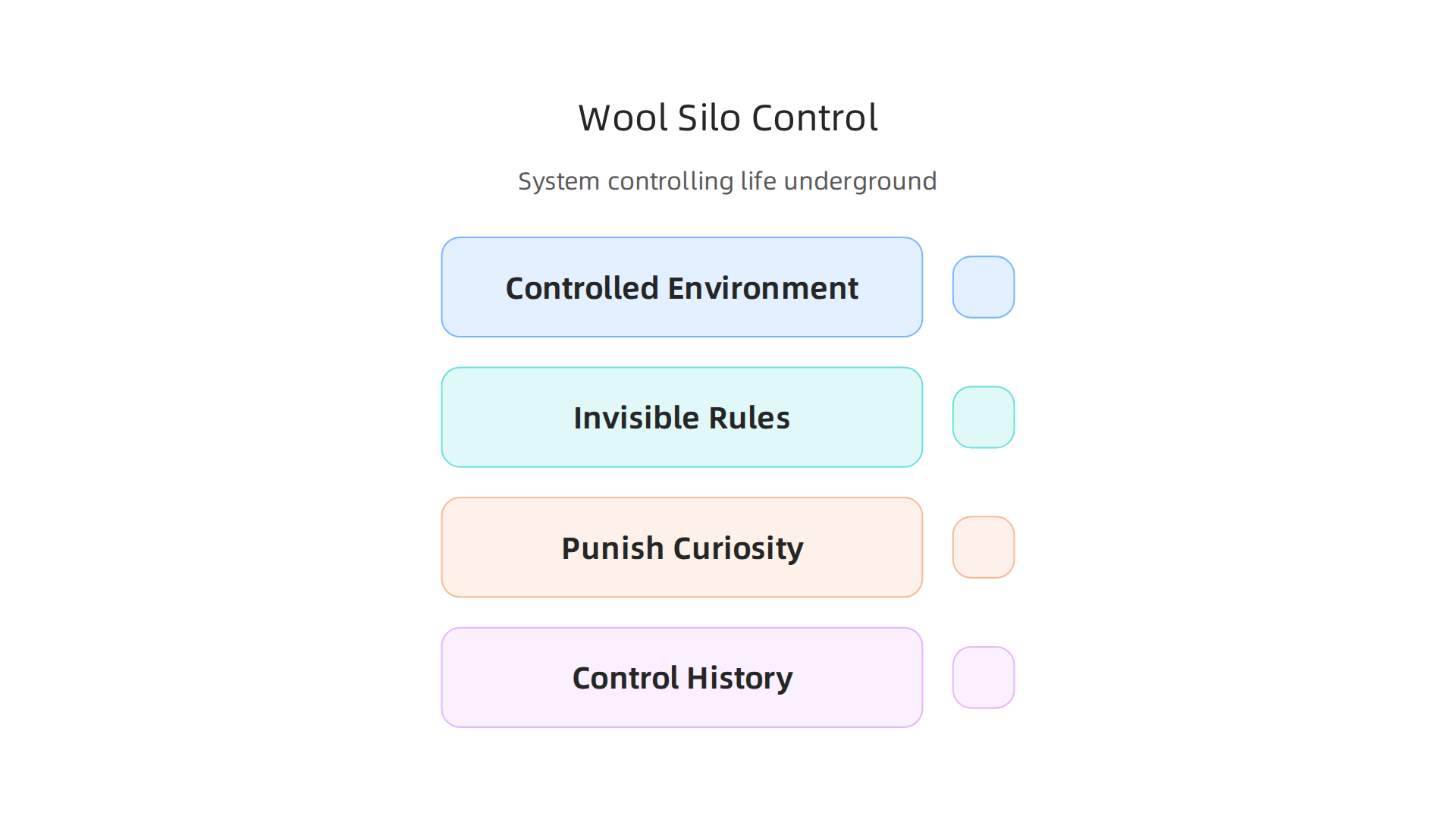
Ask too many questions, and they send you outside to clean the sensors. Nobody comes back from cleaning.
The slow-burn tension is what makes Wool so effective. Ben Richards fights for survival in fast, public challenges. Juliette, the main character in Wool, fights through quiet investigation and forbidden conversations. Her rebellion builds like pressure in a sealed tank. Just as George Orwell showed how a system can break a person’s mind by controlling information, Howey shows the same pattern in a different cage. You can explore how Orwell’s vision still matters today through the George Orwell and the Future analysis. For another survival story where the landscape itself holds secrets, the Annihilation book offers a similar kind of creeping dread.
The mystery of what lies outside the silo keeps you turning pages. And when the rebellion finally comes, it feels earned because you watch the small moments that led to it.
If these stories of breaking free from invisible cages make you want to take action in your own life, Join An Experiment and turn that curiosity into something real.
9. The Test (Sylvain Neuvel) – A High-Stakes Exam of Humanity
While Wool traps you underground, The Test traps you in a room with a test that decides your future. Sylvain Neuvel’s short novella takes a simple citizenship exam and turns it into a deadly moral dilemma. The story follows Idir, an Iranian man who wants to become a British citizen. The test seems straightforward. Then the questions shift from history and language to impossible choices. Pass the test, and you get a new life. Fail, and you lose everything.

The set-up echoes the high-stakes game premise of the running man book. In Stephen King’s story, Ben Richards competes in a murderous game show for a chance to survive one more day. In The Test, Idir faces a similar kind of pressure. The examiners watch his every move. They push him to make sacrifices that test his values, his loyalty, and his humanity. Both stories force ordinary people into impossible situations where the rules are rigged from the start.
But The Test adds a layer that feels painfully real. The citizenship exam becomes a stand-in for the barriers immigrants face every day. It asks hard questions about what we are willing to do to belong. And it does all of this in under two hours of reading time. For readers who want a quick adrenaline hit that also makes you think, this novella delivers.
Dystopian stories like this one let us face our fears about the future in a safe space. According to the article How to Find Hope in Dystopian Fiction, these dark tales help us imagine what could go wrong so we can work toward better outcomes. The Test is a perfect example. It is short, brutal, and unforgettable.
If you love discovering books that challenge your thinking, we can help you find more. Join The Newsletter and get updates on new reads, experiments, and ways to stay connected with a community that values curiosity.
Summary
This article collects nine high‑energy dystopian and survival novels for readers who loved Stephen King’s The Running Man, explaining why each title matches that book’s relentless pace and social bite. It profiles classics and modern hits — from Battle Royale and The Hunger Games to Ready Player One, The Long Walk, Wool, and short, intense works like The Test — and highlights what makes each one resonate: media manipulation, desperate stakes, moral choices, and systemic control. The piece compares tones and adaptations, points you toward quick reads as well as deeper novels, and offers practical reading paths for newcomers. You’ll learn which books deliver adrenaline, which probe psychological or political themes, and where to start depending on how much time or intensity you want. The guide also suggests ways to keep reading actively, including newsletters and community experiments, so you can move from passive consumption to more engaged reading.