
Why a focused deep dive into The Color Purple matters now
Alice Walker’s famous novel, The Color Purple, is more than just a story. It is a powerful book that keeps on touching hearts and minds even in 2026. This special book helps us understand important ideas about strength, hope, and finding your voice. It explores big themes like female empowerment and how people struggle with unfairness, especially for Black women in society. Many scholars still study how The Color Purple subverts traditional gender roles and shows what it means to be truly free.
This guide will take you on a journey deep into the color purple book. We will look closely at its main ideas, the amazing characters, and the history around the time the story takes place. We will also share easy and helpful ways to read and even teach the book, whether you are picking it up for the first time or revisiting it. Our goal is to make these big topics simple to understand.
Reading books like this can help you slow down and truly connect with a story, much like an open book thinking approach.

You might be looking for ways to unwind book ideas in your mind, or maybe you are wondering about complex stories, unlike, say, "the book with no pictures." Here, we promise to help you find personal meaning and feel like you are part of a community. You will discover creative ways to connect with the text, maybe even inspiring you to join book clubs offer true connection with other readers.

This guide is for anyone who wants to learn more, feel inspired, and discover the lasting lessons in this masterpiece.
If you want to stay in the loop about new insights, creative exercises, and ways to connect with a community that celebrates reading and personal growth, consider joining our newsletter.
Alice Walker, the amazing writer behind the color purple book, is key to understanding its deep power.

She made history when she published The Color Purple in 1982. It was so special that she won the Pulitzer Prize in 1983, becoming the very first African American woman to get that award for fiction. This made her a hugely important voice in literature.
This powerful story takes us back in time, starting around 1909 and going up to 1947.

It shows us what life was like for Black women in the American South during those years. This was a time when many people faced great hardship. Women, especially Black women, often struggled with unfair treatment and had to fight for their voices to be heard. Understanding these challenges helps us see how brave the characters in the book truly are.
When the color purple book first came out, it joined important talks about the lives and rights of Black women. It brought up tough subjects like abuse and the many problems women faced. Because of this, the book sometimes caused big debates, especially about how it showed Black men and the graphic details it included. Knowing this helps us understand that the book was not just a story, but a mirror reflecting hard truths and sparking necessary conversations.
Thinking about this history helps us understand the characters’ journeys and choices much better. It helps us see why the book’s messages about identity, strength, and finding your place are still so meaningful today in 2026. When you read, knowing the time it comes from can help you understand 10 story elements every novel and short story needs and how they are shaped by real-world events. It lets us truly unwind book ideas and connect with its enduring lessons.
Major Themes & Symbols: A structured walkthrough
The power of the color purple book comes from its deep messages and special symbols.
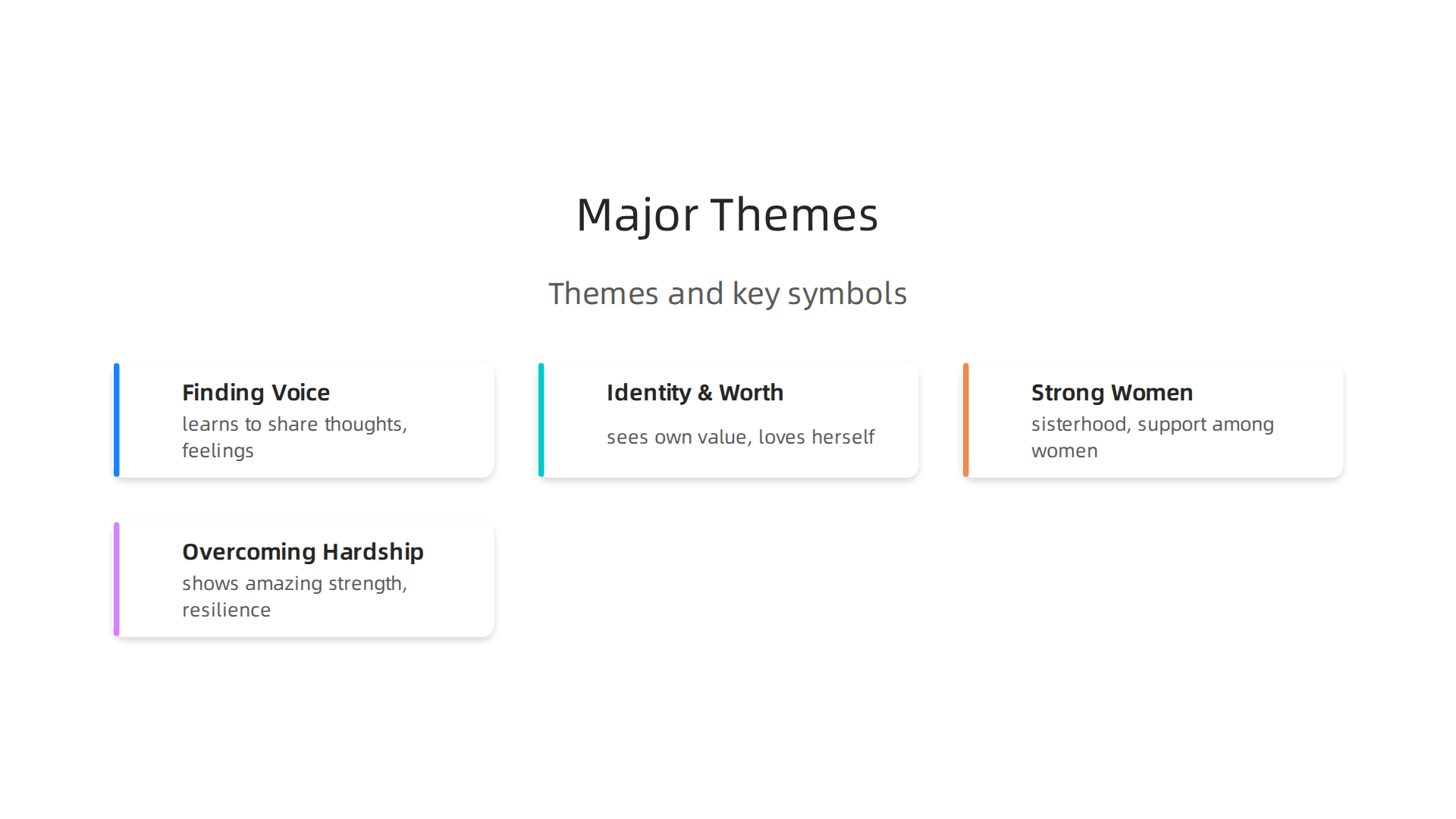
When you read this story, you’ll notice big ideas that come up again and again. These are called themes. You’ll also see things that stand for bigger meanings, and these are called symbols.
Big Ideas in The Color Purple
- Finding Your Voice: Celie, the main character, starts out very quiet. She doesn’t feel she has a right to speak up. But as the story goes on, she learns to share her thoughts and feelings. She finds her own strong voice. This idea of speaking your truth is very important in the book. It shows how Black women in the past often struggled to be heard, and how important it was for them to find their power. You can learn more about how Alice Walker shows Black female empowerment through her characters and relationships in her book The Color Purple Research Papers.

- Identity and Self-Worth: For a long time, Celie doesn’t know who she really is or what she’s worth. Other people treat her badly, making her feel small. But through her journeys and new friendships, she starts to see her own value. She learns to love herself. This theme of finding your true self, especially when facing hardship, is a core part of the story. Alice Walker explores how identity is shaped by race and gender within the traditions of Black writing Lost and Found Identity in Alice Walker’s The Color Purple.
- Strong Women and Community: The book shows how important other women are to Celie’s growth. Shug Avery and Sofia teach her to be strong and stand up for herself. They create a loving community that helps Celie heal and grow.

This idea of sisterhood and support among women is a bright light in the story, helping them overcome unfair treatment and difficulties.
- Overcoming Hardship: The characters face many tough times, from abuse to racism. But they keep going. They show amazing strength, or resilience. This theme reminds us that even in the darkest moments, people can find the power to survive and even thrive. It’s an important part of how the book helps us to unwind book ideas about struggle and victory.
Special Symbols
- The Color Purple: The color itself is a big symbol. It shows up in small ways, like in flowers. It stands for beauty, value, and God’s love for all things. Celie learns that she should notice and appreciate the small, beautiful things in life.
- Letters: Celie writes letters to God and later to her sister Nettie. These letters are her way of talking when she can’t speak out loud. They show her hidden thoughts and feelings. As she writes more, she grows stronger. The letters are a symbol of her voice and her journey to freedom.
- Pants: When Celie starts making pants for herself and others, it’s more than just sewing. It’s a symbol of her new independence. She’s taking control of her life and making choices for herself.
Using Themes for Discussion
Understanding these themes and symbols can help you talk about the book even more. You can ask questions like:
- How does Celie’s voice change throughout the book?
- What does the color purple mean to different characters?
- How do the women in the story help each other?
Thinking about these things can also inspire you to create your own stories or even write a book review. It helps you to think deeply, which we sometimes call open book thinking. And if you’re interested in connecting with others who love books, joining a book club offers true connection.
The color purple book is truly brought to life by its amazing characters. When you really look closely at these characters, you can see how their personal journeys help us understand the bigger ideas of the story. It also helps us feel for them and connect with what they go through.
Celie: Finding Her Voice and Herself
Celie is the main character, and her story is at the heart of the book. She starts as a very young Black woman in the early 1900s in Georgia. From the beginning, she faces a lot of pain and hardship. She is poor and doesn’t get much education, and people treat her very badly. In fact, her stepfather abuses her and takes her children away, and then she is married to an abusive man named Mister. For a long time, Celie stays quiet. She writes letters to God because she feels like she can’t speak out loud. These letters are her secret way of sharing her true feelings.
But Celie’s story is all about how she changes. She slowly begins to stand up for herself and believe in her own worth. This journey from being quiet and feeling small to becoming strong and independent is called her character arc. It’s a powerful part of the book, showing how she overcomes a self-concept forced on her by others to assert her worth and control her own life. You can learn more about how she changes by reading a full The Color Purple Character Analysis.

Her strength and growth make her an unforgettable character in the color purple book.
Shug Avery and Sofia: Strong Women Who Lead the Way
Celie doesn’t go on her journey alone. Other women play a huge part in helping her grow.
- Shug Avery: She is a blues singer who is confident and free-spirited. Shug is important because she shows Celie that there’s more to life than suffering. She helps Celie see her own beauty and teaches her about self-love and God in a new way. Shug’s bold spirit gives Celie courage and helps her open up. Shug is described as an exotic singer who captivates both Mister and Celie, known for her famous nightclub act as the "Queen Bee" The Color Purple Book Notes.
- Sofia: Sofia is a strong, feisty woman who isn’t afraid to speak her mind. She stands up to men and takes no nonsense. While she faces her own tough times, her spirit inspires Celie. Sofia teaches Celie the importance of fighting for what you believe in and having inner strength.
These women, and others, create a community that supports Celie. They help her heal from her past hurts and find her power. Their stories help us unwind book ideas about friendship and resilience.
Mister (Albert): From Abuser to Friend
Even some of the difficult characters, like Mister, show change. Mister starts as a very cruel husband to Celie. But as the story goes on, especially with Shug’s help, he slowly begins to see his mistakes. He starts to treat people better and even becomes a friend to Celie later in life. This shows that even people who do bad things can sometimes change for the better. This change in characters like Mister and Sofia’s journey from combative to candid, shows how the relationships in the book evolve A New Story for a Familiar Reader.
By looking closely at what each character does, says, and how they change, we can really appreciate the deep messages of the color purple book. Understanding these different parts helps you understand all the 10 story elements every novel and short story needs.
By looking closely at what each character does, says, and how they change, we can really appreciate the deep messages of the color purple book. But this powerful story has also sparked a lot of talk and even some disagreements over the years.
Reception, Controversies & Cultural Impact
When Alice Walker’s the color purple book first came out in 1982, it quickly won big awards. It earned the Pulitzer Prize for fiction in 1983, making Walker the first African American woman to win that important award for a novel Alice Walker’s Pulitzer Prize. This showed how much people loved the book’s story and its message.
However, the color purple book also caused a lot of debate. Many people found its subject matter to be very strong. The book talks about difficult things like incest, rape, wife-beating, and hints of lesbianism The Color Purple subject matter and censorship. Some people also debated how the book showed Black people in the U.S. and questioned its view of Black culture controversy and positive reception.
One of the biggest issues has been the book being banned or challenged in schools. Even in 2026, The Color Purple is often challenged because of its sexual content and explicit language book challenges due to sexual explicitness. For example, it has been removed from shelves in Florida public schools, along with other well-known titles books removed from Florida schools. Teachers sometimes face challenges when they want to use it in classes, even for higher-level studies like A-level specifications in literature, due to complaints about "obscenity" and language challenged for language and sexuality. It remains one of the most frequently banned books in classrooms because of its graphic content frequently banned for graphic content.
Despite these debates, the color purple book has had a huge cultural impact. Its powerful story has been adapted into a famous movie and a popular Broadway musical, bringing Celie’s journey to even more people. It continues to be an important work that helps us unwind book ideas about strength, survival, and finding your voice. People often gather in book clubs offer true connection to discuss its deep meanings and connect over its messages.
Running a Book-Club or Classroom Unit: Practical guide
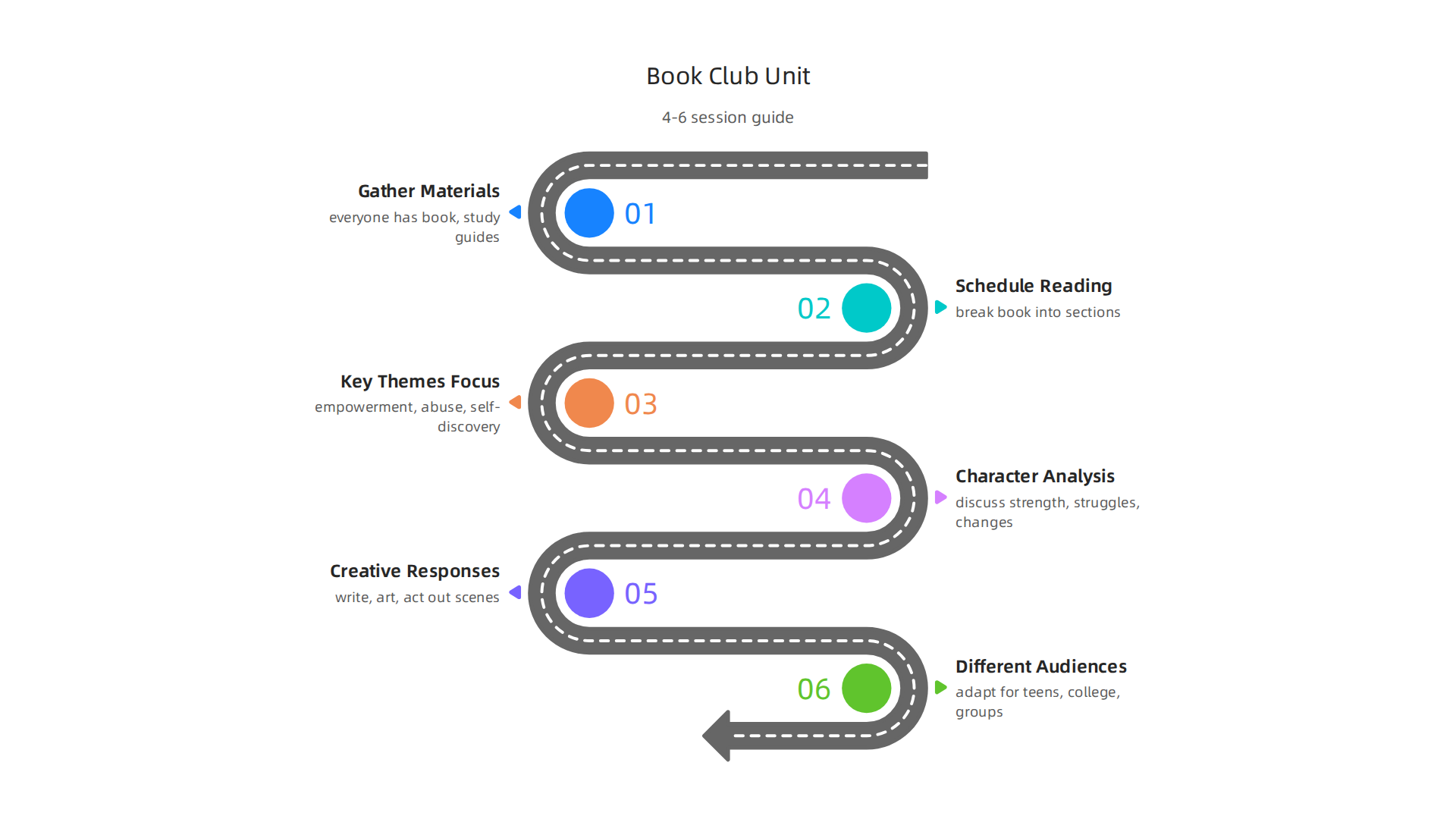
Since the color purple book continues to be a hot topic for discussion groups and classes, let’s talk about how to set up a great unit or book club. Teaching or discussing this book means careful planning, especially because of its strong themes. Here’s a simple guide to running a 4-6 session unit.
Setting Up Your Sessions
First, you need to get ready. Start by clearly knowing what you want your group to learn or discuss. Is it about strong women, tough life challenges, or finding your voice? Yale’s program for teachers offers great ideas for placing literature in a wider cultural context Placing Literature in a Cultural Studies Framework: The Color ….
Preparation and Reading (Sessions 1-2):
- Gather Materials: Make sure everyone has a copy of the color purple book. You might also want to get study guides to help with understanding. There are even resources like Spark Notes The Color Purple that can offer a summary and analysis.
- Schedule: Break the book into manageable reading sections. For example, assign a few chapters per week. Be open about the sensitive topics, and prepare ways to support readers.
- Introduction: Start with a warm-up activity. Ask members or students to share what they already know or feel about stories of struggle and hope.
Deep Diving into Discussion
The heart of any book unit is the discussion.

Facilitated Discussion (Sessions 3-4):
- Key Themes: Focus on central ideas like empowerment, abuse, racism, love, and self-discovery. Talk about Celie’s journey and how she changes through the story.
- Character Analysis: Discuss characters like Celie, Shug Avery, and Sofia. How do they show strength or struggle? How do their relationships change the story?
- Open Questions: Use questions that make people think and share different ideas. For example, "How does Celie’s writing help her?" or "What does freedom mean to different characters?" This approach helps foster open book thinking and lets everyone share their views.
Activities and Adjustments
To make the learning richer, add some creative activities.
Activities and Adaptations (Sessions 5-6):
- Creative Responses: Encourage creative projects like writing a letter from a character’s viewpoint, creating artwork, or even acting out a short scene. Some teachers use film snippets for analysis, focusing on themes like self-esteem Unit 07.01.06 | Yale National Initiative®.
- Different Audiences:
- Teens/High School: Focus on character development and the impact of difficult situations, offering more guidance on sensitive topics.
- College Students: Dive deeper into literary analysis, historical context, and how the book relates to other works.
- Community Groups: Emphasize personal connection to themes and shared experiences, perhaps inviting members to reflect on their own lives.
- Accessibility Tips: Ensure all materials are easy to read. Provide audio versions if available. Create a safe space where everyone feels comfortable sharing. You can find more resources for teaching challenging texts.
Running a unit on the color purple book offers a chance for deep learning and meaningful conversations. It helps people understand the power of stories and connect with each other. If you’re looking for more ways to turn your learning into action, why not Join An Experiment? We love seeing people get involved and share their discoveries.
After discussing the color purple book and its powerful themes, the next step is to encourage readers to go beyond just talking about it. This means moving from simply reading to actively creating. Creative exercises and prompts can help turn understanding into personal expression, making the learning even deeper and more fun.
Writing Prompts to Spark Imagination
Writing is a great way to explore the feelings and lessons from the color purple book. It allows you to step into the story in a new way.
- Character Letters: Pick two characters who do not often speak to each other in the book, like Celie and Harpo. Write a letter from one to the other, sharing thoughts or feelings they might have held back. Or, imagine a letter Celie writes to Nettie years after the book ends, reflecting on her life and growth. Writing can be a way to find healing and express emotions, much like how literature itself can be a healing balm.
- Diary Entries: Choose a character and write a diary entry from their point of view for a day not shown in the book. What are their everyday worries, small joys, or secret hopes?
- Alternate Scenes: Think about a moment in the color purple book where a character made a big choice. What if they chose differently? Write a short scene showing how the story might change. This can be a playful way to practice your writing skills and build confidence, even if you are just starting out, as with a my first learn to write workbook.
Bringing Stories to Life Through Performance
Acting out parts of the story or creating new scenes can help everyone better understand the characters’ struggles and triumphs.
- Role-Playing: Choose a short scene from the color purple book and act it out. You can even switch roles to see how different characters might feel. This helps build empathy.
- Monologues: Write and perform a short speech from a character’s viewpoint, sharing their inner thoughts that the book might not fully reveal. Imagine Sofia sharing her thoughts about resilience, or Shug talking about what freedom means to her.
- Short Skits: Adapt a small part of the story into a short skit. Focus on a key moment of change or a powerful conversation. This is especially good for small groups.
Playful Arts and Crafts
You don’t have to be an artist to enjoy creative expression inspired by the color purple book. These activities are about fun and trying new things, not about making perfect art.
- Visual Storytelling: Draw a picture, create a collage, or paint a scene that captures a feeling or idea from the book. What colors come to mind when you think of Celie’s journey?
- Character Playlists: Create a music playlist for a character. What songs would Celie listen to? What songs would represent Sofia’s strength? Each song can tell a part of their story.
- Symbolic Objects: Make or find an object that represents a key idea or character in the book, like a purple item for hope or a sewing needle for Celie’s quiet strength.
Make It Your Own: Individual or Group Fun
These creative exercises can be done alone for quiet reflection or with friends in a small group. Doing them with others can reduce feelings of loneliness and encourage you to take playful risks without fear. It’s about sharing discoveries and connecting over the themes of the color purple book, rather than striving for perfection. The goal is to make and share, turning the insights from your reading into active, joyful participation.
After diving into creative ways to connect with the color purple book, it’s helpful to also think about how its powerful story lives on in different forms. We can also learn how to talk about its tough topics with care, especially if we are teachers or leaders.
Adaptations, Teaching Sensitivities & Further Reading
The color purple book is such a strong story that it has been made into other things, like movies and stage musicals. Each new version shows the story in its own way. For example, the 2023 movie version included parts from the 1985 film, showing how much that earlier movie became a classic in its own right, just like the book itself The Color Purple: Book vs. Movie.
No matter the version, the main character, Celie, always goes on a long journey of change. She starts out young and facing many hard times, but she slowly learns to speak up for herself and find her own worth. This big change is a key part of the story, as noted by how Celie’s character arc develops from hiding abuse to taking control of her life.
Talking About Hard Topics
When you talk about the color purple book with others, especially in a classroom or group, it’s important to be thoughtful. The book deals with very difficult subjects like abuse and racism. These parts can be upsetting for some readers.
- Be Mindful of Trigger Content: Always let people know upfront that the book contains sensitive topics. This helps everyone feel safer and prepared.
- Frame Discussions Respectfully: Guide conversations so they focus on the characters’ strength, how they grow, and the important messages of hope and overcoming challenges. We can learn a lot from how characters like Celie find their voice, as her story shows a journey of enduring female oppression and emerging with power.
- Encourage Openness, Not Pressure: Create a space where people feel comfortable sharing their thoughts without being forced. It’s okay if someone doesn’t want to talk about every detail.
What to Read Next
If the color purple book has touched you deeply and you want to explore more stories that make you think, there are many paths you can take. Looking for other books that deal with strong female characters or stories of overcoming hardship can be a great way to continue your learning journey. For those interested in understanding texts better, learning to use open book thinking can make your reading experience much richer.
You might look for authors who write about similar themes of resilience and community. Joining a book club can also be a wonderful way to discover new reads and talk about them with others. This helps build real connections and keep the lessons from powerful books alive.
Summary
This guide offers a focused, accessible deep dive into Alice Walker’s The Color Purple, explaining why the novel still matters in 2026 and how readers can engage with it thoughtfully. It covers the book’s historical background, major themes like finding voice, identity, sisterhood, and resilience, plus key symbols such as the color purple, letters, and pants. You’ll get clear character analyses for Celie, Shug, Sofia, and Mister to understand how their arcs reveal the novel’s messages, and a balanced look at the book’s controversies and cultural impact. The guide also includes practical support for teaching or leading a book club—session plans, discussion questions, and safety tips for sensitive topics—along with creative exercises (letters, monologues, playlists) to deepen personal response. By the end, you’ll know how to lead respectful discussions, design a 4–6 session unit, and use creative prompts to turn reading into active learning and community connection.