
Why Sapiens still matters — and how this guide helps you turn reading into a journey
In 2026, many of us spend a lot of time looking at screens. We scroll through endless feeds, sometimes feeling a bit lost or alone. We crave experiences that truly mean something, moments that let us connect with others and grow, instead of just passively watching. Reading a great book can be one of those experiences, but sometimes even good books can feel like a lonely task.

That’s where a special book like Sapiens: A Brief History of Humankind comes in. This important book by Yuval Noah Harari helps us understand ourselves and our past better. It explores how humans went from simple animals to the rulers of Earth through big changes like the Cognitive Revolution, the Agricultural Revolution, and the Scientific Revolution. The book is organized into four main parts, making it easier to follow this grand story Review of “Sapiens” by Yuval Noah Harari (1/5).
But reading the Sapiens book doesn’t have to be a solo adventure. Imagine if you could turn your reading into a shared journey, where you learn and grow with others. This guide is here to help you do just that. We’ll give you simple ideas and ways to read the Sapiens book more deeply. You’ll find practical reading strategies and fun community activities, like how book clubs offer true connection far beyond endless scrolling. We want to help you move past just reading words on a page. Instead, you can turn this powerful book into a chance for discovery and connection. It’s like a mental [book harvest], gathering new ideas and insights together.

We also offer creator-forward ideas. This means you can use your new understanding to create things, share your thoughts, and even help others on their reading journey. Think of it as building collective momentum, where everyone helps each other learn and enjoy. If you like the idea of turning your reading into a lively, shared experience, you’re in the right place.
We believe that sharing these kinds of journeys can make reading even more rewarding. Want to stay connected and get updates on new book experiences, community challenges, and creator opportunities? Join The Newsletter.
The Sapiens book is more than just a historical account. It’s an invitation to think deeply about what it means to be human, and that’s why it’s so good at starting conversations and sparking new ideas. Yuval Noah Harari takes us on a journey through vast stretches of time, looking at our past, present, and even guessing at our future.
Big Ideas That Get You Thinking
At its heart, the Sapiens book explores several big ideas that challenge how we see ourselves. It talks about how our species, Homo sapiens, rose to power not because we were the strongest, but because we could create and believe in shared stories and myths. This unique ability allowed us to work together in huge numbers, far more than any other animal Sapiens by Yuval Noah Harari: Summary & Notes.
The book highlights three major changes, or "revolutions," that shaped our journey:
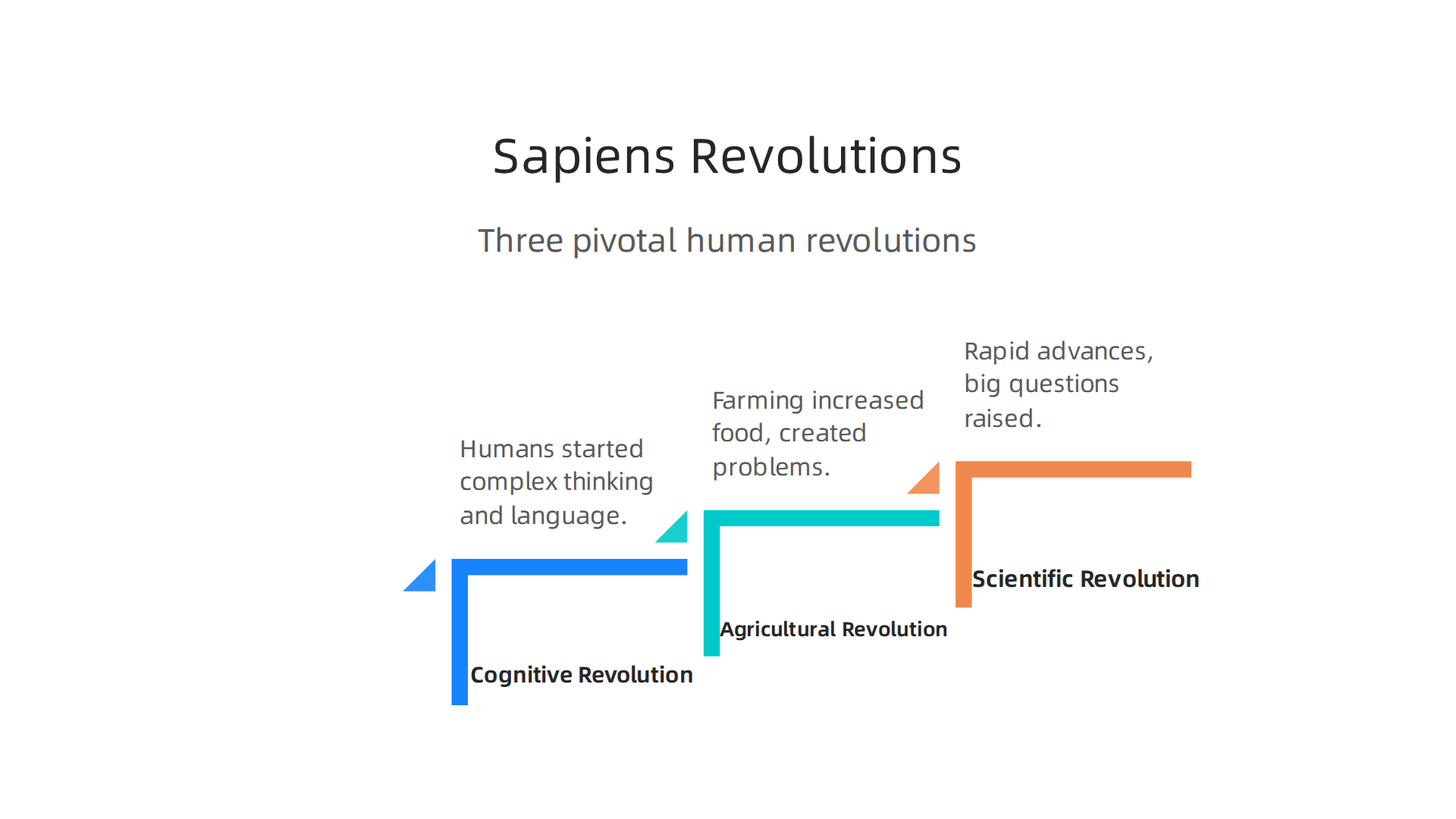
- The Cognitive Revolution: This is when humans started thinking and talking in new, complex ways, about 70,000 years ago. It gave us language and the power to imagine things that aren’t real, like gods, nations, or money. These shared fictions allowed us to cooperate and build large societies.
- The Agricultural Revolution: Around 10,000 years ago, we began farming. While it led to more food and bigger populations, Harari argues it also brought new problems, like harder work and less varied diets.
- The Scientific Revolution: Starting about 500 years ago, this revolution changed everything, leading to rapid advances in technology, medicine, and our understanding of the world. But it also raises big questions about our future.
These themes aren’t just dry history lessons. They are powerful ideas that make you stop and consider. They make you wonder about the choices we made as a species and the path we are on now. This deep thinking is what makes the Sapiens book perfect for lively discussions, whether you’re pondering the effects of the Cognitive Revolution on modern society or debating the "progress" brought by the Agricultural Revolution.
How the Book’s Structure Helps You Learn and Share
The Sapiens book is split into four main parts, each covering one of these big historical periods. Within these parts, there are 20 chapters that break down the complex ideas into smaller, easier-to-understand sections Sapiens | Summary, Key Ideas & Chapter Breakdown. For example, "An Animal of No Significance" is the first chapter, setting the stage for our human story by looking at the origins of our species and the role of fire in our early evolution An Animal of No Significance | Chapter 1 – Sapiens by Yuval ….
This clear structure is a real benefit for readers and groups. Each chapter can be like a "micro-lesson" or a self-contained idea. You can read just one chapter, discuss it with friends, and then move on. This makes it simple to use the Sapiens book for:
- Conversation Prompts: Each chapter brings up new questions, making it easy to start conversations. Just imagine discussing "History’s Biggest Fraud," the chapter on the Agricultural Revolution, with your book club.
- Creative Responses: The powerful ideas in the Sapiens book can inspire you to create. You might write your own thoughts, draw pictures, or even share your insights with others. Learning how to write a good book review can help you express these thoughts clearly and creatively. You might even find that this kind of active engagement leads to an exciting [book harvest] of new understandings.
Thinking about books in this way, where each chapter offers a fresh point of view, is a great example of open book thinking. It turns passive reading into an active search for meaning. If you’re looking to guide your group to deeper meaning, similar to how many explore themes in classic literature, consider how to guide your group to deeper meaning with The Alchemist book study. This approach can transform your reading experience from just absorbing words into truly understanding and sharing profound insights.
The way the Sapiens book breaks down history into understandable parts is really helpful. But its impact goes even deeper, especially for young people and creatives today. The book speaks to some of our biggest questions: "Who am I?" and "What is my purpose?"
Finding Yourself in the Big Story
In 2026, many young people feel a bit lost or wonder where they fit in the world. The Sapiens book offers a huge picture of human history, from early Homo sapiens to where we are now. When you read about our shared past, it can give you a strong sense of identity. It helps you see that you are part of something much bigger. You are a small piece of a very long and exciting story.
The book also explores how we, as humans, make meaning. Yuval Noah Harari talks about the stories and ideas we’ve created to understand our world. This kind of big-picture thinking can help young readers find their own purpose. It helps them think about what truly matters to them. Research shows that making sense of life’s stories can really help with mental well-being and finding meaning in life Publication: The Meaning of Life (Stories).
A Cure for Loneliness and a Spark for Creatives
One big problem many face today is loneliness. With so much digital noise and "endless doom scrolling," it’s easy to feel disconnected. The sapiens book can be like a friend, inviting you to think deeply. It makes you feel part of the human journey. Also, talking about the ideas in the Sapiens book with others can create real connections. It helps build a sense of community, which is so important.

If you want to dive into meaningful discussions with others, remember that book clubs offer true connection far beyond endless scrolling.
For creatives, this book is a goldmine of ideas. It challenges old ways of thinking and sparks new thoughts about humanity, society, and the future. Whether you’re a writer, an artist, or just someone who loves new ideas, the sapiens book can inspire your own creative work. It encourages a kind of "book harvest" of new insights. It might even make you think about other impactful books, like the profound insights you can gain from The Book of Disquiet, which offers a guide to self-discovery. Just like classics such as the nightingale book or the come as you are book touch readers deeply, the Sapiens book provides a powerful framework for understanding ourselves and our place in the world, giving us both comfort and inspiration.
Getting more from a book like Sapiens means you can’t just read the words. You have to think with them. This is called active reading. It’s like going on a treasure hunt, but instead of finding gold, you find new ideas and ways to understand the world. By reading actively, you remember more and connect the book’s ideas to your own life. Studies in 2025 showed that using active reading strategies really helps with how much you understand and remember Active Reading: Techniques for Better Retention and Engagement.
Here are some easy ways to get more from your Sapiens book reading.
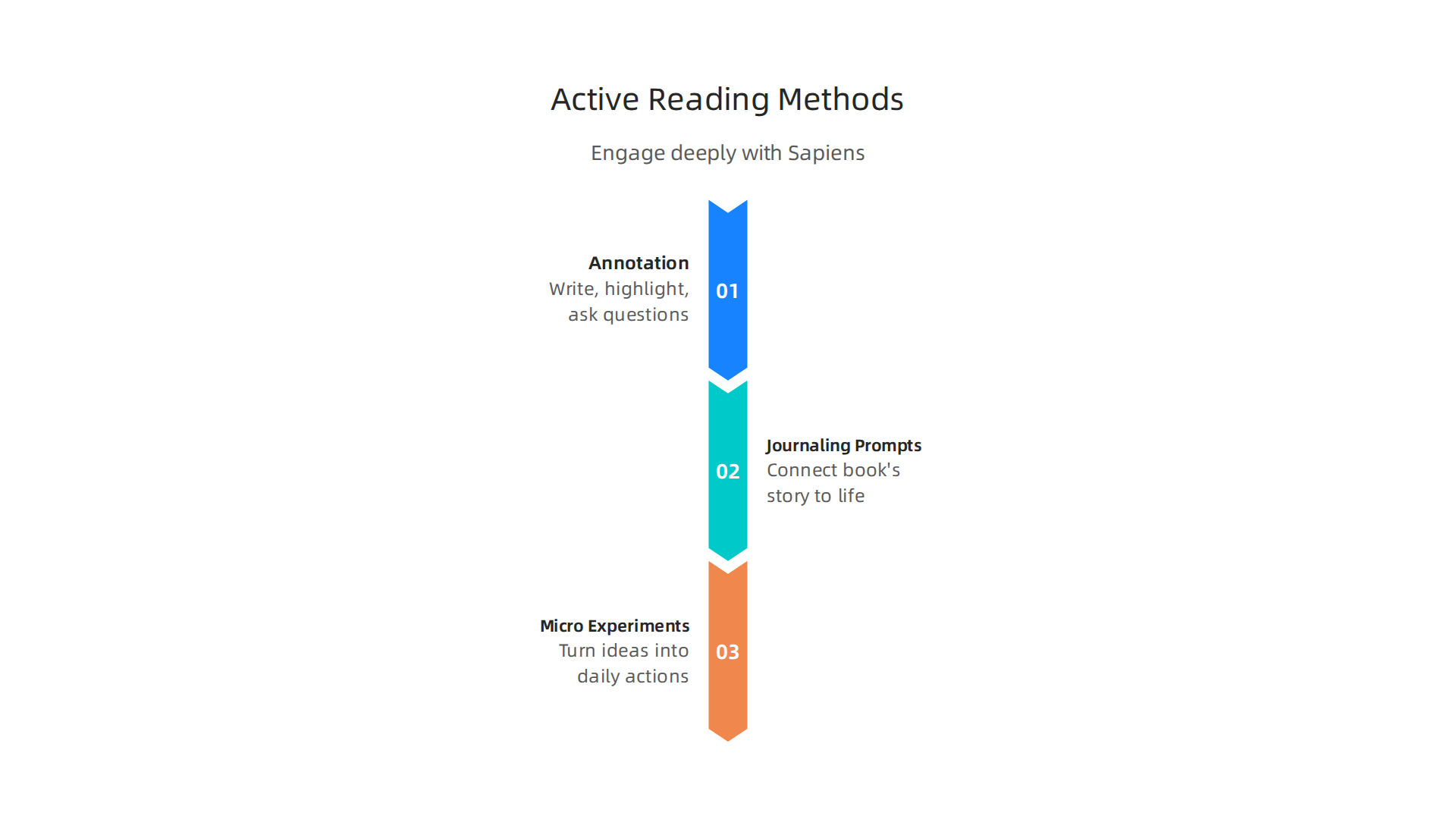
Annotation: Talk Back to Your Book
Annotation means writing in your book. It might sound strange, but it’s a powerful way to make the Sapiens book your own.

- Highlight Important Parts: Use a pen or highlighter for sentences that surprise you or make you think.
- Ask Questions: Write down any questions that come to mind in the margins. For example, "Is this still true today?" or "How does this connect to my life?"
- Write Down Your Thoughts: Jot down your feelings or ideas next to a paragraph. Do you agree? Disagree? What else does it make you think about?
- Mark Key Terms: Circle or underline important names, dates, or concepts like "cognitive revolution" or "agricultural revolution" to remember them.
This simple act of marking up your book turns passive reading into a conversation. It helps your brain truly grasp the big ideas that Yuval Noah Harari shares. It’s a key part of what we call Open Book Thinking.
Journaling Prompts: Make It Personal
After you read a chapter, take a few minutes to write in a journal. This helps you connect the large story of the Sapiens book to your own personal story.
Here are some prompts:
- "What did I learn about human nature in this chapter?"
- "How do the ideas here change how I see the news today?"
- "What part of my own life or family history does this remind me of?"
- "If I had lived during the time Yuval Noah Harari describes, what would my biggest challenge be?"
Writing your thoughts down helps you make sense of what you’ve read. Research shows that active reading strategies, like thinking deeply and making notes, greatly improve how well you understand a text USING ACTIVE READING AS A TECHNIQUE TO ENHANCE.
Micro-Experiments: Turn Ideas into Action
The Sapiens book is full of big ideas. Why not try to test some of them in your everyday life? These are small, quick activities called micro-experiments. They help you turn what you read into something real.
- Observe Your Habits: The Sapiens book talks about how we create "fictions" or shared beliefs. For a day, notice a rule or idea you follow that isn’t physical, like "everyone should work hard." Where did that idea come from? How does it affect you?
- Talk About It: Find a friend and talk about one surprising idea from the Sapiens book. See what they think.
- Notice Cooperation: Harari talks about how humans cooperate in large numbers. For an hour, notice all the ways you see people cooperating in your daily life, from traffic laws to grocery store lines.
These small actions help you see the world differently. They make the ideas from the Sapiens book come alive. Just like books such as the nightingale book or the come as you are book can change your perspective, truly engaging with the Sapiens book can lead to a rich [book harvest] of new insights and understanding.
Ready to take your learning even further?
Join An Experiment to apply your curiosity and inspiration to fun, shared challenges.
When you’re ready to share your discoveries and learn with others, book clubs and group activities are fantastic. They make exploring a big book like Sapiens book even more fun and helpful. In 2026, many people are joining book clubs because they offer real connection and shared learning, helping turn reading into a lively conversation
Book clubs on the rise. In fact, the global book clubs market was valued at $1.2 billion in 2025, showing just how popular these groups are becoming Book Clubs Market Research Report 2034.
Here are some easy ways to get a group together to explore the Sapiens book.
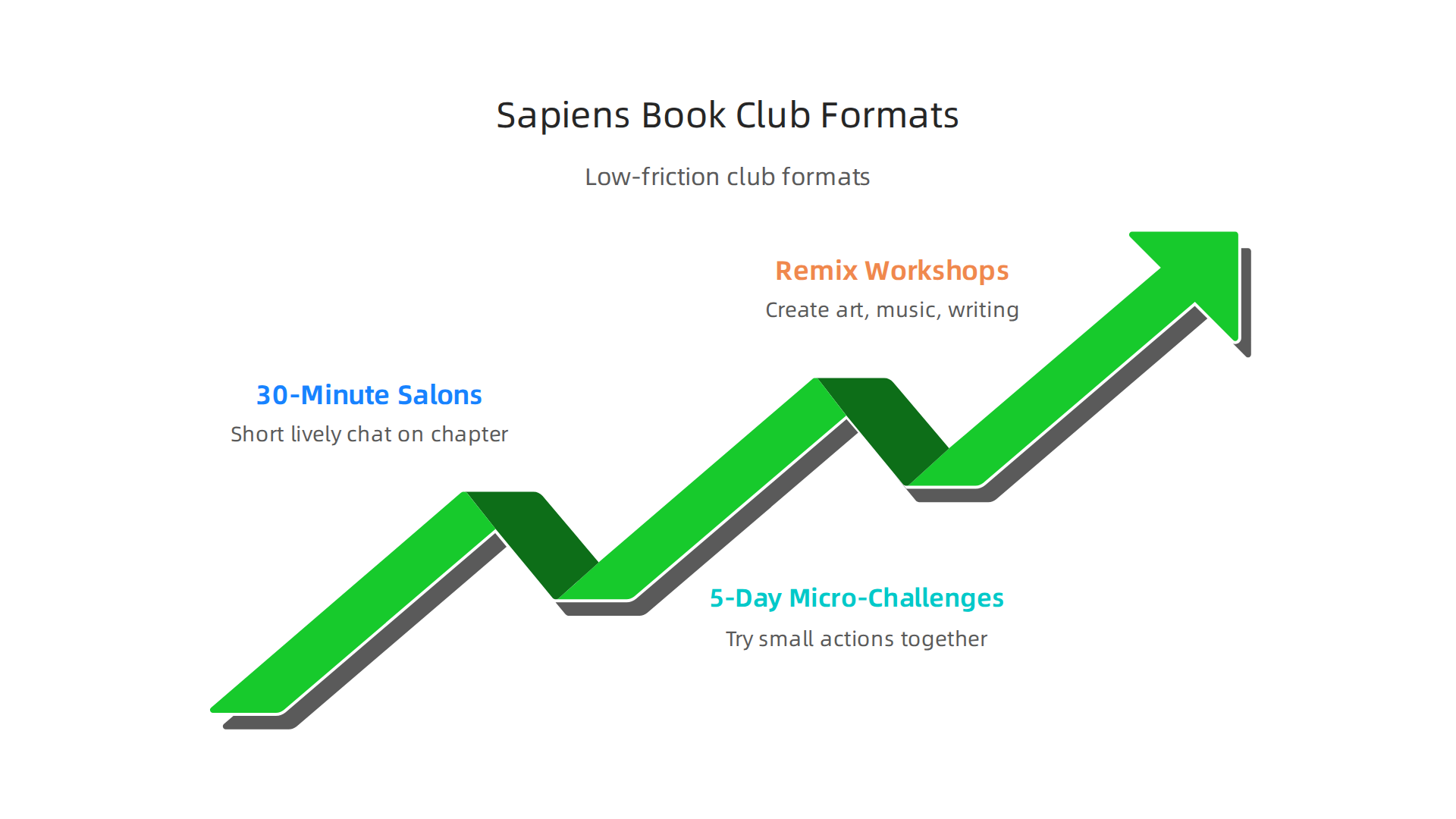
Quick Group Formats for the Sapiens Book
You do not need to meet for hours to talk about a book. Quick, focused activities can work wonders.
- 30-Minute Salons: Imagine a short, lively chat. Everyone reads a chapter or a few pages from the Sapiens book beforehand. Then, you meet for just 30 minutes. Each person shares one surprising idea or asks one big question. This keeps it light but still helps everyone learn. It’s a great way to talk about deep topics without feeling overwhelmed.
- 5-Day Micro-Challenges: Remember those micro-experiments from before? You can do them together! Pick one simple action related to the Sapiens book for the whole group to try for five days. For example, everyone could try to notice "imagined orders" in their daily life, like how money works or how countries are organized. Then, share what you noticed in a quick online message or a short call. This turns the ideas from the book into real-life experiences.
- Remix Workshops (Music, Art, Writing): This is a creative way to engage with the Sapiens book. Each chapter of the book offers so many big ideas. You could pick a chapter and challenge everyone to create something based on it. Maybe someone writes a short poem about the "cognitive revolution." Someone else might draw a picture inspired by ancient human life. A musician could even create a short tune that captures a feeling from the book. These workshops help you see the book’s ideas in new ways, much like how a story like the nightingale book can spark different feelings or how the come as you are book can inspire self-reflection.
Guides for Group Leaders
Leading a group activity for the Sapiens book is easier than you think. You can be the "facilitator," which just means you help the conversation flow.
- Simple Prompts: Have a few questions ready to get people talking. Things like "What was the most surprising thing you learned?" or "How does this chapter make you think about your future?" are great starts. You can find more ideas in guides for book studies, like those for The Alchemist book study.
- Give Everyone a Role: Maybe one person is the "timekeeper" to keep the 30-minute salon on track. Another could be the "idea collector" who writes down key thoughts. This makes everyone feel included.
- Make it Easy for Everyone: Think about how people can join. Can they call in if they can’t make it in person? Are your materials easy to read? Allowing for different ways to join helps more people feel comfortable. Studies show that a large number of avid readers want supplemental materials related to their book club choices From The Reader Lounge: A Dive into Avid Readers and Book Clubs.
- Share Creative Outcomes: If your group does a remix workshop, make a simple way to share what everyone created. A shared online folder or a quick show-and-tell can celebrate everyone’s efforts and create a wonderful [book harvest] of ideas.
These group formats turn reading the Sapiens book into a shared adventure. If you want to connect with more like-minded people and get updates on new experiments, challenges, and creative opportunities, then you should definitely Join The Newsletter!
Now, let’s look at how creators and brands can use these ideas to make exciting reading experiences that really grab people. This is about more than just selling books; it’s about building a community and a special space around ideas, like those found in the Sapiens book.
For Creators & Brands: Designing Literary Experiences that Build Audience and Distinction
If you are a creator, artist, writer, or a brand, you can turn reading into a true adventure for your audience.
Think about how you can make a book not just something people read, but something they do together.
Smart Ways to Engage Your Audience
- Creative Collaborations: Imagine bringing together different talents to explore a book. An artist could draw pictures inspired by the Sapiens book, a musician could create a song about its themes, and a writer could pen a short story. By having your audience join in, they become part of the story itself. This builds a rich "book harvest" of content.
- Ongoing Conversations: Instead of just one chat, you can create a series of discussions or challenges that unfold over time. This keeps people coming back. Regular engagement helps hold people’s interest much better than one-off events. Studies show that holding sessions close together can help retain participants in longitudinal studies.
- "Remix" Challenges: Ask your audience to create their own versions of ideas from a book. Maybe they rewrite a scene from nightingale book or imagine an alternative history from the Sapiens book. You can offer tools and tips for creativity, just like you might find for the best website tools for creators in 2026. This is similar to how a book like the come as you are book can inspire personal reflection and creative expression.
- Gamified Participation: Make it fun! Set up mini-challenges with clear goals and offer recognition for participation. This can be as simple as a leaderboard for who shared the most interesting thought or a badge for completing a creative task. Keeping track of how much people join in and what they do can help you understand what works best. There are clear 7 KPIs for Digital Book Club Optimization that brands can use to measure engagement. This active participation turns passive readers into active community members, offering a deeper reading experience through open book thinking.
Ethical Considerations for a Positive Experience
When you design these experiences, it is important to put people’s well-being first.
- Set Clear Rules: Let everyone know what to expect. How often will you meet? What are the goals? Clear rules help avoid misunderstandings and make everyone feel safe.
- Create a Welcoming Space: Ensure everyone feels heard and respected. Make sure participation is always a positive experience, not a source of stress or anxiety. This means managing discussions to be constructive and kind.
- Ask for Feedback: Regularly check in with participants. What do they like? What could be better? Learning from their answers helps you make the experience even more special and keeps them engaged. Measuring participant feedback is a key part of running successful book club programs Assessment and Participant Feedback – Book Clubs in Academic Libraries: A Case Study and Toolkit.
- Avoid Overwhelm: While engagement is great, do not push people too hard. Offer choices in how to participate, so everyone can join in a way that feels comfortable. The goal is to turn negative feelings like loneliness into positive ones, so make sure the experience is uplifting.
By following these steps, creators and brands can build truly unique and engaging literary experiences that foster real connection and inspire creativity.
Turning Reading into a Longer-Term Literary Journey: Roadmaps, Milestones, and Shared Artifacts
Going beyond one-time events, you can turn reading into a long and exciting journey that keeps people coming back. This means planning out the adventure, celebrating small wins, and making cool things together.

When readers feel like they’re part of a bigger story, they stay interested and grow with your content. In fact, studies show that people can see big improvements in reading skills and keep those gains for a long time when they follow structured programs Reading Comprehension and Retention Study.
Roadmaps for Your Reading Journey
Imagine giving your audience a clear map for their reading adventure. This helps them know what to expect and what exciting stops are coming up.
- Plan a Path: Create a simple roadmap for a 6- to 12-week journey. For example, if you’re exploring a big idea from the
sapiens book, break it down into weekly themes or chapters. Each week, there could be a short reading, a question to think about, and a small task. A good roadmap helps guide a group to deeper meaning, much like in a Guide Your Group to Deeper Meaning with The Alchemist Book Study. - Set Clear Goals: What will your audience learn or create by the end? Maybe they’ll write a short reflection, draw a picture, or share a new idea. Knowing the goal makes the journey more meaningful.
- Show the Way: Use simple tools like a shared online calendar or a basic checklist. Make it easy for everyone to see where they are on the journey and what’s next. Keeping barriers low helps more people stay involved Retention strategies in longitudinal cohort studies: a ….
Celebrating Milestones
Small wins along the way make a big difference in keeping people excited.
- Mini-Celebrations: After a few weeks, take time to celebrate what everyone has done. Did they finish a section of the
nightingale book? Did they share a new thought inspired by thecome as you are book? Acknowledge their efforts! - Digital Badges or Stars: You can give out simple digital badges or virtual stars for finishing tasks or reaching certain points on the roadmap. This is a fun way to show progress and make people feel proud.
- Highlight Progress: Show how far people have come. This helps them see their own growth and encourages them to keep going. When people feel seen and valued, they are more likely to keep engaging. Many students have shown to maintain reading gains over time with consistent engagement Results.
Sharing What You Make: Low-Effort Artifacts
A great way to build community is to have everyone create and share little pieces of work. These "shared artifacts" become a collective book harvest of ideas. They don’t have to be perfect; they just need to be shared.
- Music Playlists: Ask participants to create a short playlist of songs that remind them of a book’s themes or characters. This is easy, fun, and gives insight into their thoughts.
- Simple Zines: A zine is like a mini-magazine. People can draw simple pictures, write short poems, or jot down quotes from a book on a single piece of paper, folded up. It’s a quick way to be creative without pressure.
- Micro-Podcasts: Encourage participants to record a very short audio clip (30 seconds to a minute) sharing their favorite quote or a new idea from the reading. Tools like an AI Audiobook Generator Your Guide to Creating Premium Audiobooks can inspire ideas for simple audio sharing.
- Quick Drawings or Photos: Ask for a photo of something in their daily life that relates to a book’s idea, or a simple doodle that captures a feeling.
By setting up clear paths, celebrating milestones, and encouraging shared creations, you can turn reading into a dynamic, long-lasting journey that connects people and sparks imagination.
Are you ready to turn passive reading into active participation and discover what you can create with others?
Join An Experiment
Summary
This article explains why Yuval Noah Harari’s Sapiens remains a powerful book for understanding human history and how to transform reading it from a solitary task into a shared, creative journey. It summarizes the book’s big ideas—the Cognitive, Agricultural, and Scientific Revolutions—and shows how its clear chapter structure makes it ideal for chapter-by-chapter discussion and group learning. The guide gives practical active-reading methods (annotation, journaling, micro-experiments), quick group formats (30-minute salons, 5-day challenges, remix workshops), and facilitator tips for inclusive, low-friction gatherings. It also outlines ways creators and brands can design ongoing literary experiences—collaborations, gamified challenges, and measurable KPIs—while keeping ethical care for participants. Finally, the article offers roadmaps, milestone ideas, and low-effort shared artifacts to turn a single read into a longer-term community that sparks connection and creativity.