
Why reading The Book of Disquiet matters now
In a world full of quick notifications and endless scrolling, it’s easy to feel lost and overwhelmed. We often jump from one digital thing to the next, which can leave us feeling drained and without a real connection. Sometimes, what we really need is a quiet moment to think deeply and find meaning.

That’s where books like Fernando Pessoa’s The Book of Disquiet come in.
This special book is not like a normal story. It is a collection of thoughts, feelings, and ideas, almost like a diary written by someone named Bernardo Soares. Many pieces are short, like journal entries or small poems, and they don’t always follow a clear order. This makes The Book of Disquiet perfect for our busy 2026 lives. You don’t have to read it all at once. You can pick it up, read a little piece, think about it, and then put it down. This way of reading can help you slow down and reflect, which is a nice break from all the digital noise around us today.
The book talks about big ideas like feeling alone, trying to figure out who you are, and how important imagination is. It gives us a peek into the mind of someone who feels separate from the world around him, especially in city life. Even though it was written long ago, its themes about identity and feeling lost in a modern world still ring true for many people today. As one expert noted, the book acts out the shifting nature of who we are through its broken story style, with many fragments exploring different ideas The Book of Disquiet Themes. Reading it can be like having a long, quiet talk with a thoughtful friend. It’s different from just reading a typical novel, like The Crucible book, or a self-help guide such as Start With Why book. It’s more like a personal meditation, similar to reading book meditations marcus aurelius.
In this guide, we will explore why The Book of Disquiet can be a comforting and helpful read right now. We’ll look at its main ideas and talk about simple ways to read it so you can get the most out of it. We will also give you ideas for how to share your thoughts with others and even use the book to spark your own creative ideas. It’s a journey into finding meaning and connection, much like learning to write a book review that makes every story count.
We believe that great books can help us connect and grow. If you’re interested in more unique book insights, reading experiments, or ways to be part of a creative community, we invite you to stay connected.
Why ‘The Book of Disquiet’ still resonates: context and core appeal
The special way The Book of Disquiet is written is a big part of why it still feels so fresh in 2026. It’s not a regular novel with a clear start and end. Instead, it’s like an "insomniac’s diary," full of short, wandering thoughts and feelings written by Bernardo Soares, the main voice in the book. Soares works in an office in Lisbon, and his everyday life might seem boring, but his inner world is full of deep thoughts and dreams.
This collection of fragments, or small pieces of writing, is often called a "factless autobiography" because it tells a story not with events, but with feelings and reflections. This style is actually perfect for readers today. We live in a world where things come at us in short bursts, like social media posts or quick messages. The Book of Disquiet lets us read it in a similar way: you can pick it up, read a few thoughts, and then put it down, letting the ideas sink in. This helps many of us who might feel worn out by constant digital noise or the pressure to always be busy. It offers a quiet corner for thinking, much like someone might use [book meditations marcus aurelius] for daily reflection.
The deep feelings and big questions in The Book of Disquiet also connect strongly with what many people are going through right now. Soares often writes about feeling alone, even when he’s surrounded by people in the city. He struggles with who he really is and how he fits into the modern world. This sense of feeling lost or separate, known as alienation, is a common pain point for many individuals today who might feel disconnected despite being constantly online.

The book also dives into the importance of our inner lives and imagination. Soares finds comfort and meaning in his thoughts and dreams, creating whole worlds inside his mind. This can be a powerful message for readers who feel stuck in a rut or overwhelmed by self-doubt. It shows that our inner world is rich and full of possibilities, offering an escape and a way to understand ourselves better. The way the book of disquiet explores these themes of a fragmented self and the search for identity makes it a timeless read, reminding us that we’re not alone in these complex human experiences. It offers a space to explore questions about who we are, much like other books might explore ambition and identity, such as The Great Gatsby book reveals hard truths about ambition and identity.
Key themes and philosophical threads (a compact map)
Beyond its unique writing style, The Book of Disquiet gives us a compact map of big ideas that still feel fresh today.
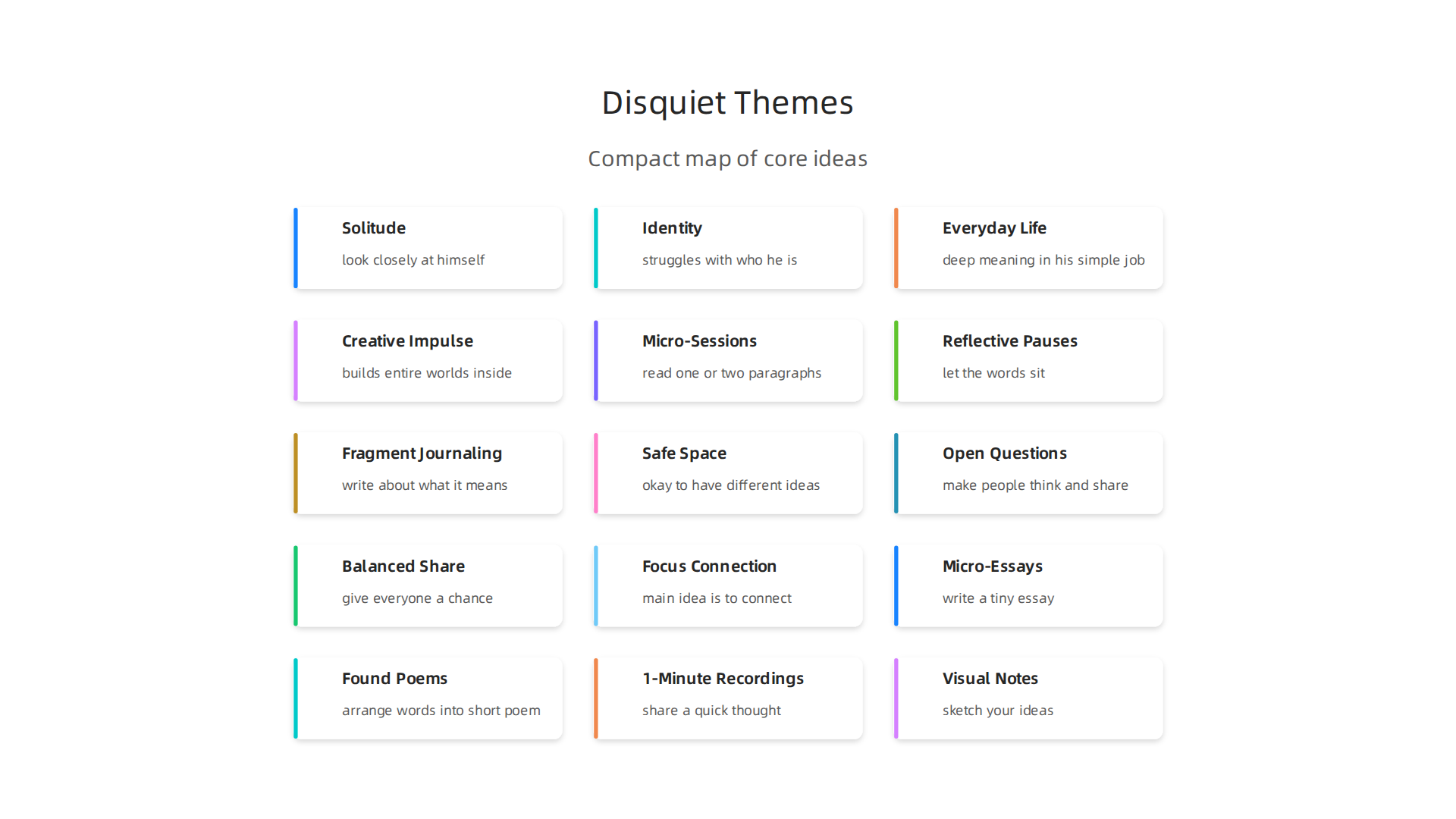
Bernardo Soares, the main voice in the book, dives deep into feelings and questions about life. These aren’t just thoughts on a page; they’re like prompts for us to think about our own lives.
One major idea is solitude. Soares often feels very alone, even when he’s among many people in Lisbon. But he uses this feeling of being apart to look closely at himself and his inner world. This kind of introspection invites readers to examine their own thoughts and feelings when they are by themselves, showing that alone time can be rich and meaningful The Book of Disquiet by Fernando Pessoa | History | Research Starters.
Then there’s the big theme of identity. Soares often struggles with who he is. He feels like he has many different selves, sometimes not even recognizing the person he remembers from his past. This idea of a changing self is a key part of the book, making us think about how we grow and change over time and how our memories shape who we believe we are The Book of Disquiet Themes | GradeSaver.
The Book of Disquiet also shows us the wonder of everyday life as material for reflection. Soares finds deep meaning in his simple office job and the ordinary things around him. He turns what seems boring into moments of deep thought and discovery. This teaches us that even our daily routines can be full of chances for reflection if we pay close attention.
Lastly, the book champions the creative impulse and imagination. Soares builds entire worlds inside his mind, using dreams and thoughts to create beauty and meaning. He believes imagination can be an escape from everyday life and a way to understand things better The Book of Disquiet Themes | SuperSummary. This shows us the power of our own minds to find hope and purpose.
These key themes from the book of disquiet are not just for reading; they offer ways to live a more thoughtful life. You can use them as ideas for small daily practices, like reflective journaling, where you write down your own feelings about solitude, identity, or the small moments in your day. Just like many people turn to [book meditations marcus aurelius] for daily wisdom, Soares’s thoughts can inspire us to explore our own personal truths.
This kind of active self-discovery can be a fun and rewarding journey.

If you’re interested in turning your curiosity into action and exploring your inner world through different challenges, you can Join An Experiment to find new ways to connect and share your discoveries. To help deepen your personal reflections, consider learning How to write a book review that makes every story count for your own thoughts and experiences.
Sometimes, big books can feel a bit scary to start. You might worry about finding enough time or staying focused, especially when there are so many things pulling our attention in 2026. But here’s a secret: The Book of Disquiet is actually perfect for readers who are busy, anxious, or easily distracted. This is because it’s not a regular story with a plot. Instead, it’s a collection of short thoughts, like a diary, which makes it easy to read in small pieces.
Bernardo Soares’s writings are like small, complete ideas, perfect for little bursts of reading The Book of Disquiet Summary of Key Ideas and Review. Think of it as a "fragmentary masterpiece" that you can enjoy piece by piece, as one expert calls it Why "The Book of Disquiet" Haunts Your Soul | Fernando Pessoa Explained.
Simple Ways to Read The Book of Disquiet
To make reading this book a helpful part of your day, try these easy methods:
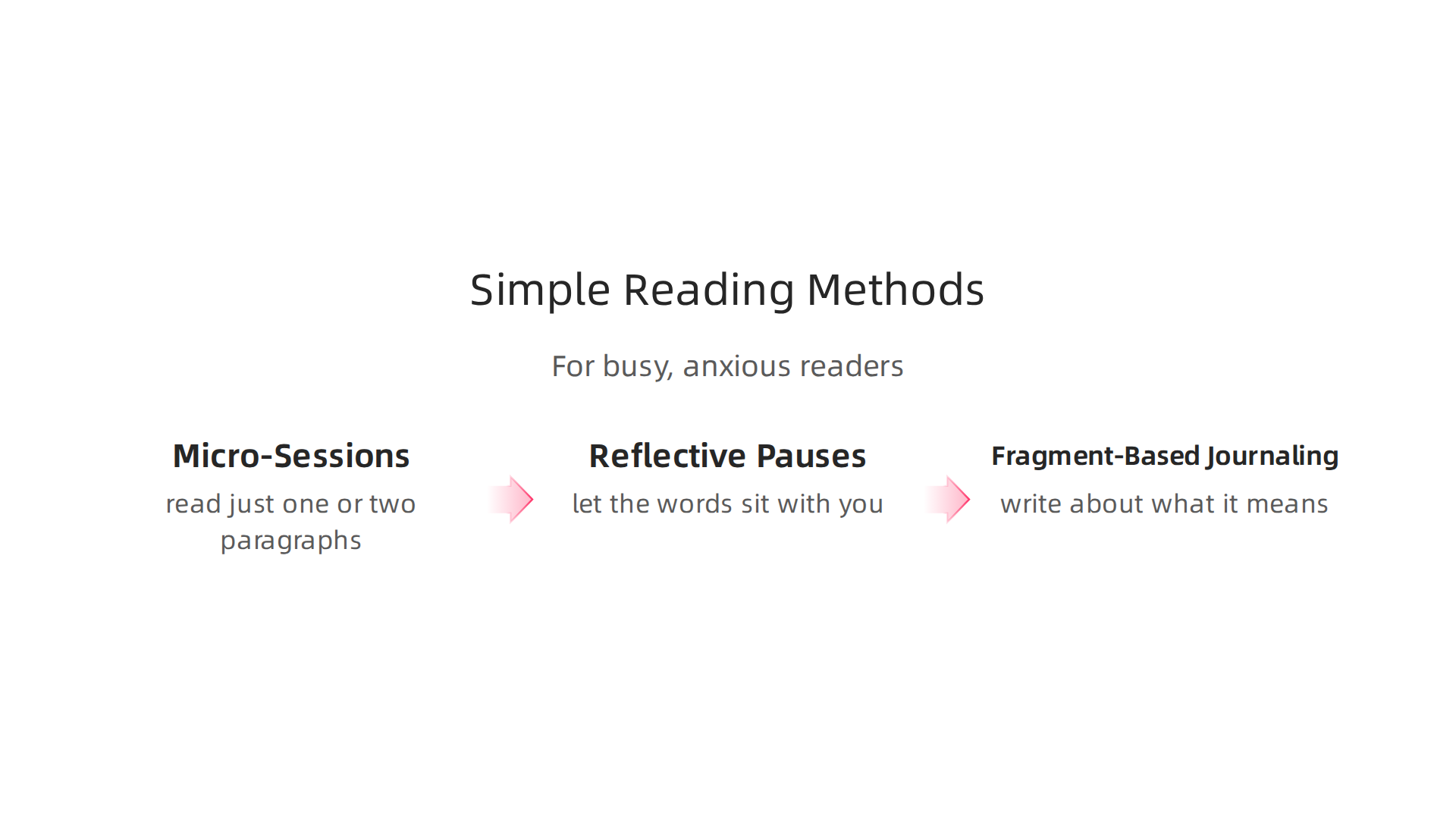
- Micro-Sessions: Don’t try to read for an hour. Instead, read just one or two paragraphs. Maybe while your coffee is brewing, or during a short break. These tiny moments can add up. Just a few lines can give you something to think about for the rest of your day.
- Reflective Pauses: Read a short section, then put the book down. Don’t rush to the next part. Let the words sit with you. How do they make you feel? Do they remind you of anything in your own life? This is a bit like doing
book meditations marcus aurelius, but with Soares’s unique thoughts. It turns reading into a quiet moment just for you. - Fragment-Based Journaling: Pick a sentence or a striking idea from what you’ve read. Write it down in a notebook or on your phone. Then, write about what it means to you. How does it connect to your feelings about identity, solitude, or your everyday world? This practice can turn reading into a creative prompt, helping you explore your own inner landscape. To help you with this, you might find tips on how to Unlock Book Review Speak To Enhance Your Reading And Writing.
By using these simple approaches, the book of disquiet becomes more than just a book. It becomes a tool for self-care and a way to spark your imagination. You’re not just reading words; you’re using them to reflect on your own life and find deeper meaning in your world. Just like with the perks of being a wallflower book or the crucible book, a good book can offer much more than just a story.
Ready to find new ways to connect with ideas and discoveries?
Sometimes, the best discoveries are those we share with others.

While The Book of Disquiet feels deeply personal, its short, thoughtful pieces are actually perfect for group discussions. Imagine sharing your unique take on Bernardo Soares’s thoughts, or hearing how someone else understood a passage that puzzled you. This kind of sharing can make the book even more powerful.
Discussion prompts and small-group formats for readers’ circles
Running a readers’ circle for the book of disquiet doesn’t need to be formal or scary. The goal is to connect and share, not to prove who understood the book best. Think of it as a friendly chat. You want to make sure everyone feels good about speaking up, without feeling like they are being tested. One great tip is to begin with introductions that let people share something personal but not too serious, related to the book’s themes, before diving into the text itself How To: Dialogic Reading Group.
To help everyone feel comfortable, try these easy tips for leading your group:
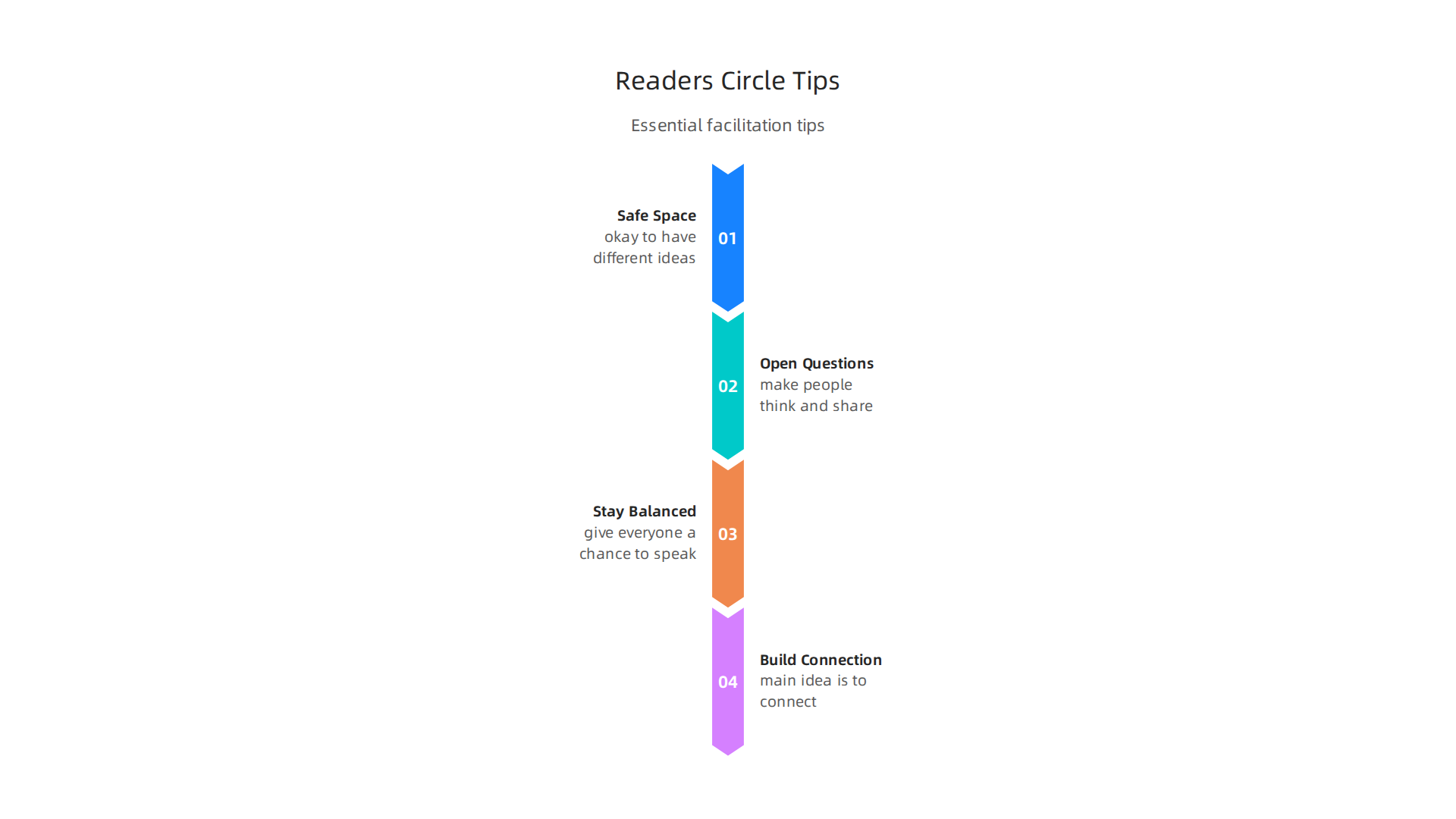
- Create a Safe Space: Make sure everyone knows it’s okay to have different ideas. Encourage listening and respect for all views Facilitation Suggestions for All Reading Groups.
- Ask Open Questions: Avoid "yes" or "no" questions. Instead, ask questions that make people think and share their feelings or experiences. For example, "How did this part make you feel?" instead of "Did you like this part?" Tips on How to Be An Effective Book Club Facilitator.
- Keep it Balanced: Try to give everyone a chance to speak. You can gently invite quieter members to share their thoughts, or suggest brief sharing times to ensure no one person talks too much Book Club Kit: Templates & Guides for Reading Groups.
- Focus on Connection: Remember, the main idea is to connect as people. The book is just a starting point for sharing thoughts about life, identity, and feelings The Book of Disquiet by Fernando Pessoa | History | Research Starters.
Here are some prompt ideas, arranged for different group lengths, to help spark conversation about the book of disquiet:
30-Minute Quick Chat
Perfect for a short break or a first meeting.
- What was one sentence or short idea from the book of disquiet that stuck with you? Why?
- Did any of Soares’s everyday observations make you see your own day differently?
- How did this book make you feel as you read it? Just one word is fine.
60-Minute Deeper Dive
For when you have a bit more time to explore. Keep 3-5 key questions ready for a good flow Book Club Discussion Guides: Tips, Resources, and Best Practices.
- Bernardo Soares often thinks about his different "selves." Have you ever felt like you have different versions of yourself? The Book of Disquiet Themes | GradeSaver
- The book talks a lot about imagination and reality. Where do you find meaning, in your dreams or in the real world?
- What does the book of disquiet say about feeling alone or finding peace in solitude?
- If you had to pick one big idea from this book, like someone might choose "start with why book" for a business, what would be the main idea of the book of disquiet?
90-Minute Full Exploration
For groups that want to really dig in and share personal connections.
- Soares wrote, "To be great, be whole." What does this mean to you, and how does the book of disquiet explore this idea of being "whole"? The Book of Disquiet | Summary, Analysis, FAQ
- The book is full of little "epiphanies," or sudden moments of understanding. Can you recall a small moment in your own life that gave you a big insight?
- How does the book’s focus on introspection and the inner world change how you look at your own life or even how you define identity?
- After reading this book, what is one new thought or idea you’re taking with you into your own day?
These prompts are just a starting point. The best discussions happen when people feel free to share honestly and connect with each other. If you want to dive deeper into how to lead such conversations, learning how to How to Write a Book Review That Makes Every Story Count can also help you understand and discuss books better.
Ready to turn your reading into a shared adventure?
Join An Experiment
Reading the book of disquiet can make you think in new ways. After you talk about it with friends, you might feel like doing something creative with all those fresh ideas. This book, known for its many short, thoughtful pieces and its "factless autobiography" style, is perfect for sparking your own imagination The Fragmented Self: Notes from Fernando Pessoa’s The Book of….
It’s like Bernardo Soares invites you to look closely at your own life and put those observations into words or other creative forms. Here are some fun ways to turn your thoughts into creative projects:
Short Creative Prompts and Formats
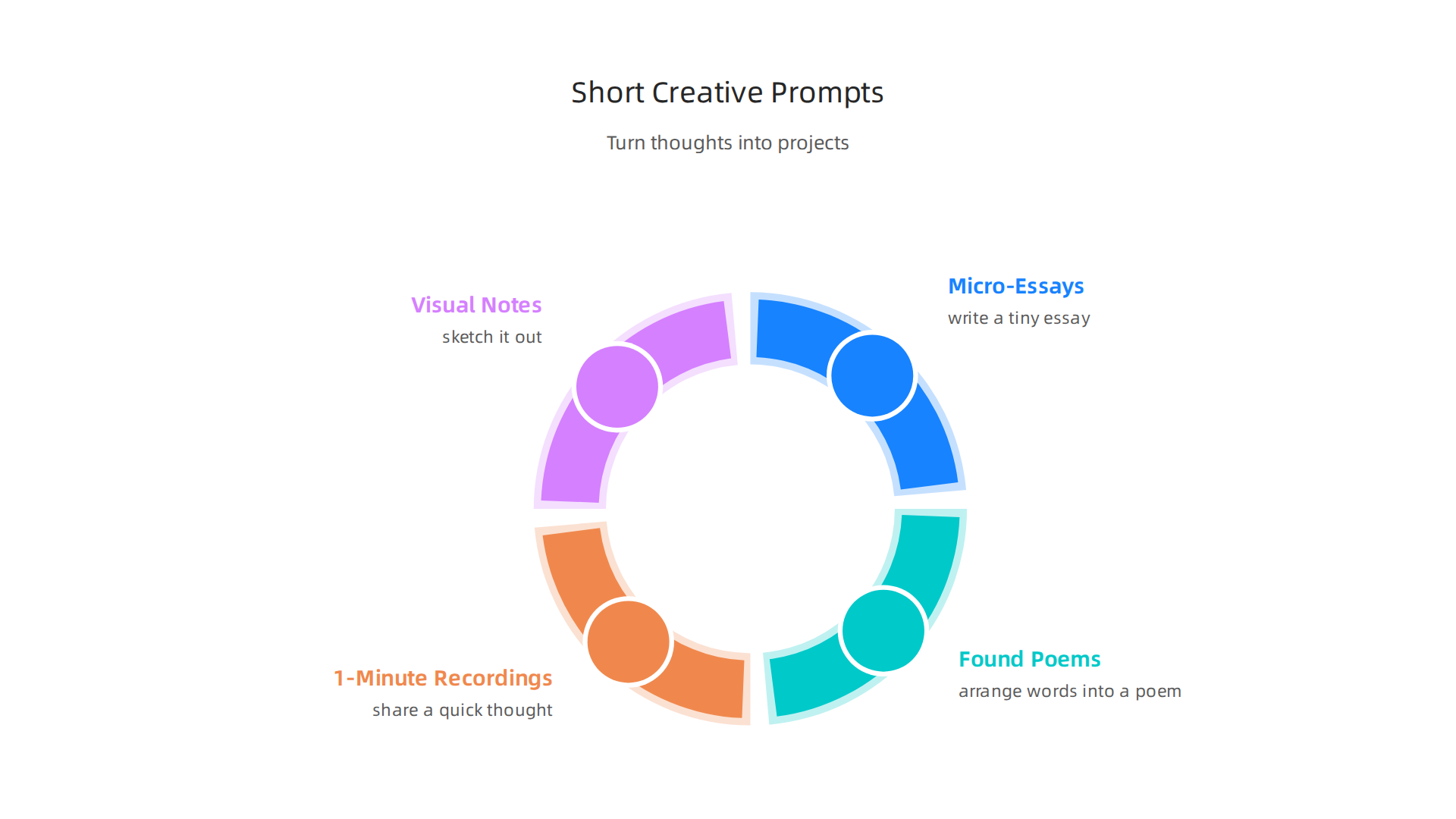
- Micro-Essays: Pick one short passage from the book of disquiet that really spoke to you. Write a tiny essay, maybe just a few sentences or a paragraph, about how it made you feel or what it made you think about. It’s a great way to practice writing. If you need help getting started, check out tips from a My First Learn to Write Workbook.
- Found Poems: Go through a few pages of the book and highlight words or short phrases that stand out. Then, arrange those words into a short poem. You don’t need to add any new words, just use what you "found" in the text. This is a playful way to connect with the author’s language.
- 1-Minute Recordings: Record yourself reading a favorite part of the book of disquiet, or share a quick thought about how the book relates to your daily life. This can be a simple voice memo on your phone. It’s a personal way to capture your insights, much like Soares captured his own wandering thoughts in his diary A Review of ‘The Book of Disquiet’ by Fernando Pessoa.
- Visual Notes or Sketches: If you love drawing, pick a scene or a feeling from the book and sketch it out. Maybe it’s a quiet street, a window, or even just an abstract shape that shows how a passage made you feel. You can find more ideas on Art Prompts to Help You Connect with a New Community.
Sharing Your Creative Responses
Once you’ve made something, you might want to share it. Sharing your work can help you feel more connected to others and the ideas in the book.
- Small Community Shares: The easiest way to share is within your readers’ circle or a small group of trusted friends. You can simply read your micro-essay, share your found poem, or play your recording. This makes the group discussions even richer.
- Online Spaces: If you’re feeling brave, you can share your work on social media or a personal blog. Many online communities love seeing creative responses to books. Just remember to create clear rules for how people should talk about each other’s work. Make sure it’s always friendly and respectful. For tools to help you share online, explore The best website tools for creators in 2026.
This kind of creative sharing helps keep the ideas of the book of disquiet alive, turning reading into a living, active experience. It’s all about making personal discoveries and sharing a laugh, or a moment of reflection, with others.
Want to stay in the loop for more book discussions, creative challenges, and community updates? Join The Newsletter for ongoing inspiration.
If you’re a creator or a small brand, you can take these personal creative ideas and turn them into wonderful experiences for a whole community. Think about building a space where people can deeply explore books like the book of disquiet. It’s a great way to help others feel connected, learn new things, and express themselves.
Here are some ways to design fun and thoughtful literary experiences:
Ways to Build Community Around Books
- Mini-Courses: You can put together short online courses that dive into specific parts of the book of disquiet. Each lesson could have a reading, a prompt, and a place for people to share their thoughts or creative work. Imagine a course on "Book Meditations Marcus Aurelius" themes, guiding people through similar reflections. This structured approach helps people feel supported in their creative journey.
- Serialized Prompts: Keep the conversation going with a series of prompts. You could send out a weekly creative challenge based on a passage from the book. This makes it easy for people to keep coming back and sharing their ongoing insights. To keep discussions lively and thoughtful, it’s good to prepare multiple passages, concepts, and questions to discuss beforehand.
- Micro-Events: Host small online meetups or local gatherings. These could be short book discussions, co-working sessions where people write their micro-essays, or even a virtual "found poem" workshop. When leading these, remember to make everyone feel welcome by inviting different viewpoints and setting clear, simple rules. You want to make sure everyone feels safe to share their ideas, much like creating an inviting space for sharing thoughts on a book like perks of being a wallflower book.
- Collaborations: Team up with other creators or small brands. Maybe a local artist can create art inspired by the book’s themes, or a musician can compose a piece that reflects the mood of the book of disquiet. These kinds of collaborations can bring new life to the text and help more people discover its magic.
Focusing on Real Engagement
It’s easy to get caught up in how many likes or shares something gets. But for these kinds of literary experiences, it’s more important to look at meaningful interactions. Are people really reading each other’s work? Are they giving thoughtful comments? Are discussions deep and respectful?
To make sure your community is truly engaged:
- Ask Open-Ended Questions: Instead of questions with a "yes" or "no" answer, ask questions that make people think and share their own feelings or experiences. For example, "How did this part of the book of disquiet make you see your daily routine differently?" Experts suggest using thought-provoking questions that encourage critical thinking.
- Create a Safe Space: Make sure everyone knows that it’s okay to have different ideas. As a leader, you can encourage diverse thoughts and make sure everyone gets a chance to speak. It’s helpful to have a facilitator guide to help you keep discussions on track and fair.
- Recognize Contributions: Acknowledge when someone shares something thoughtful or creative. A simple "That’s a great observation" or "Thanks for sharing your poem" can make a big difference and encourage more participation.
Building these kinds of rich, participatory literary experiences helps turn reading into an active adventure, connecting people through shared ideas and creative expression. If you’re ready to move past just reading and start doing, there are exciting ways to dive deeper.
If you’re looking to turn your ideas into action and connect with a community that loves to create, why not Join An Experiment? You can also learn how to grow your writing skills and share your thoughts more clearly with resources like Unlock Book Review Speak to Enhance Your Reading and Writing.
Summary
This guide explains why Fernando Pessoa’s The Book of Disquiet still matters and how its fragmentary, diary-like structure makes it ideal for busy, distracted readers today. The article outlines the book’s core themes—solitude, shifting identity, and the power of imagination—and shows how those ideas help readers reflect on modern life. It offers practical reading methods like micro-sessions, reflective pauses, and fragment-based journaling so you can digest the text in small, meaningful bites. You’ll also find step-by-step tips for running empathetic readers’ circles, discussion prompts for short or long meetings, and simple creative formats (found poems, micro-essays, recordings) to respond to the text. Finally, the piece suggests ways creators and small groups can build ongoing literary experiences using tools and prompts, turning solitary reading into shared creative practice.