
Why books can be a low-friction path to better mental health for men
Sometimes, it’s tough for men to talk about how they feel. Strong cultural ideas about being tough can make it hard to ask for help or even admit to struggling. This often means many men don’t get the support they need for their mental well-being. Studies in 2026 still show that men face many barriers to help-seeking for mental health issues.
But here’s a simple, private way to start making things better: reading. Men’s mental health books offer a low-pressure path to understanding and improving mental health. They let you explore tough topics at your own speed, in your own space, without feeling judged.

Think of it this way: good books combine stories, helpful tasks, and chances to think about your own life. They can give you new ways to look at your feelings and even change how you act. Whether it’s a deep story like the "brave new world book" that makes you think, or a guide with direct advice, books help you gain emotional insight and make positive changes. This type of self-therapy through reading, sometimes called bibliotherapy, has been shown to be helpful for adults looking for new ways to grow.
Reading can also make you feel less alone. When you read a book about someone else’s struggles, you might realize your own feelings are normal. This can reduce feelings of isolation. You learn that others have been through similar things, which can be a huge relief. It’s a private way to connect with the human experience. For example, reading a book like "the fault in our stars book" can help you explore complex emotions through characters, making your own feelings feel more valid.
To get the most out of men’s mental health books, it’s good to pick the right kind. Some books are memoirs, telling real-life stories. Others are self-help guides with tools and tips. Still others focus on building specific skills, like how to handle stress. The best books are the ones that really connect with you and make you want to keep reading and learning. Choosing books that resonate with your experiences can make a big difference in how much you get out of them.
If you enjoy diving deep into what you read and want to connect with others who love books and personal growth, you might like exploring new communities.
Join The Newsletter
How men’s mental health needs differ — and what to look for in a book
While reading can generally help anyone, it is true that men often have special needs when it comes to mental health support. Understanding these differences can help you pick the best men’s mental health books.
For example, many men prefer advice that is practical and action-focused instead of just abstract ideas. They like seeing how something works in real life and what steps they can take. They also connect better with relatable stories and real-life examples rather than just theory. In fact, studies show that modern mental health support for men often works best when it’s about performance, purpose, and getting clear results.

This approach helps men feel stronger and more in control of their mental well-being, as reported in 2026 insights on modern mental health support for men.
When you are looking for men’s mental health books, think about these things:
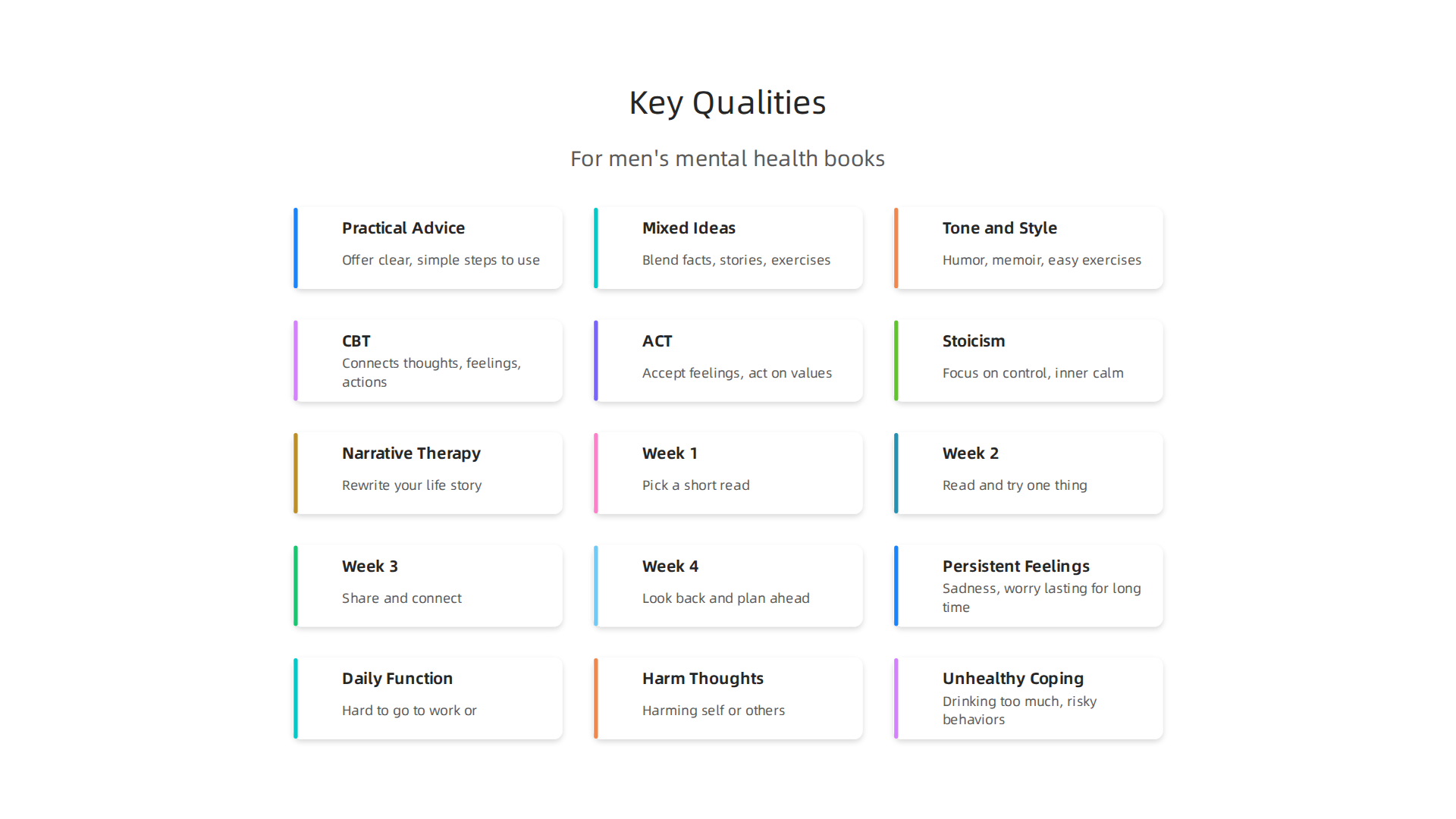
- Practical Advice: Does the book offer clear, simple steps you can use right away? Men often respond well to a "how-to" approach. For example, a book like The Free Lunch Book might offer straightforward ideas about mindset or habits.
- A Mix of Ideas: The best books often blend scientific facts, personal stories, and helpful exercises. This mix helps you understand the ideas better and see how they apply to your own life. It’s not just about learning what to do, but how to do it.
- Tone and Style: Consider if the book uses humor, is a personal story (memoir), or has short, easy-to-do exercises. These different styles can help keep you interested and make the book feel less like work. Some men also prefer less formal, "coded language" instead of clinical terms, which makes the content more approachable and less intimidating. For example, a book that feels more like a chat with a trusted friend can be very effective.
Reading formats also matter. Maybe you enjoy diving into a long story, or perhaps you prefer books broken into smaller, digestible parts. Making sure the book fits your reading style will help you stay engaged and get the most out out of these valuable men’s mental health books. To really make the most of what you read and boost your understanding, consider tools to help you stay focused, like an unlock deeper reading. If you’re looking for stories that make you think, an Amber Book might offer a rich narrative that helps with self-reflection and personal growth.
When you pick out men’s mental health books, you often want real tools and steps. Many helpful books use ideas from special types of therapy. Learning a little about these can help you choose wisely. These ideas are not just for therapists. They are also put into simple exercises you can do at home.
Here are some common types of therapy and what they mean:
-
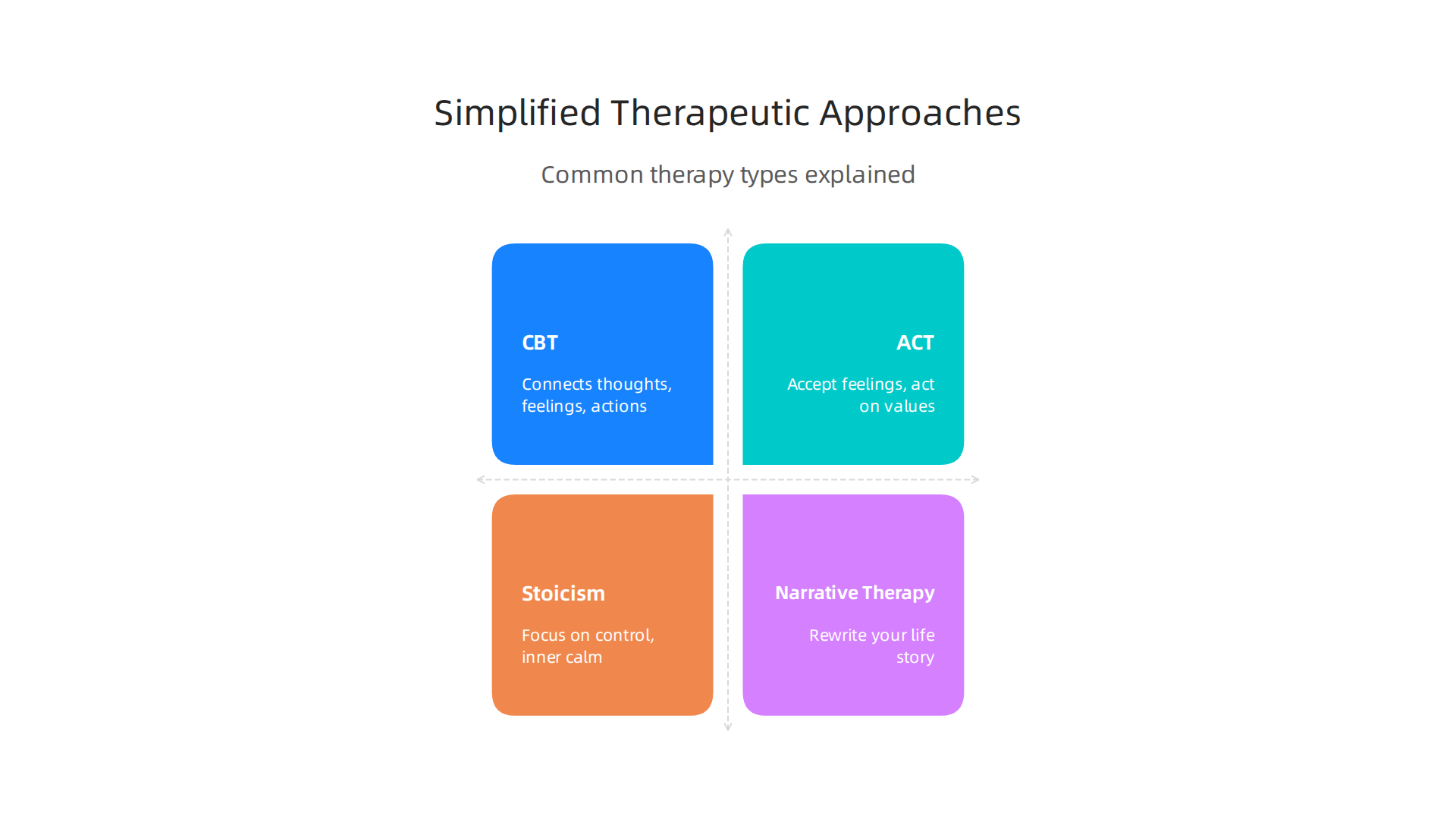
Cognitive Behavioral Therapy (CBT): This approach helps you see how your thoughts, feelings, and actions are all connected. If you change one, you can often change the others. For example, if you think "I always fail," you might feel sad and stop trying. CBT helps you notice that thought, ask if it’s really true, and try a different, more helpful thought. Books based on CBT might have worksheets where you write down your thoughts and try to find new ways to look at things. Studies show that internet-delivered CBT can help with feelings of sadness and worry.
-
Acceptance and Commitment Therapy (ACT): ACT is about learning to accept tough feelings and thoughts, instead of fighting them. Then, it helps you choose actions that line up with what you care about most (your values). For example, if you feel anxious about a new task, instead of avoiding it, ACT helps you notice the anxiety but still take steps towards what matters to you. Many men’s mental health books using ACT will have exercises to help you figure out your core values. Research in 2026 shows that Acceptance and Commitment Therapy is effective for things like sadness and worry, and it can help you feel better about life.
-
Stoicism: This is an older way of thinking that teaches you to focus on what you can control and let go of what you can’t. It’s about being strong and calm inside, no matter what happens outside. Books about Stoicism often share wisdom from ancient thinkers to help you stay steady.
-
Narrative Therapy: This approach sees your life as a story. Sometimes, we get stuck telling ourselves a story where we are the problem. Narrative therapy helps you look at your story in a new way, focusing on your strengths and rewriting parts of it to feel more in control. This is where books with inspiring stories, like some fiction or memoirs, can be helpful. For example, an Amber Book might encourage you to reflect on your own life journey and how you want your story to unfold.
When you look at men’s mental health books, try to find ones that are clear about where their ideas come from. Good books will often mention research or experts. Be careful with books that promise quick fixes or seem too good to be true. Real growth takes effort and time. The most helpful books will offer practical, step-by-step guidance you can use to make real changes in your life.
If you enjoy learning about new ideas, self-improvement, and how to live a more fulfilling life, you might like to hear more from us. Discover a world of engaging narratives, interactive challenges, and supportive discussions to empower your personal journey. Join The Newsletter for ongoing updates.
Now that you know a bit about different therapy ideas, let’s look at the best kinds of men’s mental health books you can pick up. Each type helps in its own way.
Memoirs for Shared Journeys
Memoirs are true stories about someone’s life. Reading them can help you feel less alone because you see that others have faced similar struggles. They offer connection and hope. When you read how someone else handled tough times, it can give you ideas and strength for your own life. For example, a book like an Amber Book might share a personal journey of overcoming challenges, inspiring you to reflect on your own path.
Workbooks and Skill Books for Practical Tools
These are hands-on men’s mental health books that give you exercises to do. They are great for building new habits, learning how to manage your mood, or finding your purpose. Think of them like a coach in a book, offering step-by-step guidance. They often use the therapy ideas we talked about before, turning them into simple tasks. This kind of "self-therapy through bibliotherapy" can be very helpful, as a review of studies in 2025 confirmed that reading can be a good way for adults to improve their mental health and well-being Self-therapy through bibliotherapy: A comprehensive review and content analysis for adults.
Fiction That Helps You Grow
Even made-up stories can be really good for your mental health. Fiction helps you step into someone else’s shoes. It builds empathy, which is the ability to understand and share the feelings of another. This can help you understand your own feelings better and see things from new angles.
Stories can also help you explore big ideas in a safe way. A Brave New World book, for example, makes you think about society and freedom. A book like The Fault in Our Stars book can help you connect with deep emotions and how people cope with difficult situations. If you enjoy diving into different worlds, you might want to discover sci-fi story books that often explore human nature and resilience.
Choosing Your First Book
When picking men’s mental health books, think about what you need most right now.

- For connection and feeling understood: Try a memoir.
- For learning new ways to handle problems: Go for a workbook or skill book.
- For new ideas and understanding others: Pick a good fiction book.
Also, think about how much time you have. Some books are shorter and easy to read, while others are longer. Choose what feels right for you to get started.
It’s great to know how different kinds of men’s mental health books can help you. Now, let’s turn choosing a book into a fun, low-pressure experiment. You can even try it with friends. This simple plan helps you get started and stick with it.
Turn reading into a short experiment: a 4-week plan to try with friends
Starting a reading habit can feel like a big step. But what if you saw it as a small, fun experiment? This 4-week plan is designed to be easy and to help you connect with others.
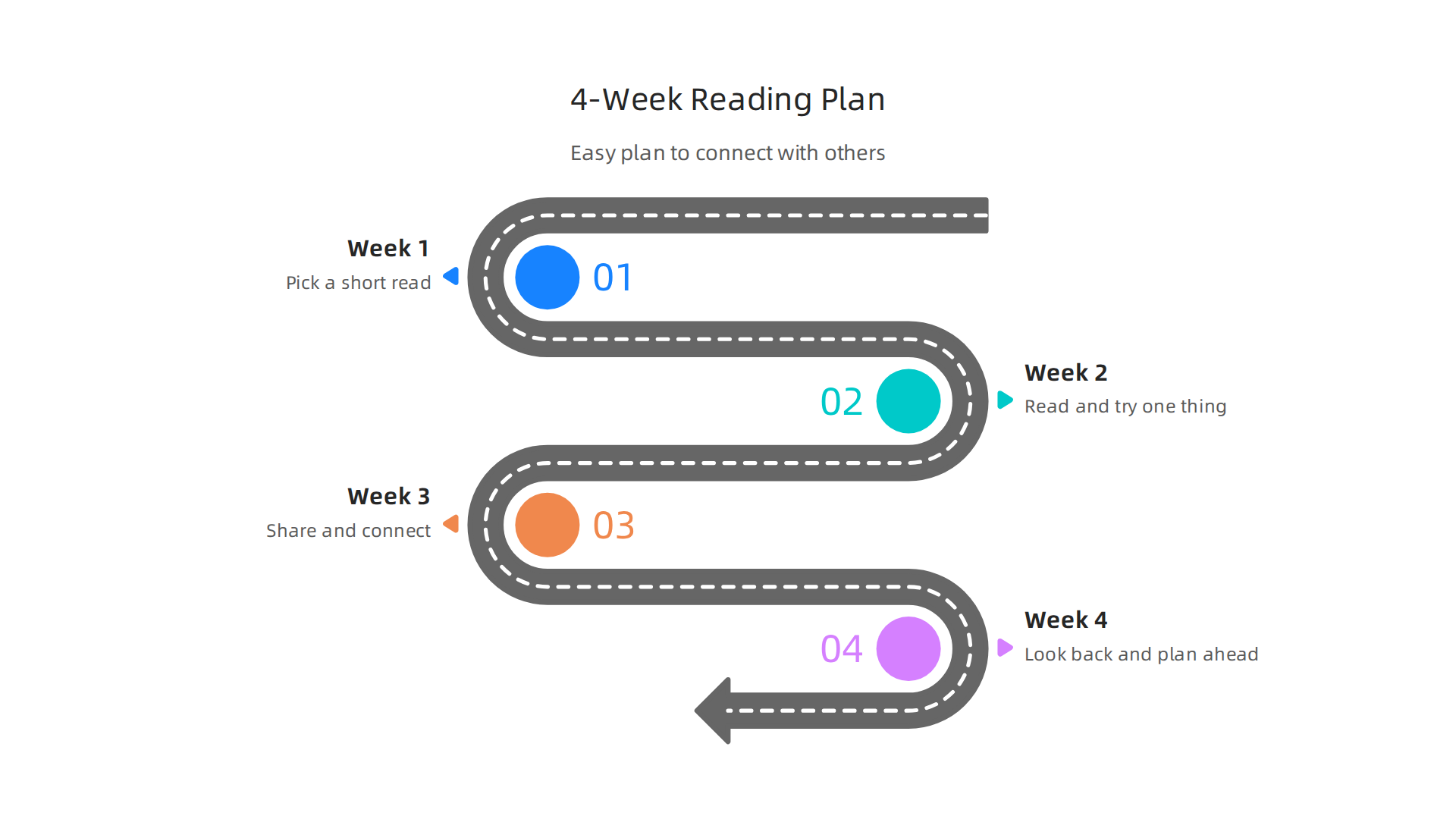
Week 1: Pick a short read
Choose a book that isn’t too long or just a part of a longer one. Maybe a short memoir, like an Amber Book, or a simple workbook that catches your eye. The idea is to pick something you can finish without much stress. If you’re looking for a quick, insightful read, think about a free lunch book that tackles a simple concept.
Week 2: Read and try one thing
Read a chapter or a few pages each day. Don’t feel you need to rush. As you read, pick just one small idea or exercise from the book to try out. Maybe it’s noting a feeling, writing down a new thought, or doing a tiny action the book suggests. This is your "micro-practice" for the week.
Week 3: Share and connect
This is where the magic happens. Talk about what you’re reading with a friend, a family member, or a small group.

You can share one idea that stuck with you or how the micro-practice made you feel. Talking about books can help you feel less alone and build stronger bonds. Research from 2026 shows that shared reading can help lower stress and make you feel more connected to others, improving your mental well-being UEL leads Queen’s Reading Room shared reading research. Even just discussing a story or an idea can open new ways of thinking and help you develop new memories, according to another study A novel way to boost health: research shows how reading can ….
Week 4: Look back and plan ahead
Think about how the reading experiment made you feel. Did you enjoy the book? Did talking about it help? You don’t have to read men’s mental health books every week, but noticing how reading affects you is the goal. If you liked it, plan your next small reading adventure. Maybe explore a new kind of book or topic.
Make it your own
Not everyone wants to read with others, and that’s okay. You can still do this experiment on your own. Try journaling your thoughts instead of sharing them aloud. Or, if reading paper books isn’t your thing, try an audiobook. Studies show that listening to audiobooks can help calm anxiety and improve sleep A study of the effects of four reading styles on college students …. The most important thing is to make it easy and enjoyable for you. Overall, reading can make a big difference in how healthy your mind and body feel, as a 2026 study highlights How reading behavior shapes physical and mental health – Frontiers.
Ready to try an experiment that helps you laugh, connect, and feel good?
Join An Experiment
For more ideas, tips on mental wellness, and updates on challenges, be sure to Join The Newsletter. You’ll find a community that supports your journey to better well-being.
How to read – practical habits that actually stick
Making reading a regular part of your life doesn’t have to be hard. It’s all about finding simple ways to fit books into your day. Think of it like building any other good habit: start small, make it easy, and tie it to things you already do. This is how you make reading, especially men’s mental health books, truly stick.
Micro-reading routines for busy days
You don’t need a lot of time to read. Try a "micro-reading" routine. This means reading for just 5 to 10 minutes at a time. Maybe while you wait for your coffee to brew, on your lunch break, or before bed. Even these short bursts add up and help you get through a free lunch book or a few chapters of a longer read.
One smart trick is "habit stacking." This is when you link a new habit to an old one you already have. For example, if you always drink a glass of water when you wake up, try reading one page of a book right after. Or, if you commute to work, listen to an audiobook on the way. These small daily rituals help make reading feel like a natural part of your day, not an extra chore. For more ways to focus while reading, consider using an Unlock Deeper Reading: A Book Journal for Focus and Memory.
Audiobooks: reading for your ears
For many men, finding time to sit down with a physical book is tough. That’s where audiobooks come in.

They let you "read" while doing other things, like working out, driving, or doing chores. And yes, listening to an audiobook truly counts as reading. Experts agree that your brain processes stories and information in similar ways whether you read with your eyes or listen with your ears. Many studies in 2026 show that listening to audiobooks can be just as good for understanding a story as reading a print book, especially for narrative fiction or topics you already know about Audiobooks vs. Reading: The 2025 Science on What Actually …. So, if you’re busy, an audiobook might be the perfect way to explore a new book. You can even find guides to help you manage an Audible Book Subscription: Your 2026 Guide to Credits, Free Books, and Top Alternatives.
Tracking progress and trying new things
Keeping track of your reading can be fun. You don’t need a fancy system. Just a small notebook or a simple app to write down the titles you’ve read, a favorite quote, or one idea that stuck with you. This helps you see your progress and feel good about what you’ve achieved.
Also, don’t be afraid to try different kinds of books. Maybe a short workbook about building healthy habits, a gripping story like The Fault in Our Stars Book, or an insightful classic like the Brave New World Book. If a book isn’t working for you, it’s okay to put it down and pick up something new. The goal is to make reading a helpful and enjoyable part of your life. Every little bit counts towards strengthening your mind and finding new ways to think and feel better.
Reading doesn’t just help you as an individual. It can also bring groups of people together and help brands connect with their audience in a deeper way. For creators and companies, books and reading projects are powerful tools to build a strong community. It’s about inviting people to be a part of something, not just watch from the sidelines.
Design reading projects that invite participation
Instead of just telling people to read a book, creators and brands can set up fun projects that get everyone involved. Think about running "micro-challenges" where people read a small part of a book each day or week. These could focus on men’s mental health books, offering a safe space for discussion and shared growth. One study showed that challenges, like a 30-day readathon, can have strong positive effects on people’s minds and feelings The Challenge.
You could also work with authors to host special discussions or online events. This makes reading a shared journey, not just a solo activity. These kinds of projects turn passive reading into active participation, leading to stronger bonds among community members. Books, even classics like Brave New World Book or popular reads like The Fault in Our Stars Book, can be great starting points for these conversations, as they are often seen as "conversation starters" for well-being The book’s a conversation starter’: a realist exploration …. To make sure your reading group thrives, consider these tips for book clubs that offer true connection.
What to measure beyond just clicks
When you run these projects, don’t just count how many people clicked a link. Look at what really matters for community:
- Retention in groups: How many people stick around in your reading club or challenge over time?
- Active contributors: How many people share their thoughts, ask questions, or complete the tasks?
- Experiment completion rates: For challenges, how many people finish the whole thing?
These numbers show true engagement and how well you are building a dedicated group.
Creative ways to share book content
Books have a lot of good ideas inside them. Brands and creators can break down these ideas into many small pieces to keep the community excited:
- Micro-episodes: Short videos or audio clips that talk about one small idea from a book.
- Discussion prompts: Simple questions that get people talking in comments or online forums.
- Live Q&A: Hold live sessions where readers can ask questions about the book or its themes.
- Community showcases: Let people share their own creative work inspired by the book. Maybe someone read a free lunch book and then cooked a healthy recipe, or an amber book and created art inspired by its themes.
These methods help stretch the life of a book and give people more ways to connect with its message and each other. Building these kinds of communities can be a rewarding way to share stories and ideas. For more help building strong online communities, check out best websites for creators in 2026.
Ready to take your community building further?
Join An Experiment
If you want to stay in the loop about new books, experiments, and community challenges, you can also:
Join The Newsletter
Reading books and being part of a community can truly help people grow and feel better. But when books touch on hard feelings or tough life events, it is very important to think about safety. This is true for everyone, especially for men’s mental health books. We need to make sure readers are supported, whether they are reading on their own or in a group.
Safety, trigger warnings, and when to pair books with professional help
When you share books about difficult topics, like those dealing with mental health, it is a good idea to include warnings. These are called "trigger warnings" or "content notes." They simply let readers know ahead of time if a book talks about things that might be upsetting for them. For example, a book might talk about sadness, loss, or stress. Giving a heads-up helps people decide if they are ready to read it. This is a kind way to show you care about your community’s well-being.
Sometimes, a book can be a big help. Self-help books, including those based on methods like Acceptance and Commitment Therapy (ACT) or Cognitive Behavioral Therapy (CBT), have shown good results for easing symptoms of sadness and worry for some people. Studies show that these kinds of self-help tools can make a real difference in how someone feels ACT Self-help Workbook for Depression and Anxiety. Even self-guided online programs can help reduce anxiety and depression, and improve how we feel about life A systematic review and meta-analysis of self-guided online ….
However, reading a book alone is not always enough. Books are great tools, but they cannot replace a trained professional when someone is really struggling.
**Here are some signs that a person might need more help than a book can offer:
**
- Feelings don’t go away: If sadness, worry, or other bad feelings last for a long time and don’t get better.
- Trouble with daily life: If it’s hard to go to work or school, take care of yourself, or enjoy things you used to like.
- Thoughts of harming yourself or others: This is a very serious sign. If you or someone you know has these thoughts, get help right away.
- Using unhealthy ways to cope: Like drinking too much, using drugs, or doing things that are risky.
If you see these signs in yourself or someone in your reading group, it is important to encourage professional help.
Resources for finding professional help:
It is okay to ask for help. Many people do. If you or someone you know needs more support, there are places to turn:
- Therapists and Counselors: These are trained helpers who can talk through problems and teach coping skills. You can often find them through your doctor, health insurance, or online directories.
- Crisis Hotlines: If you are in a crisis, these phone lines offer immediate support. You can talk to someone who understands and can guide you. Look up crisis lines for your country or area.
- Local Support Groups: Sometimes, just talking with other people who understand what you are going through can make a big difference. These groups offer a safe place to share and listen.
- Online Mental Health Screenings: Places like Mental Health America offer free online screenings for depression and anxiety that can give you a better idea of what you are feeling and if you should seek further help.
Remember, mental health is just as important as physical health. It is okay to reach out and get the care you need. Using words that help people feel connected and reduce shame around mental health topics can also make a big difference, as discussed in mental health synonyms that build connection and reduce stigma.
Summary
This article explains how reading can be a low-friction, private way for men to improve mental health by offering insight, practical tools, and a sense of connection without the pressure of formal therapy. It reviews the kinds of books that work best for men—memoirs, workbooks, fiction—and explains therapy approaches often used in self-help (CBT, ACT, stoicism, narrative therapy). You’ll find a simple 4-week experiment to start reading with others, micro-habits and audiobook tips to make reading stick, and ways creators can design reading projects that build real community. The piece also covers safety: when books help, when to add professional support, and how to use trigger warnings responsibly.