
Why choosing the right running app matters for motivation, results, and community
Running is a great way to stay healthy, clear your head, and feel good. But sometimes, it’s hard to stay motivated or know if you’re making real progress. This is where the best running apps come in handy. They can turn a simple jog into a guided journey, helping you stick with your goals.
In 2026, running apps are more popular than ever. The global market for health and fitness apps reached about $15.9 billion this year, showing how many people use them to stay active Global Fitness App Usage Statistics & Privacy Trends for 2026. These apps can be like a personal coach in your pocket. They track how far you go, how fast you run, and even the path you take. They help reduce the struggle of planning your runs or guessing your progress. With an app, you get clear steps and goals, which makes it easier to stick with your running plan and see real results.
But here’s the thing: not all running apps are the same. They offer different features, and how much you can trust them with your personal information can vary a lot. Some apps might be great for advanced training, helping you prepare for a marathon with special plans. Others might focus on helping you lose weight, while some are all about connecting with friends and other runners. You might even find a flow app that helps you find a calm, focused state during your runs, or a 360 life app that looks at your overall well-being beyond just running.
Choosing the right app means finding one that fits your own goals.

Do you want to train for a race? Do you want to track your calories burned for weight loss? Or do you just want to join a community and share your runs? Maybe you’re looking for a self-care challenge to help you make running a regular, mindful part of your routine. It’s also super important that the app respects your privacy and fits your budget. Some free apps might share a lot of your data, so it’s good to be careful.
The perfect running app makes your running journey smoother and more fun. It helps you stay on track, celebrate small wins, and connect with people who share your passion.

When you pick one that truly understands what you need, it becomes a powerful tool for staying motivated and reaching your fitness dreams. Just like finding the best free home workout apps for other exercises, choosing your running companion wisely can make all the difference.
Ready to find the best running apps for your unique goals and join a community that supports your wellness journey? We’ll help you explore the top choices available in 2026.
If you want to stay in the loop with updates on new challenges, wellness tips, and ways to connect, then be sure to Join The Newsletter. You’ll get more insights to boost your fitness and overall well-being.
To help you find the best running apps for your unique needs, we didn’t just pick names out of a hat. We created a careful way to look at each app, testing them in real-life situations.

Our goal was to truly see which apps stand out and why, so you can make a smart choice.
How We Looked at Each Running App
When we evaluated the running apps, we focused on several key things that make an app great for runners:
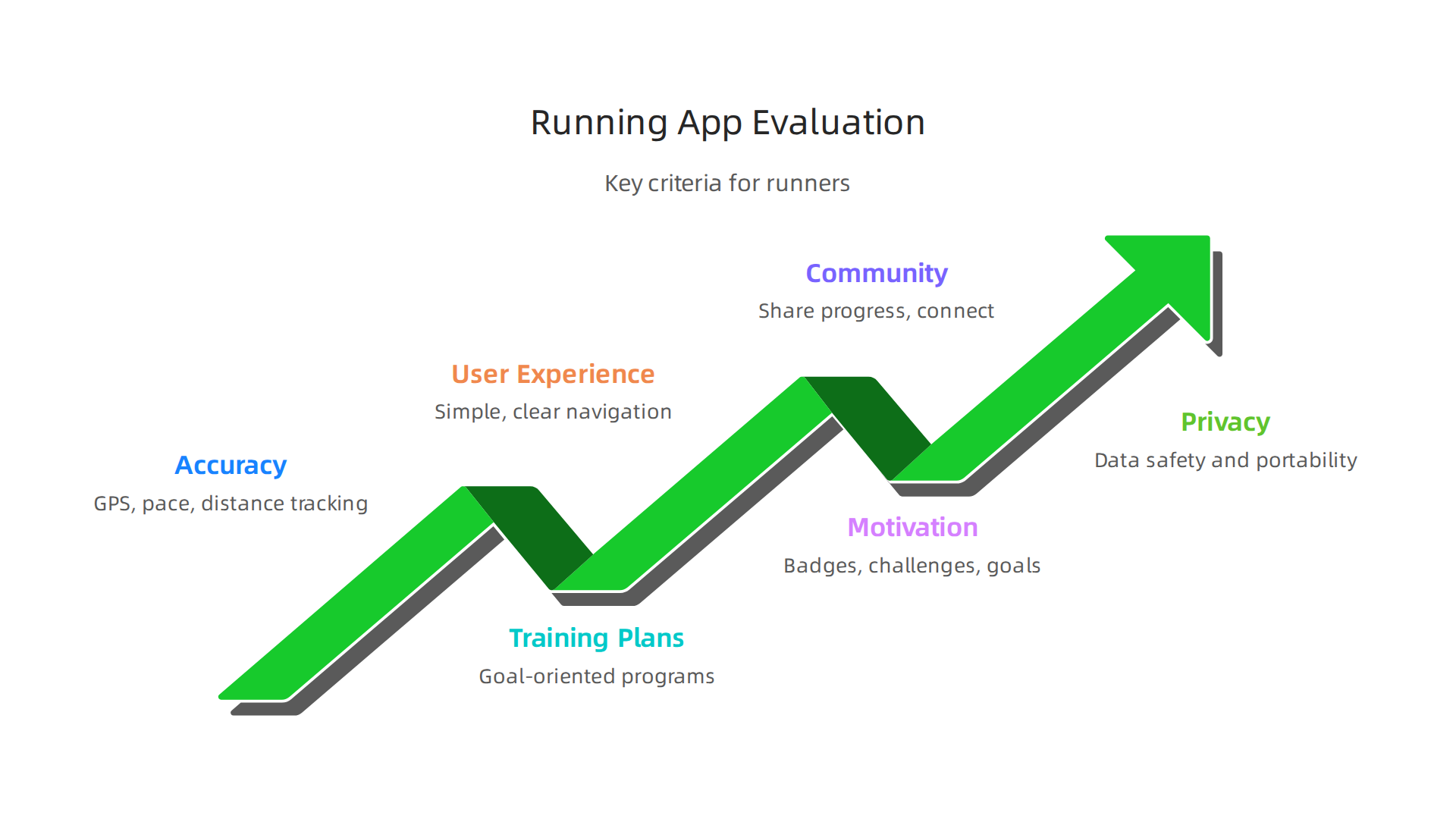
- How Accurate It Is: This is super important. We checked how well each app tracked things like GPS location, how fast you were running (your pace), and the exact distance you covered. While many apps use your phone’s GPS, it’s good to know that sometimes phone GPS can have small errors compared to special sports watches, especially over longer distances Accuracy and Adoption of Wearable Technology Used by Active …. Other studies have also looked into how accurate smartphone GPS is for running apps On the (In-)Accuracy of GPS Measures of Smartphones: A Study of Running Tracking Applications. We made sure to test this carefully.
- Quality of Training Plans: Does the app offer good training programs? Are they easy to follow? We looked for apps that help you reach goals like running a 5K race, losing weight, or just getting fitter.
- How Easy It Is to Use (User Experience): An app should be simple and enjoyable to use. We checked if the buttons made sense, if the information was clear, and if it felt smooth to navigate.
- Features That Keep You Going: What does the app do to keep you motivated? We looked for things like virtual badges, fun challenges, encouraging messages, and ways to set personal goals. Some apps even help you find a "flow app" experience, where you feel completely focused and calm during your run, which can be a great boost for your mental well-being.
- Community Features: Running can be more fun with friends! We checked how well apps let you connect with other runners, share your progress, or join groups for a friendly "self-care challenge."

- Your Privacy and Data: We looked at how each app handles your personal information. Does it keep your data safe? Can you easily take your running data with you if you switch apps? This is a big deal in 2026, as people care more about their digital privacy. Some apps even try to be a "360 life app," covering all parts of your well-being, so how they manage all that data is crucial.
How We Tested the Apps
Our testing wasn’t just about reading reviews. We put the best running apps through a full workout:
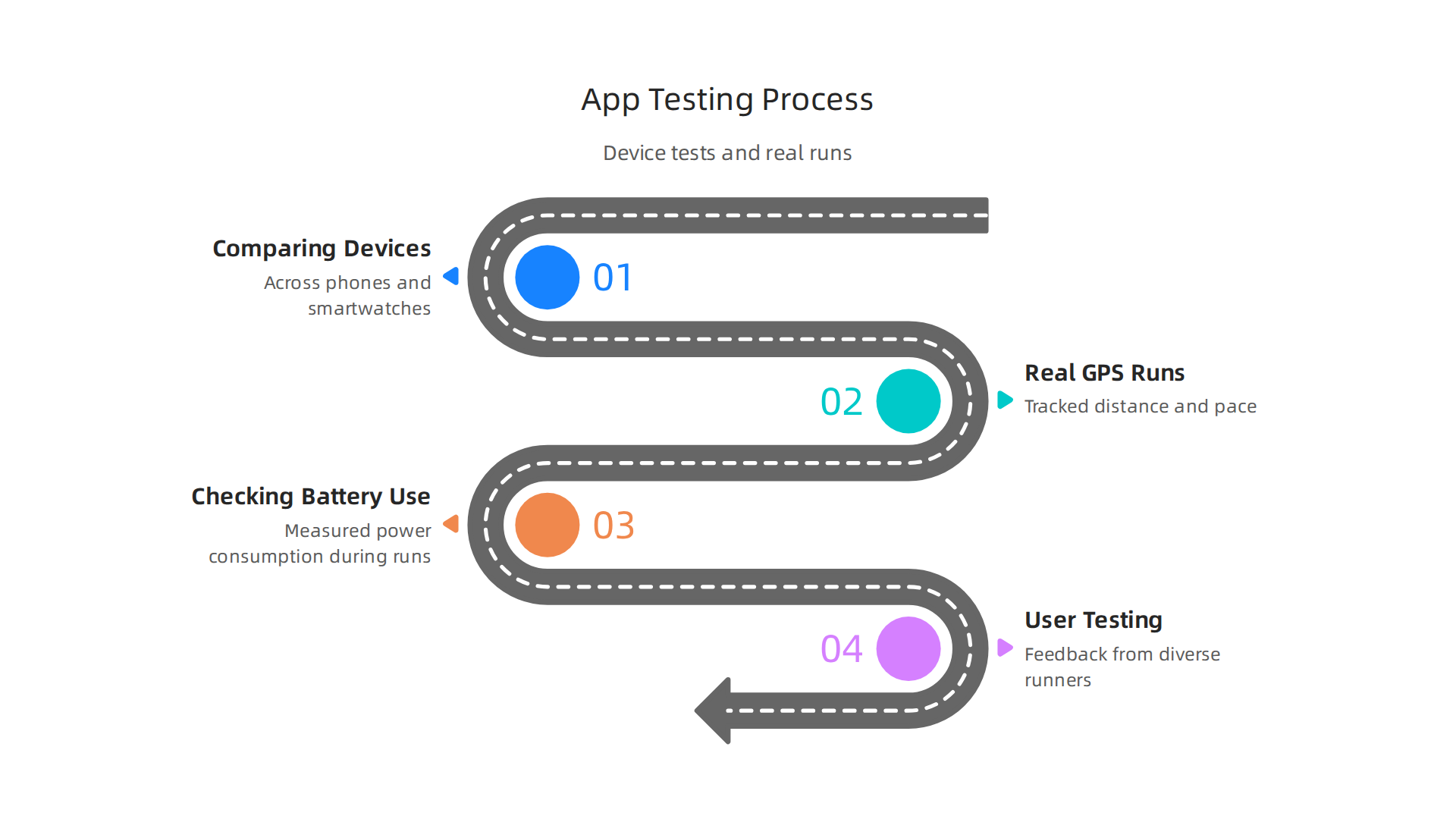
- Comparing Devices in the Lab: We looked at how the apps worked across different kinds of phones and smartwatches. We wanted to see if they ran smoothly on both newer and older devices.
- Real GPS Runs on the Road: Our testers actually went out and ran! They used the apps on various routes to see how accurately the GPS tracked distance and pace in the real world. This helped us understand how reliable the apps were in different environments.
- Checking Battery Use: No one wants an app that drains their phone battery too fast. We kept an eye on how much power each app used during long runs.
- Testing with Real Users: We had a diverse group of runners, both beginners and experienced, test the apps. They used them on different phones (iOS and Android) and gave us feedback on everything, from how easy it was to start a run to how helpful the training tips were. This helped us see how the apps performed in everyday scenarios for different people.
By using this detailed approach, we could truly see the strengths and weaknesses of each app. This helps us share the most honest and helpful advice so you can pick the perfect running companion for your journey. If you’re looking for other tools to help you stay on track, an Unlock Success with an Accountability Partner App can provide extra support.
Now that you know how we looked at each app, let’s talk about the different kinds of running apps you’ll find. Every runner is unique, and so are the best running apps out there. Some apps are great for simply tracking your runs, while others offer deep coaching or ways to connect with friends. Knowing what you need will help you pick the right one.
Top GPS and Training-Focused Running Apps: Strengths, Trade-Offs, and Who They’re Best For
When choosing the best running apps, it helps to think about what you want to achieve. We can group these apps into a few main types, each with its own good points and things to think about.
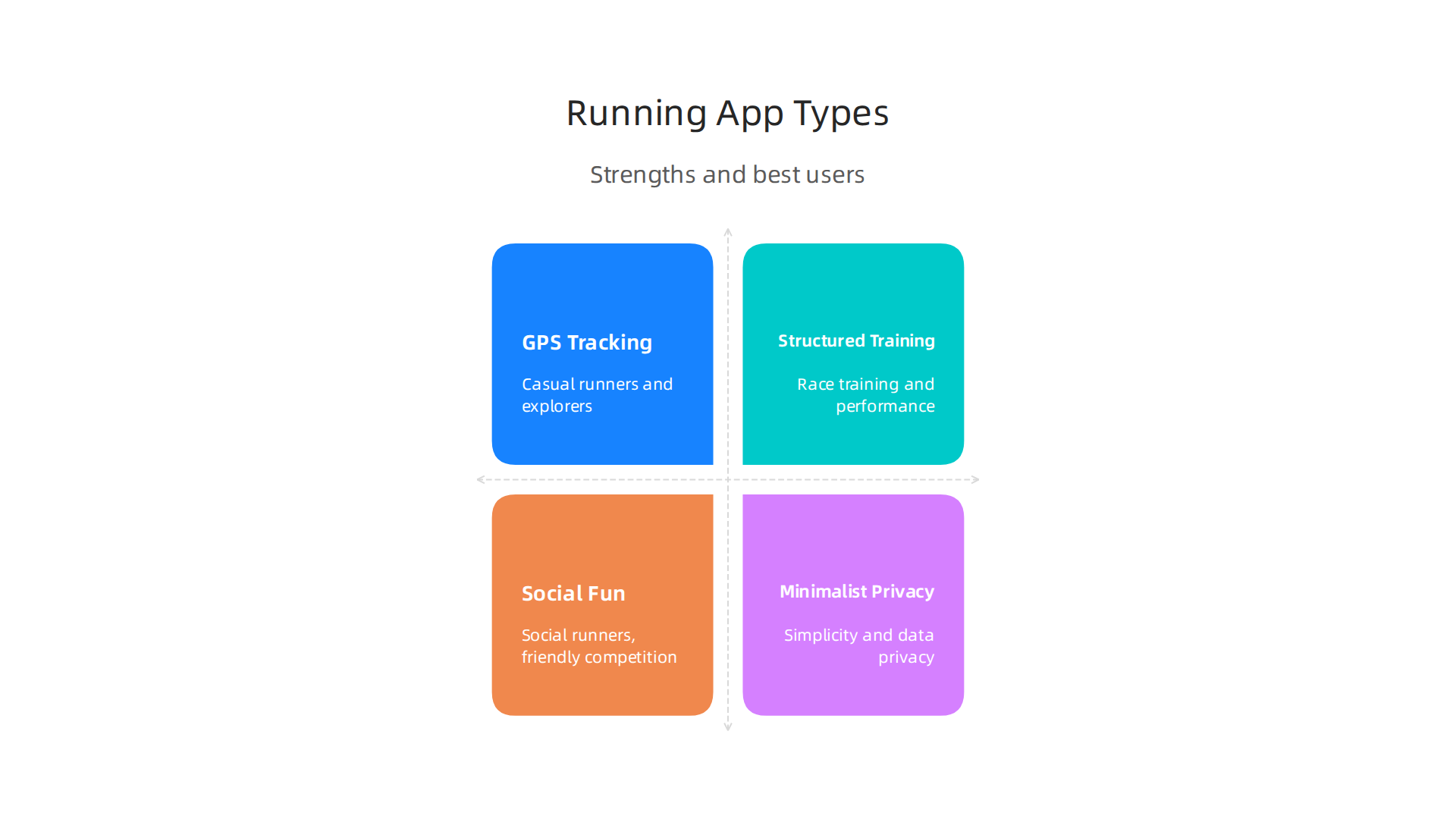
For GPS Run Tracking and Finding Routes
These apps are perfect if your main goal is to simply track where you run, how far, and how fast. They use your phone’s GPS to draw your path on a map and record key details of your workout. Many runners love seeing their routes and looking back at their progress.
- Strengths: Very good for seeing your speed and distance. Many let you find new running paths or share your own favorite routes.
- Trade-offs: How accurate they are can sometimes depend on your phone’s GPS signal. Some studies show that smartphone GPS can have small errors compared to special sports watches, especially over longer distances or in tricky areas Software Correction of Speed Measurement Determined by Phone GNSS Modules in Applications for Runners. Also, using GPS a lot can drain your phone’s battery fast.
- Best for: Casual runners, explorers who like new routes, and anyone who just wants a clear record of their runs without too many extra features.
For Structured Training and Coaching
If you have a specific goal, like running a 5K, a marathon, or just improving your speed, these apps are your best friend. They offer guided training plans, virtual coaches, and tools to help you stick to a schedule.
- Strengths: Provide step-by-step plans, audio cues, and smart advice based on your progress. They help you stay motivated and build good habits.
- Trade-offs: Often, the best coaching features come with a cost. Premium subscriptions for these apps can range from $4.99 to $19.99 per month in 2026 Running Apps Market Size, Share & Growth Forecast to 2034. You might also find yourself "locked in" to one app’s system, making it harder to move your detailed training history to another app later.
- Best for: Runners training for races, those looking to improve performance, or beginners who need a clear plan to start their running journey.
For Social Fun and Friendly Competition
Running can be more fun with friends, or when you have a goal to work towards with others. These apps focus on community features, letting you share your runs, join challenges, and connect with other runners.
- Strengths: Great for motivation, finding running buddies, and joining fun group challenges. It can make running feel less like a chore and more like a shared "self-care challenge."
- Trade-offs: You might share more personal data with these apps and their communities. Make sure you’re comfortable with their privacy settings.
- Best for: Social runners, people who thrive on friendly competition, and anyone who wants to feel part of a wider running group.
For Minimalist and Privacy-Focused Tracking
Some runners just want to track their basic stats without all the bells and whistles, and without sharing tons of personal data. These apps are simple, clean, and often put your privacy first.
- Strengths: Straightforward to use, usually focus on key stats like distance and pace. Many are designed to keep your data private and stored only on your device Privacy-focused running apps in 2026 — what actually tracks you the least when you’re just trying to log. They can help you get into a "flow app" state by removing distractions.
- Trade-offs: May lack advanced training plans, social features, or detailed analytics.
- Best for: Runners who prefer simplicity, those very concerned about data privacy, or anyone who wants a distraction-free running experience. If you are also interested in simple ways to stay active at home, check out the best free home workout apps.
Important Trade-Offs to Think About
No app does everything perfectly. Here are some big things to keep in mind when choosing:
- Accuracy vs. Battery Life: Apps that use GPS constantly can be very accurate for tracking your distance and speed, but they also use a lot of battery. Some newer phones and smartwatches are getting better, but there’s still a balance. For example, GPS sport watches often show high accuracy Accuracy of GPS sport watches in measuring distance in an ultramarathon running race, but they are separate devices.
- Coaching Depth vs. Cost: Free apps are great, but the most detailed training plans, personalized coaching, and advanced features usually come with a paid subscription. Think about how much guided help you really need versus what you’re willing to pay.
- Ecosystem Lock-in vs. Data Portability: Many apps want you to keep all your running data within their system. This can be great if you love that app, but it can make it tricky if you decide to switch to a different service later. Data portability means you can easily transfer your data to another app or keep a copy for yourself Your Data, Your Control. This is especially important as more apps aim to be a "360 life app" that tracks many parts of your well-being, making data handling key. User concerns about privacy and data security are high in 2026, with nearly half of users worrying about their health information being misused Running Apps Market Size & Opportunity Report 2035.
No running app can be truly effective if you don’t keep using it. That’s why the best running apps don’t just track your runs; they also have smart features to help you build and stick to healthy habits. These features often fall into a few key areas: how they help you form habits, how they make exercise feel like a game, and how they connect you to others for support.
Features that keep you running: habit formation, gamification, and community accountability
To help you keep running, good apps use clever ways to make the activity fun and something you want to do again and again.
Building Running Habits: Streaks, Goals, and Feedback
The trick to sticking with running is to make it a regular part of your life. Running apps help with this by using simple but powerful tools:
- Streaks: Many apps celebrate when you run for a certain number of days or weeks in a row. Seeing that "streak" grow can be a big motivator not to miss a day. It feels good to keep a good thing going.
- Micro-goals: Instead of just one big goal like "run a marathon," apps break it down into smaller, easier goals. Maybe it’s "run for 10 minutes today" or "run 1 mile." Achieving these small wins often makes you feel capable of tackling bigger ones.
- Progress Feedback: Apps show you how far you’ve come. They might show charts of your speed getting faster, your distance growing, or how many calories you’ve burned. Seeing your progress clearly helps you feel proud and keeps you motivated.
- Social Commitments: Sometimes, just telling someone you plan to run can make you more likely to do it. Some apps let you share your goals with friends, creating a friendly nudge to lace up your shoes. This can be a great way to start a personal "self-care challenge."
Gamification: Making Running a Game
Gamification is when apps add game-like elements to everyday tasks. This makes activities like running feel more engaging and less like a chore. Research from 2026 shows that these game-like features can really help people stick to physical activity and get more involved with fitness apps overall An Experimental Study on Digital Fitness Apps Structured Abstract.
- Points, Badges, and Levels: You might earn points for each mile run, get a special badge for running your fastest mile, or "level up" after completing a training plan. These little rewards make running feel like a quest, and it’s fun to earn them.
- Challenges: Apps often have challenges, like "run 50 miles this month" or "complete three runs this week." These give you a clear goal to work towards and a sense of achievement when you finish them.
- Virtual Races and Rewards: Some apps let you compete in virtual races against yourself or others, or unlock virtual rewards within the app. It’s a fun way to push yourself without needing to go to a real race. Actually, a 2022 study found that gamified fitness programs had a positive effect on getting people to be more active Do Fitness Apps Actually Work? What the Research Says – FitCraft.
Community Accountability: Running Together
Running apps also help people connect, which can boost motivation.
- Leaderboards and Clubs: If you love friendly competition, leaderboards can push you to run more to see your name higher up. Joining a club with friends in an app can create a team feeling, where everyone supports each other.
- Sharing and Support: Many apps let you share your runs with friends or a larger community. You can give "likes" or comments on others’ activities, and they can do the same for you. This social support can be very powerful. Studies show that social elements in gamified apps can create a sense of community and make people more active Effect of digital health applications with or without gamification on physical activity and cardiometabolic risk factors: a systematic review and meta-analysis of randomized controlled trials.
For social users, these features are great for finding buddies and staying motivated. But what about introverts? They might prefer smaller, private groups or simply enjoy seeing friends’ progress without needing to compete directly. The best running apps understand this and often let you control how much you share. For many, connecting with others through an app helps turn exercise into a shared "self-care challenge." If you find yourself needing a little extra push to stay on track, or want to make sure you’re getting things done, you can also unlock success with an accountability partner app.
If you are looking for ways to try out new habits and challenges, we have many opportunities for you. Why not take a step towards making positive changes in your life right now? Join An Experiment.
Connecting with others through an app helps turn exercise into a shared "self-care challenge." But beyond motivation, some of the best running apps also offer guidance and coaching to help you train smart and stay healthy.
Coaching, training plans, and injury prevention: what to expect from an app-based coach
When you choose a running app, you might find different types of "coaching" to help you reach your goals. These range from simple plans made by computers to more personal help from real experts.
Different Kinds of Coaching in Running Apps
Apps offer different levels of support, and each has its good points and not-so-good points:
- Algorithmic Plans: These are like basic recipes for running. The app uses rules and data to create a plan for you. For example, it might tell you to run for 20 minutes today and 25 minutes tomorrow. These plans are easy to follow and often free or cheap. But they don’t really know you or how you feel on a given day. They might not be the most exact for your personal needs. Research from 2026 shows that these kinds of plans using survey and activity data may not be very good at predicting injuries Best AI Marathon and Half Marathon Training Apps (2026).
- Coach-Built Plans: Here, a real running coach designs the training programs. The app then delivers these plans to you. These are often smarter than purely algorithmic plans because a human expert thought about how best to train. They can be more personal and safer, as they come from someone with experience. However, you still don’t get direct, one-on-one talk with the coach.
- Live Coaching: This is the most personal option. Some apps connect you with a real coach who talks to you, checks your progress, and adjusts your plan just for you. This kind of coaching is the most exact and personal, which can make training safer and more effective. But it’s also usually the most expensive.
Choosing the right type depends on what you need. If you’re new to running, a simple algorithmic plan might be enough. If you have big goals or past injuries, a coach-built plan or even live coaching could be a better choice for safety and better results.
Key Features for Staying Injury-Free
Running is great exercise, but sometimes injuries can happen. It’s important to look for features in running apps that help you avoid getting hurt. However, it’s also good to know that many studies, including one from 2026, suggest that running apps alone might not actually lower your risk of injury Effectiveness of an online multi-component exercise-based injury …. Still, some features can guide you toward safer habits.
Here are some things to look for:
- Progressive Load Planning: This means the app helps you slowly increase how much you run or how hard you train. Jumping into too much too fast is a big cause of injuries. A good app will suggest adding distance or speed a little at a time.
- Recovery Tracking: Running is not just about the miles, but also about rest. The best running apps help you track your sleep, how tired you feel, or even your heart rate to see how well your body is recovering. If you’re not recovering well, the app might suggest an easier day.
- Cross-Training Cues: Running uses certain muscles a lot. Cross-training means doing other exercises, like swimming or cycling, to work different muscles and prevent overuse injuries. Some apps offer ideas for cross-training or link to other fitness programs. If you’re looking for different ways to stay active, you might also explore best free home workout apps that can complement your running routine.
- Links to Clinician Resources: If you do get hurt, some apps might suggest seeing a doctor or physical therapist. They might even have connections to experts who can help you. Getting professional help for injuries is always the best path. In fact, real-time feedback with instructions from pressure sensors, as supported by an app, has been shown to reduce the risk of running-related injuries, according to a 2024 review Running-Centred Injury Prevention Support: A Scoping Review on ….
Even with the best running apps, listening to your body is key. If something hurts, it’s always wise to slow down or take a break.
While preventing injury is key, staying motivated often comes down to who you share the journey with. Beyond just coaching, many of the best running apps now offer great ways to connect with other runners, turning lonely miles into a shared "self-care challenge."
Community Formats that Work in Running Apps
Connecting with others through an app can make running more fun and help you stick with your goals. Here’s how these apps build supportive communities:
- Small Groups and Challenges: You can create or join small groups with friends or family. These groups might set up friendly challenges, like who can run the most miles in a week. This adds a fun, competitive spark. Apps often use what’s called gamification, adding game-like elements such as points, badges, or leaderboards. Research from 2026 shows that these gamified features can really boost how much people exercise and how consistently they stick with it Gamification in a physical activity app.
- Coach-Led Cohorts: Some apps offer bigger groups guided by a coach. This can feel like being part of a team. The coach might set goals for everyone, share tips, and build a sense of belonging among all the runners.
- Local Meet-Ups and App-Integrated Clubs: Many running apps help you find or even create local running clubs. This lets you meet people in real life who share your love for running. Being part of a running community helps you feel supported and less alone. Studies from 2024 tell us that social elements, like peer competitions and support networks, help build community and make people more active Effect of digital health applications with or without gamification on physical activity and cardiometabolic risk factors: a systematic review and meta-analysis of randomized controlled trials. This kind of support makes your health journey more enjoyable.
Using App Features to Build Engagement
Running app features are not just for everyday runners; they are also powerful tools for brands and creators. They can use these social functions to build loyalty and truly connect with their audience.
- Participatory Campaigns: Imagine a creator launching a "360 life app" challenge within a running app, where participants log their runs and share their progress. Or a brand could host a "flow app" competition, encouraging users to find their running rhythm and share their experiences. These kinds of creative campaigns help people move beyond just looking at content to actually doing something active. If you’re looking for extra motivation, an accountability partner app can also help you stay on track.
- Meaningful Engagement: By inviting people to join challenges and share their wins, brands and creators can build strong communities. This makes people feel more connected to the brand and each other. For creators aiming to foster such active communities and monetize their work in new ways, there are many best websites for creators available in 2026 to explore.
These community features make running a more social and rewarding experience for everyone involved. Ready to take action and connect with others in a meaningful way? Join An Experiment and turn laughter, curiosity, or inspiration into action, results, and shared participation. Or, if you just want to stay in the loop about new challenges and community projects, Join The Newsletter for ongoing updates.
After finding your running community, it’s smart to think about the more practical details of the best running apps. These include how your personal information is handled, if you can move your data to other apps, how much the app costs, and if it works with your devices. Looking into these things helps you choose the right app without any surprises.
Privacy Matters: Your Data and Running Apps
When you use a running app, you’re sharing a lot of personal information. This can include where you run, how fast you go, and even your heart rate. It is important to know what happens to this data.
Many fitness apps collect your personal data. In fact, research from 2025 showed that about 12 out of 15 popular fitness apps share your personal information with other companies, essentially selling your privacy Beware, 80% of the most popular fitness apps are selling out your privacy. This is especially true for free apps, which often share more data. Location tracking and health details are very sensitive, and many people worry about this.
If you are worried about your privacy, you are not alone. Around 48% of users are concerned about their health data being misused by running apps. Also, nearly 41% of users stop using fitness apps within three months because of worries about privacy and not being able to control their data Running Apps Market Size & Opportunity Report 2035.
It’s also good to check if an app offers "data portability." This means you can easily get your data back or move it to another service if you want to. In 2026, rules are coming out that help people control their data more easily Your Data, Your Control. Some apps, like a "360 life app" or a "flow app," might collect a lot of different data to give you a full picture of your health. Always look at the app’s privacy settings to see how your information is used and shared.
Subscriptions and Device Compatibility: The Cost of Your Run
Most of the best running apps offer both free and paid versions. The free version might have limits, like not being able to join certain challenges or get detailed reports. Paid versions, often called premium, unlock all the features.
The cost for premium running apps can change quite a bit. Monthly plans might range from about $4.99 to $19.99 in 2026, with yearly plans usually being cheaper overall Running Apps Market Size, Share & Growth Forecast to 2034. Besides the app itself, you might also need to think about buying extra gear like smartwatches or heart rate monitors, which can add to the total cost.
The running apps market is quite large and growing. It was valued at about $4.3 billion in 2026 and is expected to grow even more by 2035 Running Apps Market Size and CAGR (22.55%) 2035. This shows that many people are willing to pay for these services. If you’re looking for other fitness apps that might be free, you can also explore options like the best free home workout apps to achieve your fitness goals.
Before picking one of the best running apps, make sure it works well with your phone, smartwatch, or any other devices you use for your runs. Good compatibility means a smoother experience as you track your self-care challenge.
Summary
This article explains why choosing the right running app matters for motivation, progress, safety, and community. It walks through how apps differ — from GPS route trackers and structured coaching to social platforms and privacy-focused tools — and describes the testing process used to evaluate accuracy, battery use, training quality, and user experience. You’ll read about trade-offs like GPS accuracy versus battery life, coaching depth versus cost, and ecosystem lock-in versus data portability, and learn which app types suit casual runners, racers, social users, or privacy-minded people. The piece also covers habit-building features, gamification, community formats, and injury-prevention tools so you can pick an app that keeps you consistent and safe. By the end, you’ll know what features to prioritize, how to weigh costs and privacy, and how to choose an app that fits your goals and devices.