Why Split Fiction is the Sci-Fi Subgenre You Need Right Now
You know that feeling when you are scrolling through your phone, and your brain feels like a TV with too many channels playing at once? Information, news, opinions, ads. It all blurs together.

You want something that actually grabs you. Something that makes you think and feel, not just pass the time.
That is exactly where split fiction comes in.
Split fiction is a sci-fi subgenre that tells a story through multiple, separate perspectives. Think of it as a novel where two or more characters live in different worlds, times, or even different versions of reality. Their stories weave together to create a bigger picture. It is not just about jumping between plotlines. It is about showing you how different people experience the same universe in completely different ways.
Why does this matter in 2026? Because we are all living in a split narrative right now. Our days are broken into work mode, home mode, online persona, real self. We switch between devices, roles, and mindsets constantly. A well-crafted split narrative can mirror that fragmented experience and help us find some coherence. It shows us that even when life feels scattered, there is a pattern underneath.
Readers in 2026 are not just looking for entertainment. They want stories that challenge their thinking and offer real emotional depth. A simple good-versus-evil plot is not enough anymore. People are hungry for complexity, for multiple angles on truth, for characters who see the world through very different lenses. As one book lover put it, these are stories that don’t shy away from the sad parts of life while offering humor and relief. That blend of depth and lightness is exactly what split fiction delivers.
If you are new to the subgenre, you might wonder where to start. The best split fiction books build a solid premise with a strong human dimension. They make you care about each character’s journey, even when their paths seem miles apart. Understanding the story elements that make these narratives work can help you appreciate them more and maybe even inspire your own writing.
Here is the thing: split fiction is not just a reading trend. It is a way to see your own life from new angles. It invites you to step outside your own head and try on someone else’s reality. And in a world full of noise, that kind of perspective shift is rare and valuable.
If you are ready to dive into a universe that blends sci-fi comedy, curiosity, and genuine emotional connection, there is a whole world waiting for you. Explore stories that turn anxiety into laughter and loneliness into belonging.
What Is Split Fiction? Defining the Dual Narrative
You have probably read a book where the story jumps back and forth between two different time periods. Or maybe you have seen a movie that follows two characters living in parallel worlds who never meet until the very end. This is the heart of split fiction. It is a storytelling structure built on multiple timelines, separate perspectives, or alternate versions of reality.
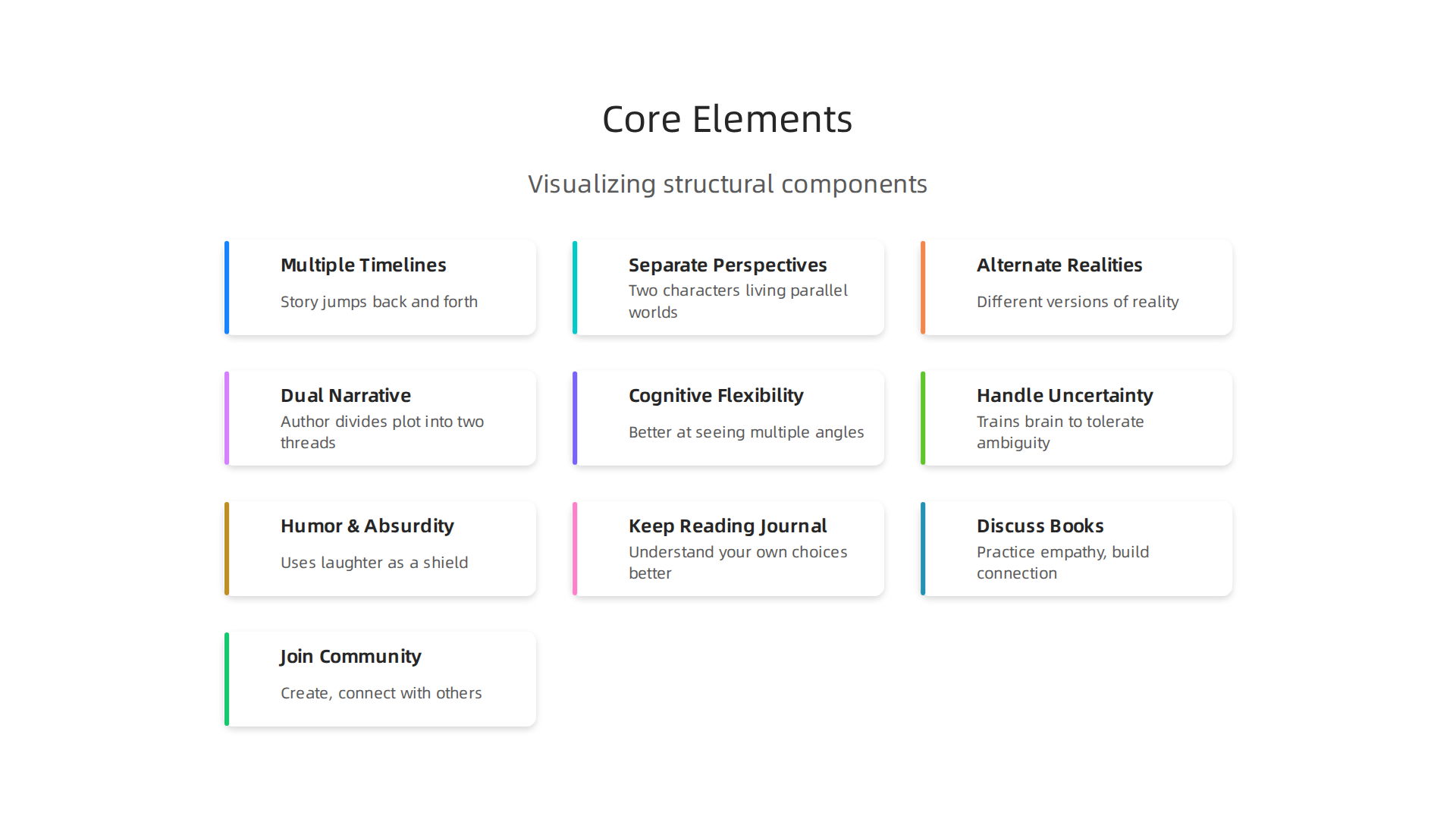
Instead of a straight line from start to finish, the story unfolds like a braid, with each strand adding color and meaning to the whole.
At its simplest, split fiction uses what writers call a dual timeline or dual narrative. The author divides the plot into two (or more) distinct threads. These threads might be set decades apart, on different planets, or inside the same city but filtered through very different eyes. The key is that each thread has its own complete arc, its own conflict, and its own cast of characters. Yet they are not separate stories. They connect, collide, and complete each other. This technique is not new. Classic works like The Odyssey weave two journeys into one epic. More recently, novels like The Time Traveler’s Wife and Cloud Atlas have pushed the form into exciting new territory. But split fiction is especially at home in science fiction because sci-fi already loves to ask “what if?” By toggling between realities, the genre can explore how a single choice, invention, or disaster echoes across time and space.
Understanding this structure makes reading a split fiction book much more rewarding. You start to notice the small mirrors the author places between timelines. You see how a scene in one world explains a mystery in another. And you appreciate the craft behind the storytelling. For example, the sci-fi comedy universe called The Ridiculous uses a dual perspective to turn anxiety into laughter. By bouncing between two characters who experience the same cosmic events in totally opposite ways, the book reveals a deeper truth about connection and resilience. When you know what split fiction is, you can feel the author’s hand guiding you through the maze.
If you want to explore more about what makes a dual timeline story tick, check out this guide on Writing Dual Timeline Books from The Novelry. It breaks down the ingredients that make these narratives work. And for a deeper dive into essential story components, the article on 10 story elements every novel needs can help you spot them in any split fiction book.
Why Split Narratives Captivate Us: The Psychology of Dual Perspectives
Your brain is wired to look for patterns. When you read a split fiction novel, you jump between timelines. You see a detail in one chapter. Then twenty pages later, that detail shows up again in a new light. That moment of recognition feels good. It triggers a small reward in your brain. Every time you notice a connection between timelines, your brain releases dopamine. That is the same chemical behind the rush of solving a puzzle.

This is part of the reason dual narratives hook us so fast. But the reward is just the start. These stories also reshape how you think and feel.
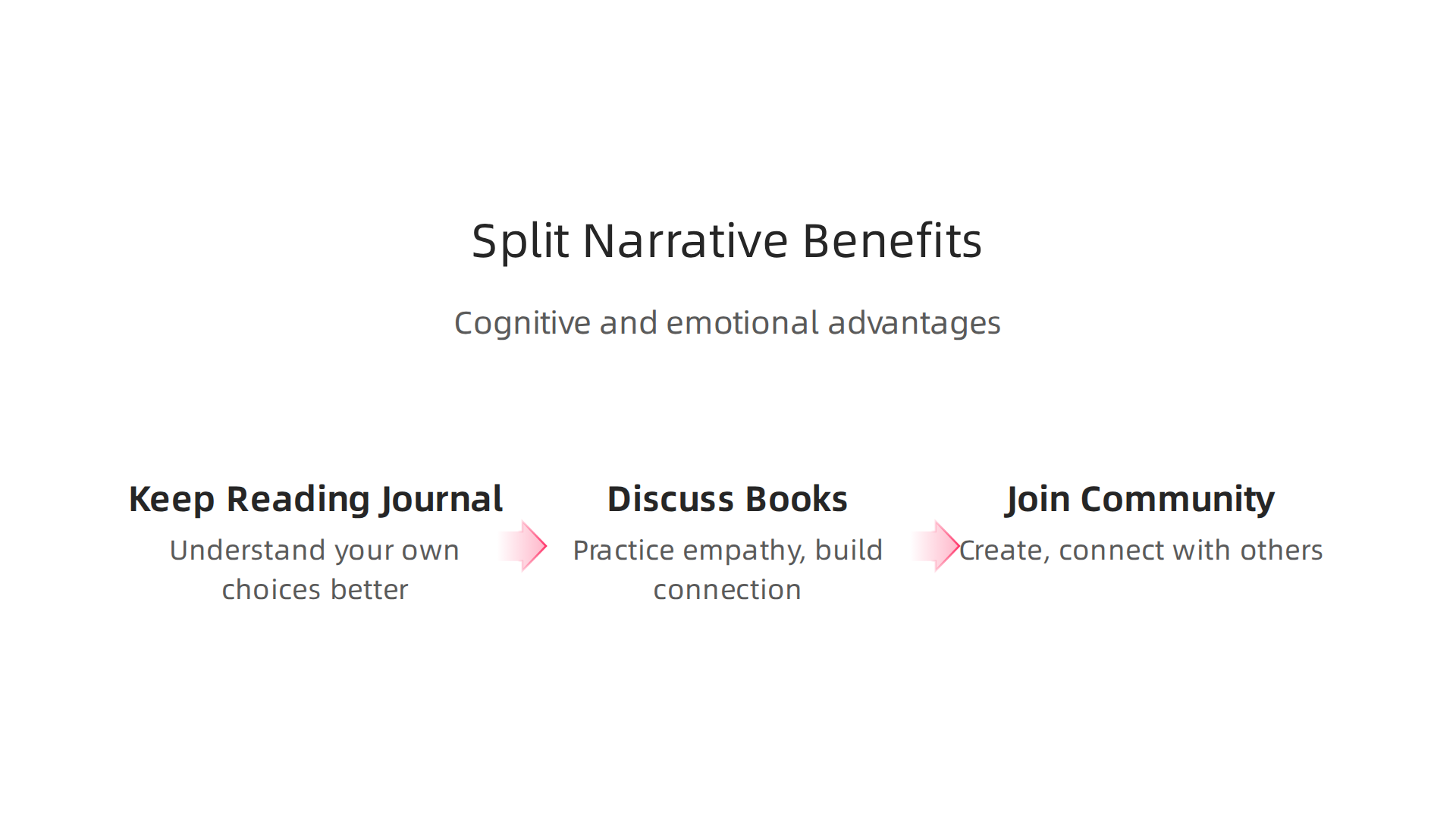
First, they build cognitive flexibility. Every time you switch between timelines, your brain shifts gears. You hold two different sets of characters, problems, and settings in your mind at the same time. This mental practice makes you better at seeing the world from multiple angles. Studies show that reading complex narratives can increase empathy. One study found that people who felt deeply transported into a story showed more empathy and even helped strangers more often. That skill of caring about someone else’s life, even a fictional one, carries over into your real relationships.
Second, split narratives give you a safe space to handle uncertainty. Life is messy. Things do not always make sense. Dual timeline stories mirror that messiness. They show you two realities that may contradict each other at first. But as the story goes on, you begin to see how both can be true at once. This trains your brain to tolerate ambiguity. You learn to sit with not knowing and trust that clarity will come. That is a powerful life skill.
Third, humor in these stories makes the uncertainty even easier to handle. Comedy works by breaking our expectations in a harmless way. According to the benign violation theory of absurd humor, absurd comedy breaks our expectations in a way that feels safe. A split narrative can show the same scary event from two perspectives: one terrified, one laughing. That contrast lets you explore big ideas like the meaning of life without feeling crushed by them. This is where the psychology of science fiction satire shines. It uses laughter as a shield.
Put all three together, and you have a reading experience that is both entertaining and good for your brain. It keeps you curious, emotionally open, and ready for surprise. This is why finishing a split fiction book often feels so satisfying. All the loose threads come together at once.
If you want to explore more books that challenge your mind and make you think differently, check out this guide to sci-fi adventures with layered narratives. And for a deeper look at how storytelling shapes our empathy, see this research on transportation into a story and empathy.
A Deep Dive Review: Split Fiction at Its Best
Let’s look at how one novel pulls off the split fiction trick perfectly. The Ridiculous uses three intersecting timelines to explore identity and choice.
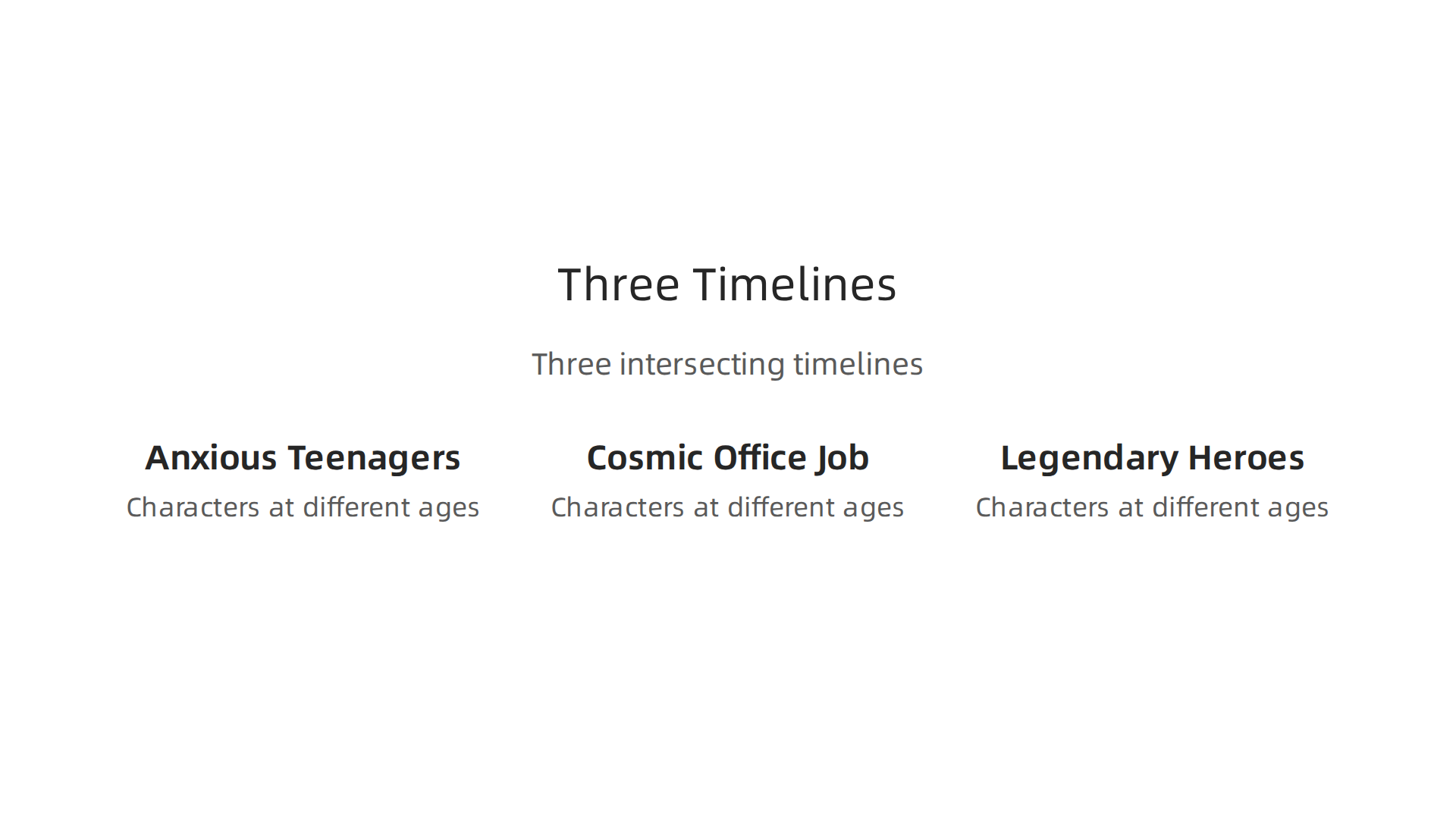
Each timeline features the same characters at different ages. One shows them as anxious teenagers. Another drops them into a cosmic office job. A third reveals them as legendary heroes. The connections between these timelines reward careful readers and make you rethink everything you thought you knew.
Critics praise the book for blending laugh-out-loud moments with big questions about purpose and free will. The humor never feels forced. Instead, it works because the story uses science fiction satire to point out how silly our worries really are. This mix of comedy and philosophy keeps the pages turning while also making you stop and think.
In this split fiction review, I will examine the plot structure, the character arcs, and the comedic elements that make this story so effective. You will see how each timeline serves a distinct purpose and how the author uses humor to soften heavy themes. By the end, you will understand why dual timeline stories can be both fun and meaningful.
If you want to write your own layered story, start by learning the fundamentals with this guide to 10 story elements every novel needs. And if you are ready to laugh while questioning the universe, explore The Ridiculous on Amazon and see how three timelines can change your perspective.
Plot and Structure
The story opens with two separate realities that feel completely unrelated. One timeline follows characters struggling with everyday absurdity. The other takes place in a surreal cosmic setting. Neither world acknowledges the other at first. But as the novel progresses, small clues start connecting them. A repeated line of dialogue. A shared dream. A familiar object appearing in both realities. These breadcrumbs pull you deeper into the mystery. Each timeline stays distinct, yet both explore the same core themes of choice and identity. If you enjoy stories that play with structure, you will appreciate how this novel rewards close attention. For another book that bends the rules of storytelling, check out this look at the Annihilation book.
Character Development Across Splits
One of the best parts of this split fiction review is watching characters grow differently across timelines. You see two versions of the same person. One takes risks. The other stays cautious. Each choice reveals hidden layers of personality. It feels like a real exploration of human nature. For readers who love deep character work, this approach delivers. Check out these story elements every novel needs to understand how authors build layered personalities. And if this split-world storytelling excites you, Explore The Books to see the series in action.
Humor and Absurdity
In this split fiction review, the absurd situations feel over the top on purpose. The book uses wild scenarios to show how silly real-world anxieties can be. One character might panic about a minor problem while their alternate self faces a truly ridiculous challenge. The contrast makes you laugh and think. Laughter becomes a coping mechanism for the protagonists, helping them step back and see their fears in a new light. It turns worry into something you can joke about. For more on how sci-fi blends humor with big ideas, check out this Project Hail Mary book breakdown.
How Split Fiction Resonates with Modern Readers
Have you ever wondered what your life would be like if you made a different choice years ago? That small decision in high school. That job you turned down. That person you never called.

Most people carry a handful of these "what ifs" around every day. Split fiction gives those questions a stage. It lets you watch parallel versions of the same character living out those alternate paths. And in doing so, it does something powerful. It makes you feel less alone.
When you see a character facing the same kind of crossroads you face, but living through both outcomes, something clicks. You realize that uncertainty is normal. That second guessing yourself is part of being human. Readers often report a deep sense of relief when they encounter these stories. It is like getting permission to stop obsessing over every choice. The narrative shows you that both versions of a life can be messy, beautiful, and worth living. This shared experience builds a quiet connection between the reader and the pages.
Research backs this up. Studies show that readers who become deeply absorbed in a story feel more empathy and are more likely to help others. When you step into the shoes of two different versions of the same person, you stretch your understanding of human experience. It becomes easier to accept your own imperfect path. This split fiction review highlights how the structure itself becomes a tool for perspective.
Engaging with these layered stories can also lower anxiety. Instead of spiraling over every choice, you start to see life as a series of branching paths rather than a single right or wrong track. The pressure lifts. For anyone who struggles with constant decision fatigue, split fiction offers a healthy mental break. It rewires the way you think about your own future.
If you want to explore more about how storytelling shapes the way we see ourselves and others, check out this guide on mental health synonyms that build connection and reduce stigma. It offers simple shifts in language that can change how you talk about your own inner world.
And if this kind of resonant, perspective shifting fiction speaks to you, there is a place where that idea comes to life. A series built around laughter, curiosity, and the joy of exploring alternate paths. Ready to experience it for yourself? Explore The Books and see how a funny, thoughtful story can change the way you see your own decisions.
Why ‘The Ridiculous’ Exemplifies Split Fiction Done Right
So what does split fiction look like in real books you can read right now? The Ridiculous is a perfect example. This series takes the core idea of parallel universes and wraps it in humor that actually makes you laugh out loud. But here is the trick. Underneath all the jokes, there are deep questions about who you are and what your choices mean. The book creator behind this series understands something important. You can explore heavy ideas without feeling heavy yourself.
The narrative structure of The Ridiculous works like a funhouse mirror. It shows you one version of reality, then flips it. You see the same character in a completely different world. And instead of feeling confused, you laugh. That laugh does something real. It lowers your guard so the deeper questions can slip in. Why did that version of the character end up happy? What small change sent them down a different path? You start asking yourself the same things about your own life.
This balance between humor and reflection is rare. Most books either make you think hard or make you laugh. The Ridiculous does both at the same time. It is a great example of absurdist comedy books that use the genre’s strengths to explore real human worries. The absurdity makes the existential stuff feel lighter. You can sit with big questions about meaning and choice without spiraling into anxiety. Instead, you smile and keep turning pages.
Beyond the story itself, The Ridiculous invites you to join in. The series runs community experiments that push readers to take action. You are not just reading about alternate paths. You are encouraged to create your own. Maybe you write a silly poem about your biggest regret. Maybe you share a picture of a decision that changed everything. These small acts make the ideas stick. They turn passive reading into active growth.
If you want to see how narrative structure can shape the way you think, check out this guide on 10 story elements every novel and short story needs. It breaks down the building blocks that make stories like The Ridiculous work so well.
The Ridiculous proves that split fiction does not have to be serious to be meaningful. Sometimes the best way to reflect on your life is to laugh at all the versions of it first.
How to Get the Most from Reading Split Fiction
You just finished a split fiction book like The Ridiculous. The story jumped between worlds, timelines, and versions of the same character. Your head is spinning in the best way. Now what? How do you make that reading experience last and actually change how you think? Here are three simple ways to turn a great story into real personal growth.
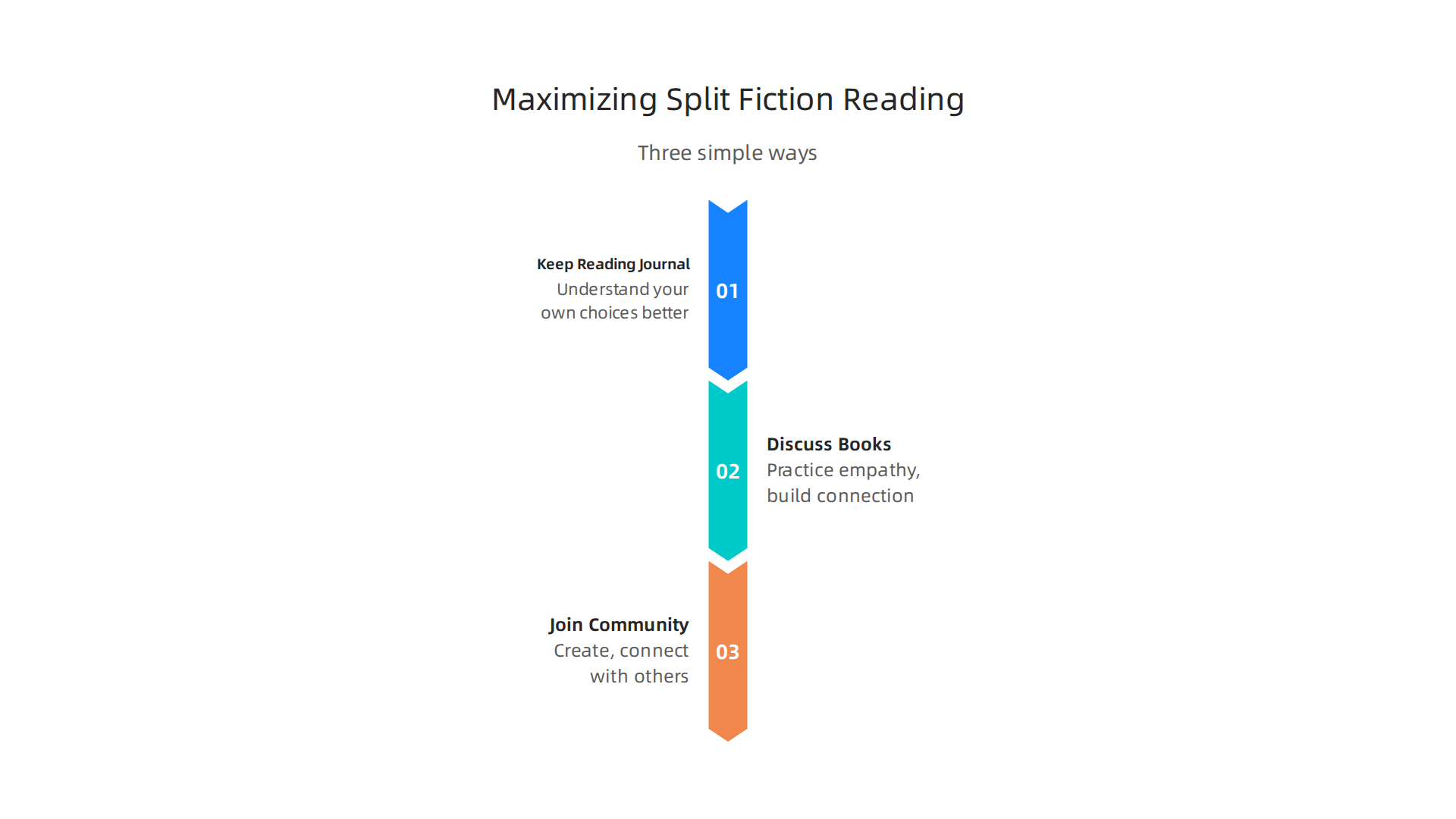
Keep a Reading Journal
Split fiction works because of the timeline shifts and character variations. One version of a character takes a risk. Another version plays it safe. The differences are what make you stop and think.
Grab a notebook or open a digital doc. Write down the moments when the story splits. What caused the change? How did each version react? Ask yourself which version feels more like you. This practice is a form of writing to learn. You do not need to be a great writer. You just need to put your thoughts on paper. Over time, this habit can help you understand your own choices better. If you want to build a stronger writing habit, check out this guide to building writing confidence. It gives simple steps to start writing without pressure.
Discuss Books with Others
You catch different things when you talk about a story with someone else. Maybe they noticed a small detail you missed. Maybe they saw a character completely differently.

Try joining a book club or even just texting a friend who loves reading. Ask them, "Why do you think the main character made that choice in the other timeline?" These conversations open up new ways to see the narrative. They also help you practice empathy. According to reading trends for 2025 to 2026, more readers are seeking social reading communities because shared stories build deeper connection. You are not just reading alone anymore. You are part of a conversation.
Join Community Experiments
Split fiction does not have to end when you close the book. The best part is that you can step into the story yourself. Many split fiction series, including The Ridiculous, run community experiments that ask you to take action.
Maybe you write a short poem from the perspective of an alternate version of you. Maybe you share a photo of a fork in the road you faced in real life. These small acts make the ideas stick. They also connect you with other readers who are doing the same thing. Instead of just consuming, you create. Instead of feeling isolated, you belong.
If that sounds like something you want to try, Join An Experiment. You will find a creative challenge that builds on the book’s themes. You get to laugh, reflect, and share your results with a supportive community. It turns reading into an active, ongoing adventure.
The goal of any split fiction review is not just to rate the book. It is to understand how the story affects you. When you journal, discuss, and participate, you get the most out of every alternate universe you visit.
Summary
This article explains why split fiction — stories told through multiple, separate perspectives or timelines — is the sci‑fi subgenre to read in 2026. It defines the form, shows how dual narratives braid distinct arcs into a single emotional whole, and uses The Ridiculous as an example of the technique done well. The piece outlines the psychological payoff: pattern recognition, cognitive flexibility, greater empathy, and a healthier tolerance for uncertainty, often eased by absurdist humor. It also breaks down plot, character work, and comedic balance so readers can appreciate craft and spot authorial signals. Finally, the article gives practical tips for getting the most from split fiction — journaling, discussing with others, and joining community experiments — and points aspiring writers toward the story elements that make layered narratives succeed.