
Why study psychopathy in literature? Framing the question
When we read books or watch movies, we often meet characters who seem different.

They might not care about others’ feelings, or they might do mean things without feeling bad. These characters sometimes show what we call the "signs of a psychopath." But why is it helpful for us to look at these characters through the lens of real-world ideas about psychopathy?
Thinking about clinical concepts, which are ideas from doctors and scientists, can help us understand story characters much better. It lets us see them as more than just good or bad. We can think about why they act the way they do, which makes stories feel more real and deep. Psychopathy is a personality problem where people have trouble with emotions and empathy, and often act in ways that go against society’s rules “Psychopathy: Developmental Perspectives and their … – PMC”. It means they might not feel guilt or regret, and can be very impulsive “Psychopathy: A comprehensive review of its assessment and intervention ☆”.
For both readers and writers, this brings up some important points:
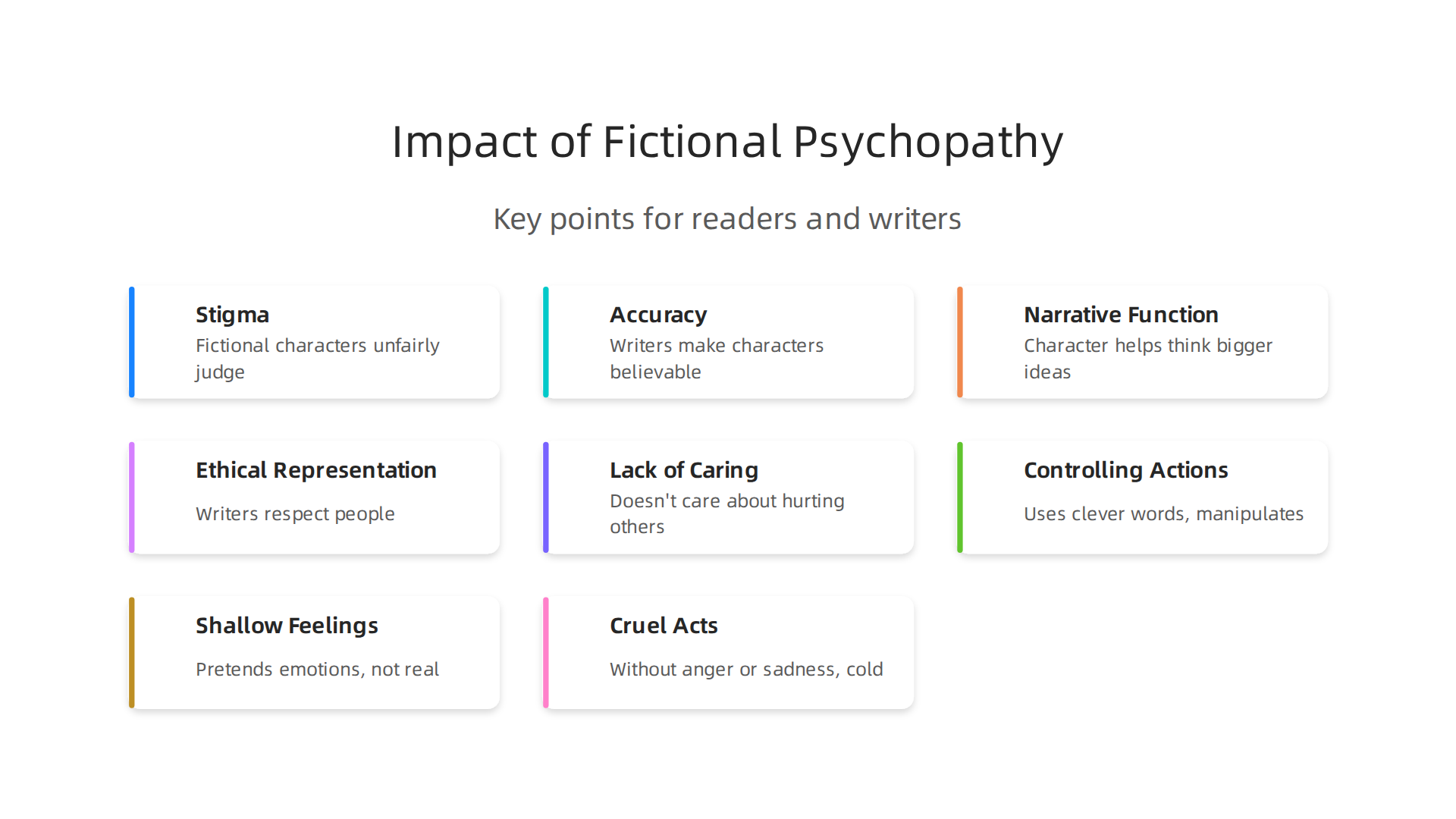
- Stigma: Sometimes, fictional characters with signs of a psychopath can make people unfairly judge real individuals who have mental health challenges. It is important to remember that stories are not always real life. We should be careful not to create unfair ideas about people. Learning more about how we talk about mental health can help mental health synonyms that build connection and reduce stigma.
- Accuracy: Writers want their stories to feel true. When they create characters who show signs of a psychopath, they need to try and make these characters act in ways that are close to what real experts know about psychopathy, instead of just making things up. This makes the character more believable.
- Narrative Function: How does such a character help the story? Are they just a bad guy, or do they help us think about bigger ideas? A character’s role in the story is one of many 10 story elements every novel and short story needs.
- Ethical Representation: Is it right to put such characters in books? How can writers do it in a way that respects people and does not spread wrong ideas? Movies also show how hard it is to get this right “Psychopathy and the cinema: fact or fiction?”.
By exploring these points, we can enjoy stories more deeply and also think about important ideas about mental health and how we show people in books.
Stay updated on new book explorations, writing experiments, and ways to join our community. Join The Newsletter
When we talk about characters in stories, we often use words like "psychopath" to describe someone who acts a certain way. But it is important to know that in the world of doctors and scientists, the idea of a "psychopath" is much more detailed and not quite the same as what we see in books or movies.
Understanding the Real Meaning
Actually, "psychopathy" is not an official diagnosis you’ll find in the main book doctors use for mental health problems, called the DSM-5. Instead, what doctors might diagnose is Antisocial Personality Disorder (ASPD). People with ASPD show a long-term pattern of not caring about other people’s rights, and they often break rules or laws starting from age 15 Antisocial Personality Disorder – StatPearls – NCBI Bookshelf. So, while psychopathy is a way to describe certain personality traits, it is not listed as its own separate disorder in the way ASPD is Psychopathy as a clinical-forensic construct: conceptual evolution ….
Think of it like this: all squares are rectangles, but not all rectangles are squares. Similarly, many people with psychopathy traits would also meet the criteria for ASPD. However, not everyone with ASPD would be seen as a "psychopath" in the deeper clinical sense.
Psychopathy often focuses more on specific personality traits, like not feeling empathy or guilt, and having shallow emotions, along with antisocial behaviors Psychopathy: clinical features, developmental basis and therapeutic challenges. ASPD, on the other hand, puts more focus on the repeated bad behaviors. To figure out the signs of a psychopath in a real person, doctors use special tools like the PCL-R, which scores different traits to help understand the person better A narrative review of psychopathy research: current advances and the argument for a qualitative approach.
Pop Culture Versus Clinical Reality
The problem starts when stories simplify these complex ideas. In books like the running man book, characters might show clear "signs of a psychopath" by being truly evil or heartless. But these portrayals often miss the subtle and tricky ways psychopathy truly shows up in real life. When writers make a character just "bad" without digging into the real difficulties of a personality disorder, it can confuse readers.
This can make us think that anyone who shows a few mean traits is a "psychopath." It also spreads wrong ideas about mental health challenges in general. For example, some people confuse the signs of a psychopath with things like the symptoms of schizotypal personality disorder or even multiple personality disorder facts, which are very different. Media stories can sometimes make us believe wrong things about these issues How Media Exposure Relates to Laypersons ….
So, when we enjoy a story with a character who seems to show the signs of a psychopath, it is good to remember that real life is much more complicated than what is on the page.
Close reading: spotting narrative signals that a character is written as psychopathic
While real life is much more complex than fiction, authors use specific tricks to show us when a character has the "signs of a psychopath" in their stories. It is like they leave little clues for us, the readers, to pick up on. This helps us understand the character’s role in the plot, even if it is not a perfect picture of a real person.
Here are some common ways writers signal that a character might be psychopathic:
- Lack of caring and remorse: A big sign is when a character does not seem to care about hurting others. They might do something cruel and then act like it is no big deal, or even find it funny. Real psychopathy is marked by a lack of empathy and emotional responses Psychopathy: Developmental Perspectives and their …. This means they don’t feel bad or guilty for their actions.
- Controlling words and actions: Characters written as psychopathic often try to control others. They use clever words to get what they want, often lying or twisting the truth. They might make people feel bad or scared to make them follow orders. This manipulative way of talking or acting is a key narrative signal.
- Shallow feelings: Authors might show characters having feelings that are not very deep or that change quickly. They might pretend to be sad or happy to fit in, but it does not feel real. This lack of true emotional depth is another hint. Psychopathy often involves not feeling guilt or regret Psychopathy: A comprehensive review of its assessment and intervention ☆.
- Cruel acts without clear reason: Sometimes, a character will do something mean or violent, and the story shows it is not out of anger or sadness, but more like a cold calculation. Think of characters in books like the running man book who might seem to enjoy making others suffer without a strong emotional cause. If you enjoy delving into such thrilling dystopian stories, you might like to read about other books like The Running Man.
How Authors Shape What We See
Writers use special tools to help us see these "signs of a psychopath." One tool is called unreliable narration. This is when the character tells their own story, but their view of the world is twisted. They might make themselves seem good, even when they are doing bad things. This makes us question what is real.
Another tool is focalization, which is about whose eyes we are seeing the story through. If we see a character through the eyes of someone who is scared of them, we might get a different picture than if we saw them through the eyes of someone they have fooled. Authors also use framing to show us what to think about a character. They might describe their cold stare or their unsettling smile, guiding our thoughts about their inner life.
It is important to remember that these are just story elements. A character in a book, even one with clear "signs of a psychopath," is not a diagnosis. They are part of a narrative, meant to make us think and feel. Understanding these 10 story elements every novel and short story needs can help you appreciate how authors build such complex personalities.
If you enjoy exploring deep and complex characters in fiction, you might also like to join others who are turning their curiosity into action.
The way a story is told, or its narrative voice, really changes how we feel about the characters in it. This is especially true for characters who show signs of a psychopath. When an author lets us see the world through a character’s eyes, either by having them tell the story themselves (first-person) or by staying very close to their thoughts (close focalization), it can make us understand them in a different way.

Seeing Through Their Eyes
If a story is told by a character with very different ideas about right and wrong, it can be hard to know what to think. When we are deep inside the mind of a character who lacks normal empathy, we might start to see things their way. Writers can make us feel close to even morally questionable characters by giving us a close look into their thoughts and feelings. This can make it easier for us to sympathize with them, even if they do bad things, simply because we understand their reasons, however twisted they might be Narrative Intimacy and Reader Sympathy.
This closeness means we might, for a moment, feel like we are part of their choices. Authors do this to make us think deeply about good and bad. They might show us how a character thinks they are right, even when their actions hurt others. This makes us question our own moral judgments.
How Authors Make Us Judge
Authors use smart tricks to guide how we feel about characters. They might write the character’s voice in a special way. For example, if a narrator sounds too formal or tries too hard to explain why they did something, it can hint that they are not being honest with us. This use of voice helps authors create sympathy, confusion, or even strong judgment in the reader.
Sometimes, the writer will make a character charming or very smart, which can make us like them even if they display the common signs of a psychopath. The choice of words and the style of the story play a big part in how we decide if a character is good or bad. Actually, an unreliable narrator’s viewpoint often does not match what we, the readers, think is right or wrong, forcing us to think for ourselves Unreliable Narration. This challenge makes us more involved in the story and helps us reflect on what we value.
Engaging with characters this way can make reading a much richer experience. If you want to keep track of your thoughts and feelings about complex characters and stories, using tools like a book journal for focus and memory can be very helpful.
If you find this exploration of how stories work exciting and you want to stay connected with more insights into books, creative writing, and engaging content, then you should consider joining our community.
After exploring how a story’s voice shapes our view of characters, especially those who might show complex traits, it is time to look at how we can actively study them. This helps readers, students, and writers understand stories even better.
Tools for Understanding Characters
To truly get to know a character, we need to dig a little deeper than just reading words on a page. This is called close reading. It means paying careful attention to small details about a character’s actions, how they talk, and what others say about them.
Here are some helpful tools:
- Close Reading Prompts: Think of these as special questions that guide your reading. They ask you to look for specific things. For example, "What does this character do when they are upset?" or "What do their actions tell us about their beliefs, even if they say something different?" You can use prompts like these to help you analyze how a character’s behaviors show their true self Articulate character motivations.
- Annotation Strategies: This means making notes as you read. You can highlight words that describe the character, underline actions that surprise you, or write your thoughts in the margins. For instance, you might note when a character’s words don’t match their actions, which can be a key part of understanding them. Activities like isolating chunks of text and annotating specific details are great for this To Teach Close Reading: Characterization [S1 E22].
- Comparative Checklists: Imagine a simple checklist where you track a character’s behavior over time.
- What are their main goals?
- How do their actions affect others?
- Do they show traits like a lack of care for others’ feelings, which might be similar to some signs of a psychopath? (Note: We use this term for study, not to diagnose real people).
- How does the story itself present them?
This helps you think about the character’s role in the story and the impact they have. You can also look at how their traits, actions, and dialogue change throughout the story Analyzing Characters Worksheet for 6th-8th Grade.
Learning in Groups
For students and groups, there are fun ways to study characters together:
- Classroom and Workshop Exercises: Many teachers use creative activities to help students analyze characters. One popular idea is creating "character silhouettes." Students draw the outline of a character and fill it with quotes and descriptions from the text. This helps them visualize and describe the character based on what they’ve read Character Analysis Activity for Any Text: Character Silhouettes. Other activities include using a three-column note-taking method or sorting sentences into categories about a character Character Analysis Activities.
These methods help everyone think deeply about characters in a thoughtful and honest way. They encourage us to look past simple labels and understand the "why" behind what characters do, even in stories like "the running man book" where survival often pushes characters to extreme behaviors. Understanding characters better can even help writers create more interesting and real people in their own stories. For more insights on building compelling narratives, consider exploring essential 10 story elements every novel and short story needs.
If you are eager to put these methods into practice and actively engage with stories and creative challenges, you’re in the right place.
Let’s move from how we study characters to the kinds of characters we often see in stories. These are called "tropes." A trope is like a familiar pattern or type of character that shows up again and again in books, movies, and TV shows Defining the Trope in Romance Fiction. Think of them as character types you recognize right away, like the brave hero or the evil wizard.
Common tropes and their narrative roles: villain, antihero, mirror, and foil
Stories often use specific kinds of characters over and over. They do this to make the story exciting or to teach us something. Here are some common ones:
-
The Villain: These characters usually cause problems. Sometimes they are shown as very bad people. We see the "charming predator" who seems nice but has bad plans, or the "calculating mastermind" who thinks many steps ahead. These characters can sometimes show traits that fiction writers link to "signs of a psychopath," like not caring about others or being very good at tricking people. But it is important to remember this is just in stories and not how real people are diagnosed Fictional portrayals of psychopaths. Such characters help move the story forward and create excitement.
-
The Antihero: This character is not fully good or bad. They might do bad things for good reasons, or have flaws but still fight for what is right. Characters in books like "the running man book" often show antihero traits as they try to survive in tough worlds. They make us think about right and wrong in new ways. Sometimes, characters who struggle with their own minds, maybe even showing traits similar to "negative symptoms of schizophrenia" like not showing much emotion, can be written as complex antiheroes. The media often uses such portrayals to explore deeper themes Portraying Psychosis in Crime Fiction.
-
The Mirror and The Foil:
- A mirror character is like looking into a reflection. They are very much like the main character but maybe have made different choices. They help us see what the main character could become.
- A foil character is the opposite. They highlight the main character’s traits by being so different. If the hero is brave, the foil might be scared, making the hero’s bravery shine even more.
These character types are important because they make stories interesting. They help drive the plot and make us think about moral choices. However, sometimes writers can make these characters too simple. When a character is just "evil" or "good" without much depth, the story can feel less real. This is when a trope becomes "reductive," meaning it takes away from the full picture. Good storytelling uses these patterns as a starting point, but then adds many layers to make the characters feel alive, even characters like those in a black book which might explore dark or mysterious themes.
Thinking about these character types can help you enjoy stories even more. It also helps writers create characters that readers will truly care about and remember.
If you enjoy diving into character complexities and exploring how stories are built, you will love staying connected with our community. Join The Newsletter for updates on new books, creative challenges, and ways to participate in our unique experiments.
Stories are fun, and they can help us think. But when we create or read about characters, especially those who act very differently, we need to be careful. Sometimes, how characters are shown in books or movies can cause real problems for real people. This is because of something called "stigma."
Stigma means that people have wrong ideas, bad feelings, or treat others unfairly because of something about them, like a mental health condition. For example, if many villains in stories show "signs of a psychopath," people might start to think that anyone who acts a little bit like that in real life is also dangerous or bad. Or if characters with traits similar to "negative symptoms of schizophrenia" are always shown as frightening antiheroes, it can make others afraid of people who struggle with real mental health challenges. This way of thinking can be very harmful Mental Health Stigma. It makes it harder for people to get help or feel accepted. In fact, public stigma often means people fear, avoid, or even discriminate against those with mental illness Public Stigma of Mental Illness in the United States.
Writers have a big job to do. They should try not to make characters who have mental differences seem simple or evil without a good reason. It’s important to remember that fictional traits, like those sometimes shown as "signs of schizophrenia" in a story, are not the same as a real diagnosis. Stories like "the running man book" might show tough characters in extreme situations, but these are made-up worlds. Good writers add many layers to their characters so they don’t just become a harmful stereotype.
For us, the readers, it’s also important to read smartly. We can enjoy all kinds of stories, even ones with dark themes, like a black book that explores complex ideas. But we must always remember that what happens in a book is not always like real life. We should try to separate the fun parts of a story from how real people are. We can learn more about real mental health by looking at trusted sources and reading helpful books, like those for Practical Men’s Mental Health Books. By doing this, we can enjoy our stories and still be kind and fair to everyone around us. We can also use Mental Health Synonyms That Build Connection and Reduce Stigma in our own language to help others feel understood.
From analysis to craft: writing characters with complex moral psychology
Now, let’s turn to writers. How can they create strong characters, even those with dark or challenging traits, without causing harm or spreading wrong ideas?

It’s a big task, but very important. When writers choose to show characters with traits that might hint at serious conditions, like the "signs of a psychopath," they have a special duty to be careful and thoughtful.
Here are some tips for writers to build characters with deep and sometimes difficult inner lives:
- Do Your Homework, Really: If you are writing about traits that sound like "signs of schizophrenia" or "negative symptoms of schizophrenia," do real research. Learn about these conditions from trusted sources, not just other movies or books. Understand that real people with mental health challenges are not villains. This helps you avoid making characters that are just flat stereotypes. In fact, many fictional portrayals of psychopathy have been criticized for being either too "demonized" or too "romanticized" without real depth or accuracy Fictional portrayals of psychopaths.
- Show, Don’t Just Tell, Their Inner World: Characters with complex moral questions need more than just bad actions. We need to see why they do what they do, even if it’s twisted. Think about using an unreliable narrator. This is where the person telling the story might not be telling the whole truth, or they see things in their own biased way. This method can help show a character’s complex inner thoughts and reasons for acting How to Write Unreliable Narrator Readers Trust Then Doubt. When a narrator’s view goes against what readers might expect, it makes the character more complex Nünning – 2004 – Unreliable Narration.
- Actions Have Weight: Even if your character has traits like "signs of a psychopath," their actions must have consequences. Show how their choices affect others and themselves. This helps readers understand that harmful acts are not excused, even if the character’s background is sad or complex. Stories often try to make readers understand characters who might do bad things through their point of view Narrative Intimacy and Reader Sympathy. But understanding is not the same as saying their actions are okay.
- Build Layers, Not Just Evil: A character should be more than one thing. Give them different sides, fears, hopes, and even moments of weakness. For example, a character who shows "negative symptoms of schizophrenia" should have feelings, relationships, and struggles that make them human, not just a scary figure. When characters are well-developed, like those you might find in a deep read such as The Great Gatsby Book reveals hard truths about ambition and identity, they challenge readers to think.
When drafting scenes, ask yourself: What does this character truly want? What are they afraid of? How do they lie to themselves? How does their language show their true self, or hide it Dangerous Talk? Consistent behavior patterns come from these deep motivations. By doing this, writers can create characters that are memorable and thought-provoking, like those in intense stories such as Books Like The Running Man: 9 Thrilling Dystopian Survival Novels, which show tough individuals in extreme situations.
Making a character truly unique means digging deep into their mind, not just painting them with broad strokes. If you are a writer or creator looking for ways to build engaging narratives and connect with an audience, consider how active participation can bring stories to life.
Ready to explore creative ways to build stories and connect with others? Join An Experiment and turn your inspiration into action and shared discoveries.
Summary
This article explains why examining psychopathy in literature matters and shows readers and writers how to do it responsibly. It contrasts the clinical concepts used by researchers (like antisocial personality disorder and assessment tools) with simplified pop‑culture labels, and points out why that distinction affects accuracy and stigma. The piece outlines key narrative signals—lack of remorse, manipulation, shallow affect, and cruel acts—and describes how authors use voice, focalization, and unreliable narrators to shape reader sympathy. It offers practical close‑reading tools, annotation strategies, and classroom activities to analyze characters fairly, and surveys common tropes such as the charming predator and the antihero. Finally, it gives writers guidance on research, showing consequences, and building layered characters to avoid reductive or harmful portrayals. After reading, you will be able to spot literary cues of psychopathic characterization, discuss ethical issues, and apply concrete methods to read or write more nuanced characters.