
Why ‘The Little Frog’ Approach to Self-Care Works — and How this Guide Helps
In 2026, many of us feel pretty stressed out. It’s easy to get caught up in things like worry, always checking our phones, and feeling like we’re not truly connected to others.

You might feel a bit lost in endless scrolling, looking for something real, or just plain tired. This can leave us with feelings of anxiety and self-doubt. Actually, studies show that cutting down on screen time can really help improve your mental health and well-being Smartphone screen time reduction improves mental health.
Trying to change everything at once can feel too big, like trying to leap over a giant river. That’s where "the little frog’s guide to self-care" comes in. This guide is all about taking small, easy steps, just like a little frog hopping from one lily pad to the next. These tiny actions add up to big changes in how you feel and live your life. Think of it like the idea behind the atomic habits book where small changes make a huge difference over time.
This guide gives you a playful and simple toolkit to boost your emotional wellness. It’s based on ideas that work and helps you turn those negative feelings into laughter, action, and real connections. You’ll find ideas for what you can do on your own, whether you’re interested in a self love workbook for women or just need some quiet time. There are also fun, community-based experiments that let you connect with others, share discoveries, and build confidence. We believe that caring for yourself can be an exciting journey, not just another chore.
Ready to hop into a world of fun and personal growth?
Join The Newsletter to get updates on new experiments, challenges, and ways to make your wellness journey exciting. You can also explore gamified self-improvement: Turn personal growth into play for more ideas on making your self-care journey enjoyable.
Core Micro-Habits: Simple Practices That Scale
You know how a little frog makes small hops to get across a big pond? That’s exactly how we build better habits and feel better. Instead of trying to do everything at once, the little frog's guide to self-care teaches us to focus on tiny steps. These tiny steps are called micro-habits. They are so small that they feel easy to do, but they grow into powerful routines that change your life, much like the idea from the atomic habits book.
How do these micro-habits work? It’s simple, really. Each one has three parts:
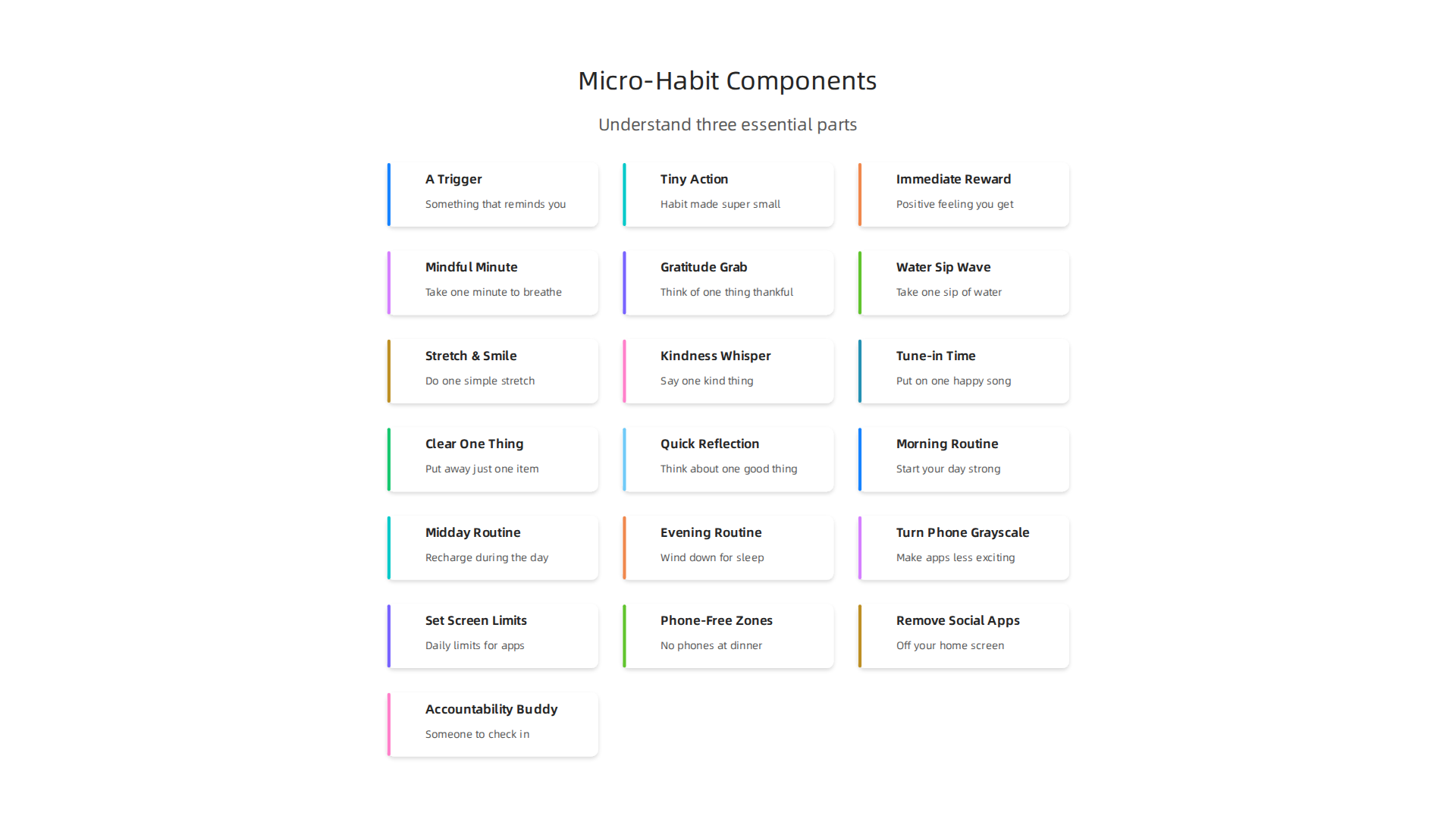
- A Trigger: This is something that reminds you to do the habit. It could be finishing your coffee, a specific time of day, or even seeing something like your toothbrush.
- A Tiny Action: This is the habit itself, but made super small. We’re talking 5 to 10 minutes, or even less. Studies show that even very small, daily practices can really help your well-being Daily micropractice can augment single-session interventions.
- An Immediate Reward or Feeling Good: This is the positive feeling you get right after doing the habit. It makes you want to do it again.
Here are some easy micro-habits you can try for your emotional wellness examples:
- The Mindful Minute: When you finish your breakfast, take one minute to just breathe. Focus on the air going in and out. This helps calm your mind.
- Gratitude Grab: Before you get out of bed, think of one thing you are thankful for and say it out loud or write it down.
- Water Sip Wave: Every time you pass the kitchen, take one sip of water. Staying hydrated is good for your body and mind.
- Stretch & Smile: When you stand up from your chair, do one simple stretch. Reach for the sky, touch your toes, and then give a small smile.
- Kindness Whisper: Look in the mirror and say one kind thing to yourself. This helps build self-love, just like what you might find in a
self love workbook for women. - Tune-in Time: Put on one happy song while you get ready or do a quick chore. Let the music make you feel good.
- Clear One Thing: Before you leave a room, put away just one item that’s out of place. It makes a tiny bit of difference, and you’ll feel proud.
- Quick Reflection: At the end of your day, take two minutes to think about one good thing that happened. This helps you notice the positives. If you want to dive deeper into understanding yourself, exploring resources like Uncover Your True Path: 10 Books for Self-Discovery and Meaningful Reflection can be a great next step.
These small actions add up. They help you turn feelings of worry or being alone into positive actions and a better sense of self. While mental health supplements might offer support, building consistent habits is a powerful, active way to care for your mind.
Ready to put these tiny leaps into action?
Join An Experiment and turn laughter, curiosity, and inspiration into real results and shared participation.
Designing Your Daily Routine: Micro-Routines That Beat Overwhelm
It’s one thing to know about tiny habits, but how do you fit them into your busy days without feeling even more stressed? The secret is to design micro-routines. These are like mini plans for your morning, midday, and evening.
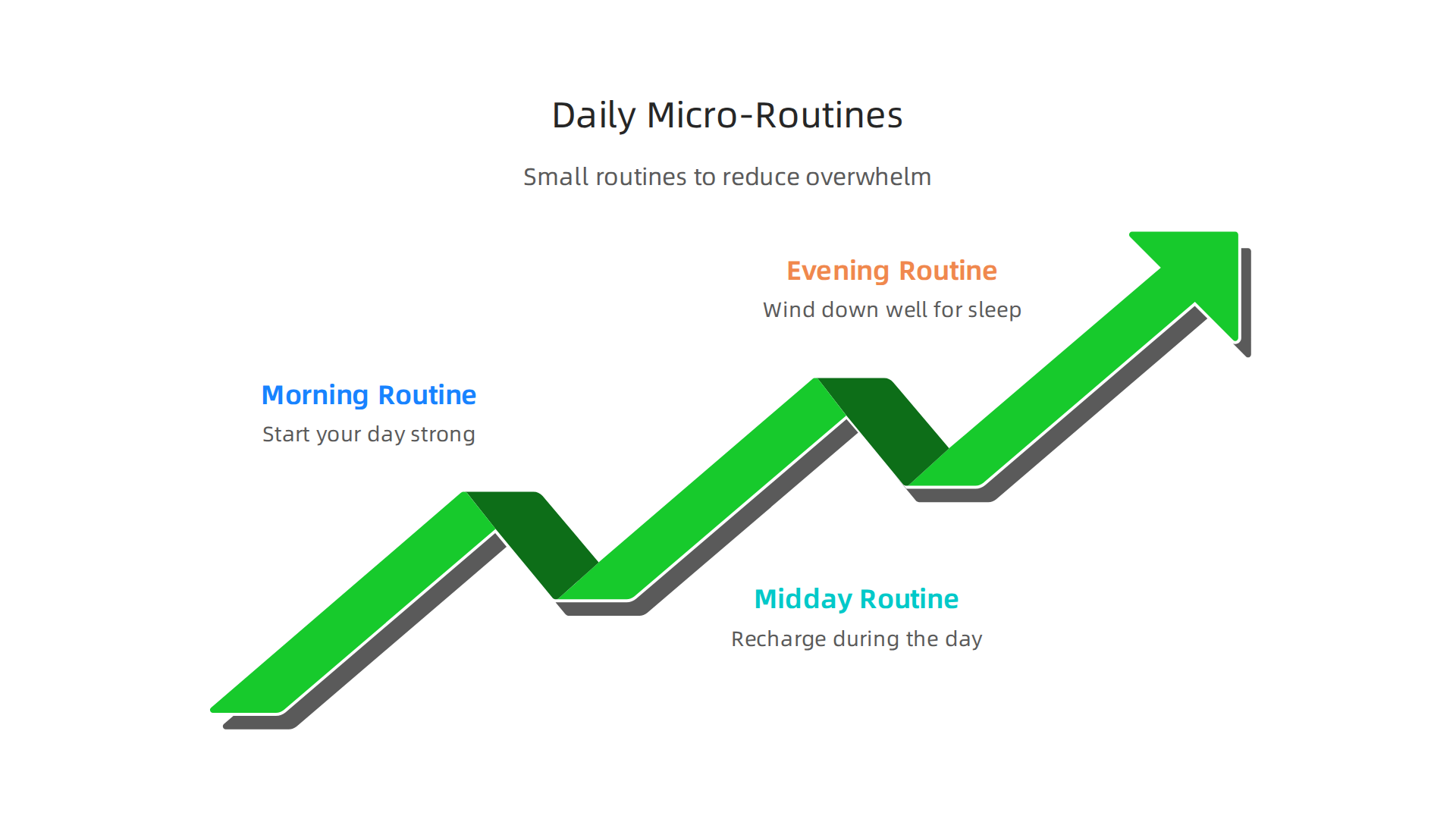
They help you weave in those small actions from the little frog's guide to self-care and make them a natural part of your day, even when things get crazy.
The idea is not to add more pressure. Instead, it’s about making small, helpful choices that are easy to stick to. Think of it as gently nudging yourself toward better emotional wellness examples throughout your day.
Start Your Day Strong: Morning Micro-Routine
Your morning sets the tone. Instead of rushing, try to build in a few calm moments.

- Before You Get Out of Bed: Do the "Gratitude Grab" we talked about. Think of one thing you’re thankful for. It takes seconds.
- With Your First Drink: While your coffee or tea cools, take your "Mindful Minute." Just breathe and notice the quiet.
- Before You Leave the House: Do one simple stretch, or say one kind thing to yourself in the mirror.
These small acts are like gentle waves that start your day with peace, instead of a big splash of overwhelm.
Recharge During the Day: Midday Micro-Routine
The middle of the day can get busy. It’s easy to forget about yourself. But short breaks can really help.
- After Lunch: Take a five-minute walk, even if it’s just around the office or your yard. Move your body a little.
- When You Feel Stuck: Do the "Water Sip Wave" from the last section. Every time you pass the kitchen, drink a little water.
- Limit Screen Time: Studies show that cutting down on how much time you spend on your phone can really boost your mental health. Try putting your phone away for 10-15 minutes during a break to give your brain a rest Smartphone screen time reduction improves mental health.
These small pauses can keep you feeling fresh and focused, not tired and cranky.
Wind Down Well: Evening Micro-Routine
How you end your day matters a lot for how well you sleep and how you feel the next morning.
- Before Dinner: Do the "Clear One Thing" habit. Put away just one item that’s out of place. It brings a tiny sense of order.
- An Hour Before Bed: Try to swap screen time for something else. Reading a physical book or listening to quiet music can make a big difference. Research shows that digital detox strategies can improve your mental health Digital Detox Strategies and Mental Health.
- Right Before Sleep: Do your "Quick Reflection." Think about one good thing that happened today.
Making Routines Stick with Simple Tools
To make these micro-routines part of your everyday life, you can use "habit-stacking." This is a helpful idea from the atomic habits book. It means you do a new small habit right after an old one you already do without thinking. For example, "After I brush my teeth, I’ll do one simple stretch."
You can also use simple tools to help. A small notebook for your gratitude or reflections, or even a reminder on your phone. If you’re looking for ways to keep track of your tiny steps, checking out some great apps can make it easier to stay on track. You can find helpful ideas in guides like Best Task Management Apps 2026 For Focus And Productivity.
Remember, the goal is not perfection. It’s about being kind to yourself and building small, positive habits that add up over time to create a much better sense of well-being.
Creative Self-Care: Using Play, Art, and Small Projects to Rebuild Confidence
Building on the idea of small, helpful daily routines, let’s explore how being creative can also be a simple but powerful way to take care of yourself. You don’t need to be a famous artist or have special skills. Creative self-care is about bringing play and new ideas into your day, even if it’s just for a few minutes. It’s another great example of emotional wellness examples that anyone can try.
Often, the hardest part of being creative is just starting. This feeling is called creative inertia. We think we need a big idea or a lot of time. But like the tiny habits in the little frog's guide to self-care, you can start with micro-projects. These are small, easy tasks that help you get going and feel good about what you make. Studies show that even small daily practices can help with your well-being Daily micropractice can augment single-session interventions.
Easy Micro-Projects to Boost Your Spirit
Here are some ideas for quick creative projects:
- Doodle a thought: Grab a pen and paper. Draw how you feel, or just make some fun shapes. No rules, no judgment.
- Write a silly haiku: A haiku is a short poem with 5, 7, then 5 syllables. Write about your lunch, a pet, or the sky. It’s just for fun!
- Build a tiny sculpture: Use things on your desk or around the house. Maybe paper clips, spare buttons, or small stones.
- Sing along to a favorite song: Don’t worry if you sound great. Just enjoy the music and let yourself go.
- Take a photo of something beautiful: It could be a flower, a cloud, or even a toy. Just notice the world around you.
These simple acts help you take playful risks without feeling like you might fail. When you try something new, even tiny, it builds your confidence little by little. Finding 23 Project Ideas To Stimulate Your Creativity can give you even more starting points.
Sharing and Connecting Through Creativity
Once you start making small things, you might find joy in sharing them. You don’t have to show them to the whole world. Maybe just a trusted friend, or a small online group. This "low-stakes collaboration" can make you feel more connected to others and give you a sense of belonging. It’s like celebrating small wins, which can really boost your spirits How Celebrating Small Wins Boosts Team Morale + ….
Sharing your creative journey can also help keep you going, adding a bit of good accountability. There are many communities out there looking for people to share their ideas and work. For example, if you’re a creator or artist, platforms exist to help you connect and show your work. Checking out the best websites for creators can offer a starting point.
When you take part in fun projects, you turn everyday actions into chances for laughter and discovery. It makes life feel more exciting and less lonely.
Ready to turn your curiosity into action and see what you can create?
We’ve talked about how being creative, even in small ways, can boost your mood and confidence. But it’s hard to make time for these fun projects when our phones and computers are always calling for our attention. It’s easy to get caught in "doomscrolling," where you spend a lot of time just looking at endless posts and news, which can make you feel tired and sad. This is why learning about digital minimalism and gentle detoxes can be really helpful.
Digital minimalism is simply choosing to use your digital tools like phones and apps on purpose, instead of just out of habit. It’s not about throwing away your phone, but about making sure your screen time adds to your life, not takes away from it. A gentle digital detox is about taking small, easy steps to reduce how much passive content you consume. Think of it like a little break for your mind. Doing this can make a big difference for your emotional wellness. In fact, studies show that cutting down on smartphone screen time can help improve your mental health, making you feel less stressed and sleep better Smartphone screen time reduction improves mental health.
Simple Ways to Start Your Gentle Digital Detox
You don’t need big, hard rules to start a digital detox. Small changes, much like the advice in the little frog's guide to self-care or ideas from an atomic habits book, can lead to real results. Here are some simple ideas:
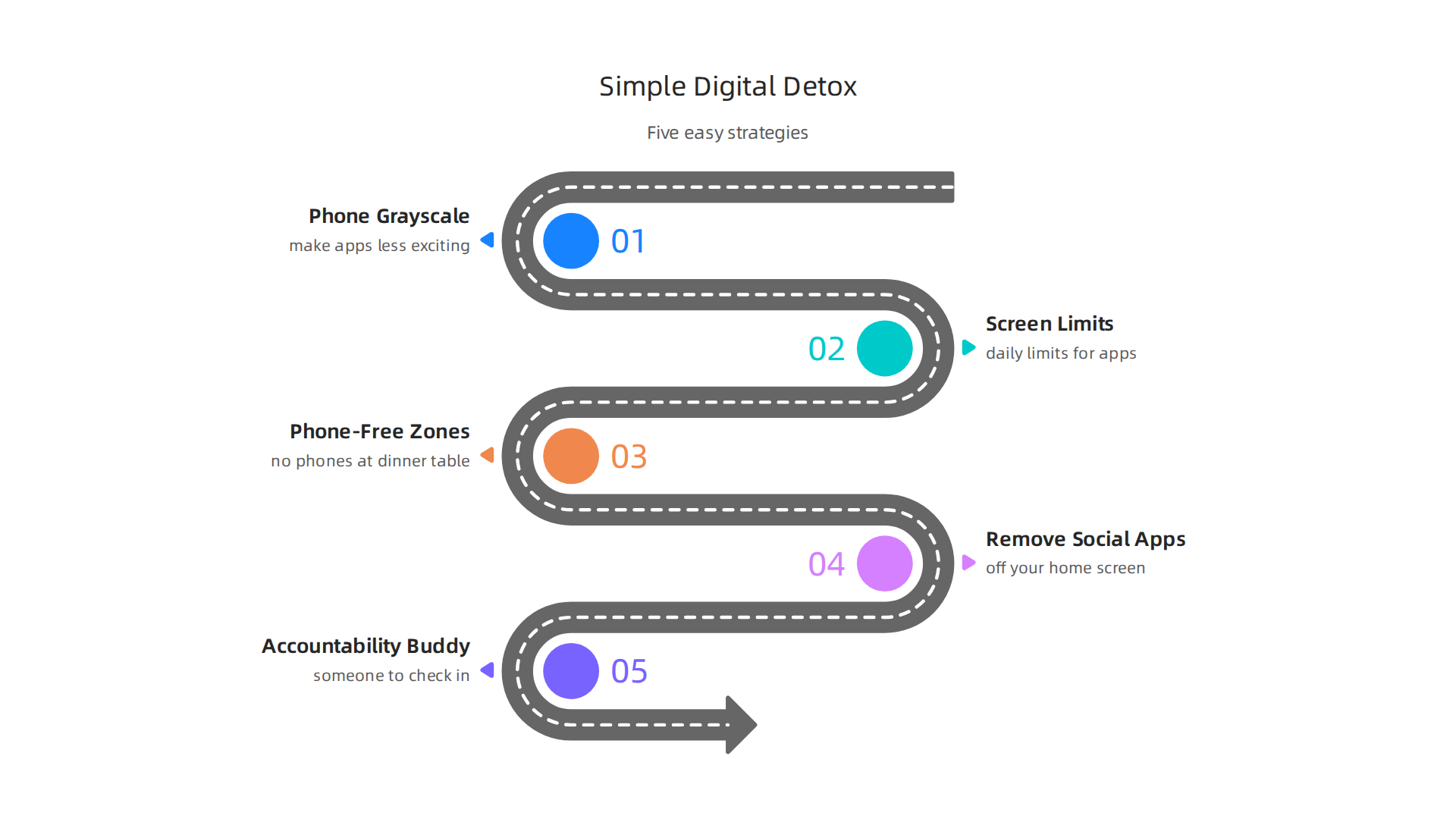
- Turn your phone to grayscale: Making your phone screen black and white can make apps less exciting and reduce your urge to scroll. Research shows this "digital nudge" can cut down screen time by about 50 minutes a day Digital Nudges for Screen Time Reduction.
- Set screen time limits: Most phones have tools that let you set daily limits for certain apps. When you hit your limit, the app might close or give you a warning. These "nudges" can help you be more aware of your usage Digital Nudges for Reducing Social Media Screen Time.
- Create "phone-free" zones or times: Maybe no phones at the dinner table, or putting your phone in another room an hour before bed.
- Remove social media apps from your home screen: Put them in a folder or off the main page. This makes you think twice before opening them, reducing mindless scrolling.
- Have an accountability buddy: Just like with any new habit, having someone to check in with can make it easier. You can use an app to help you unlock success with an accountability partner app.
The goal here is not to punish yourself, but to make your digital life more mindful and peaceful. By gently reducing passive consumption, you create more space for creative self-care, real-life connections, and simply being present. Think of it as giving yourself a gift: more time for what truly matters, and less time lost to endless scrolling.
After looking at how small changes in our digital habits can make a big difference, it’s time to find some easy tools and ideas to help you keep going. Building on the spirit of the little frog's guide to self-care and the idea of tiny, powerful changes, here are some things you can try today. These are like little experiments for your own happiness.
Tools, Templates, and Tiny Experiments You Can Try Today
It doesn’t take a lot to start feeling better. Often, the smallest steps lead to the biggest changes. Here are some simple ways to add more emotional wellness to your day.
Try a 7-Day Micro-Challenge
Imagine doing small, quick things each day that add up to more happiness. That’s what a 7-day micro-challenge is all about! These are quick actions that take very little time, but can really boost your mood and help you connect with others. For example, one project suggests doing daily "micro-acts" to become happier and more resilient The Big Joy Project. You could try things like:
- Day 1: Five-minute drawing. Just doodle anything that comes to mind. No need to be perfect.
- Day 2: Thank-you note. Write a quick note or text to someone you’re thankful for.
- Day 3: Listen to one happy song. Really pay attention to the music.
- Day 4: Go outside for 10 minutes. Just breathe and notice your surroundings.
- Day 5: Learn one new, simple fact. It could be about anything!
- Day 6: Try a different route. Walk a slightly different way to the store or around your block.
- Day 7: Offer a small compliment. Make someone’s day a little brighter.
These small actions can feel a lot like playing a game to improve yourself, which can be a fun way to bring gamified self-improvement turn personal growth into play into your daily life.
Quick 5-Minute Creativity Prompts
Remember how creativity helps your mood? You don’t need hours. Here are quick ways to be creative:
- Story Starter: Write down the first sentence of a story. Don’t worry about the rest, just the start.
- Color Burst: Pick one color and list everything you can think of that is that color.
- Shape Fun: Draw five different shapes and then try to turn them into funny characters or objects.
- Word Play: Choose a random word and write five words that rhyme with it, even if they’re silly.
These little ideas can unlock your creative side, and there are many creative project ideas you can explore to stimulate your imagination, even on a tight schedule. These short bursts of creativity are great examples of how to bring more joy into your daily routine.
Quick Check-in Script for Friends
Sometimes, just connecting with a friend can make a big difference for your emotional wellness. Try this simple script:
"Hey! Been thinking of you. No need for a long chat, but just wanted to say hi and see how you’re doing with [something specific they mentioned recently, if you remember, or just general life]."
This shows you care without putting pressure on either of you. It’s a small way to strengthen your connections.
Measuring Your Small Wins
How do you know if these tiny experiments are working? By noticing your "small wins." These are the little successes you have, like doing your 5-minute drawing or sending that thank-you note. Studies show that recognizing these small wins can really boost your motivation and happiness Small wins in practice.
Keep a simple note in your phone or a small journal called your "happy experiments log." After trying a new tiny experiment, just write down:
- What you did.
- How it made you feel (even a little bit better counts!).
- One good thing that came from it (like a smile, a calm moment, or finishing something).
This helps you see your progress and gives you ideas for what to try next. For anyone looking for deeper self-reflection, a self love workbook for women might offer more structured guidance.
Iterating on Your Experiments
"Iterating" just means trying something, seeing how it goes, and then making small changes to make it even better next time. It’s like a scientist doing a test, but for your own well-being!
- Did it feel good? Do more of that!
- Was it hard? Make it even smaller or easier.
- Did you forget? Find a simple reminder.
By noticing your small wins and gently changing your experiments, you’re building habits that will stick. This journey of self-discovery and growth is ongoing, and you’re always learning what works best for you.
Ready to keep up with more simple ideas, challenges, and ways to bring laughter and creativity into your life? Then be sure to Join The Newsletter.
As we learned how tiny experiments can help us feel better, you might wonder how these ideas can help a bigger group. If you are a creator, an artist, or a brand, you can use these very same ideas to build special experiences for your audience. Think of it like creating your own the little frog's guide to self-care for the people who follow you. You can help them feel better and more connected, and this also helps your brand stand out.
For Creators & Brands: Designing Participatory Wellness Experiences
The goal here is to make your audience feel like they belong and are truly part of something special. This is called building "participatory wellness experiences." It’s about turning people from just watching your content into active players in a fun journey. This way, your brand becomes more than just a product or service; it becomes a helpful friend. Studies show that when communities are engaged in designing and making things, they feel more invested and involved Utilization of community engagement in social innovation health projects.
Making Your Audience Feel Like They Belong
When people feel like they belong, they are happier and more loyal to your brand. You can help create this feeling by:
- Sharing a Story: Just like the stories in "The Ridiculous" universe, having a fun story or theme helps people get excited and want to join in.
- Giving Small Tasks: Offer quick, easy things for people to do, like the 7-day micro-challenges we talked about earlier. These small actions add up. For example, a creator focused on wellness might design a daily "gratitude photo challenge."
- Celebrating Small Wins: When your audience participates, make sure to praise their efforts. This could be a shout-out on social media or a special badge. This makes people feel seen and valued. This is also how small habits build up, a bit like the lessons in the
atomic habits book.
When creators and brands help their audience take small, positive actions, it leads to real engagement and helps them stand out. This is a powerful way to make your brand different from others in a busy world, leading to deeper connections and measurable success for your brand in 2026 The Complete Guide to Measuring Brand Activation ROI in 2026.
Easy Ways to Get Your Audience to Join In
You don’t need a huge budget to get people involved. Here are some simple, low-cost ways to turn your audience into active participants:
- Quick Challenges: Create weekly or monthly challenges that are simple and fun. Maybe a "5-minute drawing challenge" or a "share one positive thought" prompt. These are great
emotional wellness examples. Harvard research shows that giving creators toolkits can help them spread helpful information, which means simple guides can influence your audience to create more themselves Creator research. - Co-creation Projects: Ask your audience to help you make something. It could be ideas for your next story, suggestions for a new song, or even helping name a character. For example, if you sell a
self love workbook for women, you could ask for ideas for new exercises. - Recognition and Features: Highlight your audience’s contributions. Share their creative work, thank them by name, or even interview them. This makes them feel like a valued part of your community.
These methods help your audience move from being just watchers to becoming active parts of your world. It’s about creating a two-way street where everyone gets to play and grow together.
If you’re looking for more ways to build connections, you might want to explore how book clubs offer true connection far beyond endless scrolling. Finding the best tools and platforms can also make this easier, as discussed in articles about the best websites for creators build community and monetize work in 2026.
Examples & Mini Case Studies: How Tiny Experiments Scaled into Communities
We just talked about how creators and brands can make special experiences for their audience. Now, let’s look at how these small ideas, like tiny experiments, have grown into big, caring communities. These examples show how helping people with little actions can lead to something truly special.
Case Study 1: The "Daily Smile" Challenge
Imagine a creator who saw many people feeling a bit down or lonely. They decided to launch a simple "Daily Smile" challenge. Each morning, people were asked to do one tiny thing that made them smile, then quickly share it with a special hashtag. This was like a real-world version of the little frog's guide to self-care, but for a whole group.
At first, only a few people joined. They shared pictures of a favorite coffee cup, a pet, or a funny drawing. The creator praised every effort. Soon, more people joined. They found that these small acts of looking for joy were great emotional wellness examples. It reminded them of how small actions, like those in the atomic habits book, can lead to big changes over time. The group grew into a supportive community where members cheered each other on, turning a simple challenge into a daily dose of shared happiness.
Case Study 2: Designing a Book Together
Another brand, one that creates helpful tools for personal growth, wanted to make a new product. Instead of just making it on their own, they asked their audience for help. They put out a call: "Let’s create a self love workbook for women together!"
They invited people to share ideas for exercises, drawing prompts, and even chapter titles. They used online polls and live chats. People loved feeling like they were part of making something real. The brand took all the ideas and put them into the workbook. When the book was finally released, the community felt a deep connection to it because they had helped build it. This made their bond with the brand much stronger.
Case Study 3: The "Curiosity Corner" Project
A popular artist who loves exploring new ideas wanted to help their followers break free from endless scrolling. They started a "Curiosity Corner" project. Each week, they gave a small prompt, like "Find something in your home that has a funny story and share it." Or, "Write a silly 3-line poem about your day."
The artist shared their own funny stories and poems first. Then, they highlighted the best submissions from their audience. This regular recognition made people feel seen and valued. It turned passive watchers into active participants, sharing their creativity and connecting over shared laughter. This project helped build a vibrant community around the artist’s work, showing that even simple creative prompts can spark joy and belonging.
Measuring Your Impact
It’s great to see your community grow, but how do you know if your efforts are truly working? You can measure the impact of your tiny experiments and community-building efforts. Here are some simple ways:
- See who is active: Look at how many people are posting, commenting, or reacting to your challenges each day, week, or month. Websites often keep track of daily active users, weekly active users, or monthly active users, which can show you how many unique people are joining in Community Success KPIs: Measure Real Growth.
- Check how often people respond: If you ask a question, how many replies do you get? This shows how much people care and want to talk.
- Watch for new people joining: Are new members signing up regularly? This helps you see if your community is growing. You can even check how many members stick around over time by looking at your retention rate The 5 essential metrics for community engagement.
- Look at how much content people create: Are your audience members sharing their own stories, photos, or ideas? This is a great sign of a healthy, active community. You can also see how long discussions last or how many replies a topic gets.
By keeping an eye on these things, you can see what works best and make your community even better. You might find that a new challenge or way of sharing truly sparks a lot of interest.
Adapting These Ideas for Your Own Space
You can take inspiration from these stories for your own projects. Think about:
- Your unique story: What kind of fun theme or character, like "The Ridiculous" universe, can you create to make your audience excited?
- Small, easy steps: What simple, fun challenges can you offer that don’t take much time or effort? Remember, tiny wins add up.
- Celebrate everyone: How can you show appreciation for your audience’s participation? A simple shout-out goes a long way.
These methods help your audience move from just watching to becoming active parts of your world. It’s about creating a two-way street where everyone gets to play and grow together. If you’re interested in being part of a community that loves to turn laughter and curiosity into action, you might enjoy trying one of our interactive challenges.
Ready to see how small actions can lead to big changes in your life and connect you with others? Join An Experiment and start your journey today.
For ongoing ideas, updates, and more ways to stay connected within our vibrant community, be sure to Join The Newsletter.
Summary
This article introduces the