We all feel stuck sometimes, don’t we?

Maybe you’re trying to start a new habit, like exercising more or reading every day, but it feels hard to keep going alone. It’s easy to get lost in endless scrolling on your phone, feeling a bit lonely even with many people online. Your big goals might feel far away, and it’s tough to stay motivated when no one is cheering you on. This feeling of being stuck is super common in 2026.
This is where an accountability partner app can really help. Imagine having a friend who checks in on your goals, gives you a gentle push when you need it, and celebrates with you when you succeed. That’s what an accountability partner app does! It connects you with others, or even just helps you track your own progress, making sure you don’t give up. These apps offer social support, helpful reminders, and clear ways to see how far you’ve come. For example, some might help you stay on track with a just run: zero to 5k app plan or encourage you to try free gym apps. They make sure your efforts are seen and counted, turning those lonely struggles into shared victories. Many people are using these tools to reach their goals, with some popular options highlighted in guides like the Best Accountability Apps in 2026.
In this article, we’ll dive deeper into how these apps work. We’ll show you why having an accountability partner app is so powerful and what features to look for. We’ll also talk about keeping your information safe and give you simple steps to pick the best app for you. Get ready to find out how these apps can help you turn your dreams into real results.
If you’re looking for ongoing updates about community, challenges, and wellness tips, be sure to Join The Newsletter to stay connected.
An accountability partner app works by using smart tricks to help you build good habits and reach your goals. It’s like having a helpful coach right in your pocket. These apps make it easier for you to stick with things, even when it feels hard.
How Apps Change Your Habits
These apps use a few simple ideas to help you stay on track:
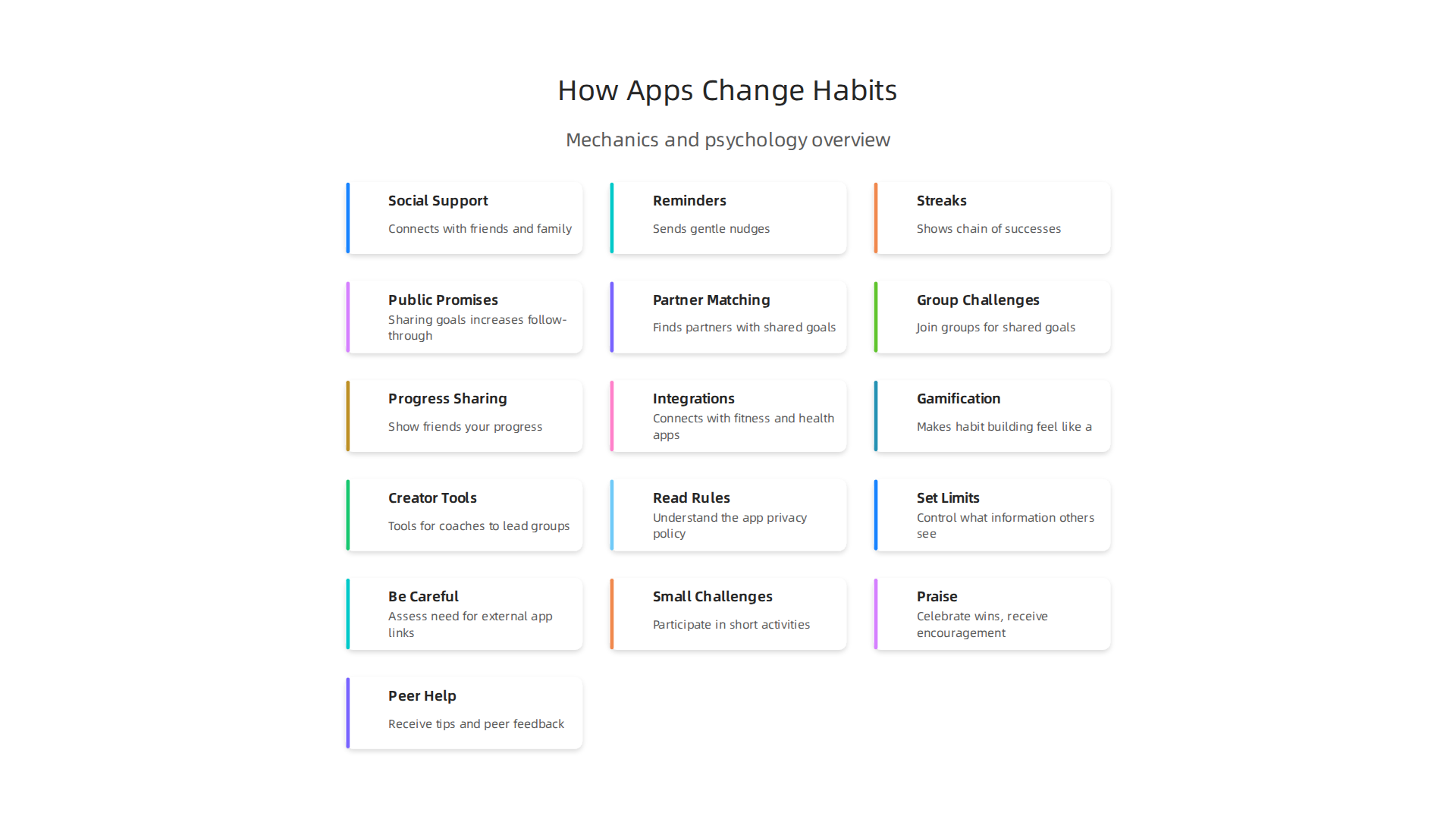
- Social Support: Many apps let you connect with friends, family, or even new people who have similar goals. Knowing someone else is watching or cheering you on can be a huge motivator. It adds a bit of "social accountability." For example, research shows that apps with social support, like having a "buddy" feature, can really help with building habits The Effect of Social Support Features via Buddies in App-Based Habit Building.
- Reminders: Life gets busy, right? These apps send you gentle nudges at the right time. Maybe it’s a reminder to drink water, go for a walk, or spend time on your favorite hobby. Simple reminders make it harder to forget your daily tasks.
- Streaks: This is a fun one! When you do a habit day after day, the app shows you a "streak" or a chain of successes. Seeing that long line grow makes you want to keep it going. No one wants to break a perfect streak! These visual trackers make your progress clear and fun, like a game.
- Public Promises: Some apps let you share your goals with others. When you tell people what you plan to do, you’re more likely to follow through. It makes the goal feel more real.
The Psychology Behind Why It Works
These clever tools also tap into how our brains work:
- Making a Commitment: When you set a goal in an accountability partner app, you’re making a promise to yourself. Sometimes, you even make a promise to others in the app. This makes you feel more serious about your goals.
- Not Wanting to Lose: Our brains really don’t like losing things. If an app makes it feel like you might "lose" your streak or let down a partner by not doing your habit, you’ll be more likely to do it.
- Seeing What Others Do: It can be motivating to see how others are doing with their goals. This "social comparison" can give you a friendly push to keep up your own good work.
- Getting Fast Feedback: Every time you check off a task in the app, you get a small reward, like seeing your progress bar move or getting a little celebration message. This quick feedback makes your brain happy and makes you want to do it again. Many behavior change techniques in apps focus on things like self-monitoring and setting goals Digital Behavior Change Intervention Designs for Habit Formation Interventions.
How You Use an Accountability Partner App
Here’s how it usually goes when you use one of these apps:
- Set Your Goal: First, you tell the app what you want to achieve. Maybe you want to read more, exercise, or practice self care tips. You might even want a daily quote of the day motivational reminder.
- Find Support: You can choose to work alone, find a friend in the app, or join a group of people with similar goals. This creates your accountability circle.
- Track Your Progress: Each day, you simply open the app and mark off if you did your habit. Most apps make this super easy, often with just a tap. You’ll see charts and numbers that show how well you’re doing over time. This helps build new habits more effectively App-Based Habit Building Reduces Motivational Impairments in Daily Life.
- Get Nudges: The app will send you reminders, encouraging messages, or even a nice quote to keep you inspired.
By using these simple but smart methods, an accountability partner app helps you turn your intentions into real actions and lasting habits. If you’re looking for more ways to stay organized, check out the Best Task Management Apps 2026 for Focus and Productivity.
Ready to try some of these ideas out for yourself and see the power of participation?
Join An Experiment to turn curiosity into action and connect with others.
By using these simple but smart methods, an accountability partner app helps you turn your intentions into real actions and lasting habits. If you’re looking for more ways to stay organized, check out the Best Task Management Apps 2026 for Focus and Productivity.
Ready to try some of these ideas out for yourself and see the power of participation?
Join An Experiment to turn curiosity into action and connect with others.
Evidence: Do accountability partner apps actually help?
Many people wonder if an accountability partner app really makes a difference.

The good news is, yes, there’s a lot of proof that these apps can truly help you build better habits. Scientists and researchers have looked closely at how these apps work and what kind of results people get.
Types of Evidence We Have
We learn about the usefulness of these apps in a few ways:
- User Surveys: This is when app makers or researchers ask people using the apps about their experiences. They ask if the app helped them, what they liked, and what could be better. These surveys show us how users feel and if they think the app is effective.
- Observational Datasets: Researchers can look at how many people use the apps, for how long, and what habits they track. They can see trends in how people make progress over time. For example, they might see that many users stick with fitness goals like using a just run: zero to 5k app or other best free home workout apps for longer periods when using the app.
- Randomized Trials: These are like scientific experiments. Some people use an accountability partner app, and others don’t. Then, researchers compare the groups to see if the app users made more progress with their habits. This is a very strong way to find out if something truly works. Many studies show positive results for behavior change apps, especially for health goals like being more active or eating better Behavior Change Resources Used in Mobile App-Based Systematic Review.
What the Research Tells Us
Studies generally show that accountability apps are helpful for many people:
- Better Eating and Activity: Research from 2026 confirms that mobile apps are useful for promoting physical activity and helping people reduce the time they spend sitting still Integrating Mobile Apps and Wearables for Health. Also, these apps can consistently improve healthy eating behaviors, based on a review of studies The use of internet-based smartphone apps consistently improved consumers’ healthy eating behaviors. This means if you want to eat healthier or be more active, an accountability partner app could be a big help.
- Building Habits: The apps are good at helping people form new habits. This could be anything from drinking more water to practicing daily self care tips or finding a quote of the day motivational reminder.
- Time to Form Habits: Actually, forming a new habit takes longer than most people think. It’s not usually 21 days. Research shows it can take from 2 to 5 months on average, and sometimes even longer, depending on the person and the habit Time to Form a Habit: A Systematic Review and Meta-Analysis. An accountability partner app helps you stay with it during this longer period.
Strengths and Limits of the Research
- Strengths: The biggest strength is that many studies show a real, positive effect. People who use these apps often stick to their goals more often than those who don’t.
- Limits: It’s sometimes hard to tell if people use the apps for a very long time, like a year or more. Most studies look at shorter periods. Also, not everyone uses the apps in the same way, and what works for one person might not work for another. We also need more studies on different types of people and different kinds of goals to know for sure how well they work for everyone.
What ‘Effective’ Really Means
When we say an accountability partner app is "effective," it usually means it helps you:
- Stick to your habits in the short term: You do what you set out to do each day or week.
- Make small, positive changes: These changes add up over time to bigger, lasting improvements.
- Feel more motivated: You’re more likely to keep going, even when it’s tough.
So, while no app can do all the work for you, an accountability partner app is a strong tool to help you on your journey to build new, healthy habits and reach your goals.
To keep up with more helpful tools and insights,
Join The Newsletter and become part of our community.
Now that you know how much an accountability partner app can help, you might be asking yourself, "Which one should I pick?"

With so many apps out there, it can be hard to choose. It’s smart to know what features are most important to you before you start looking.
Key Features to Look For in an Accountability Partner App
The best accountability partner app will have features that fit your needs, whether you’re trying to build a new habit or just track your progress. Here are some main things to look for:
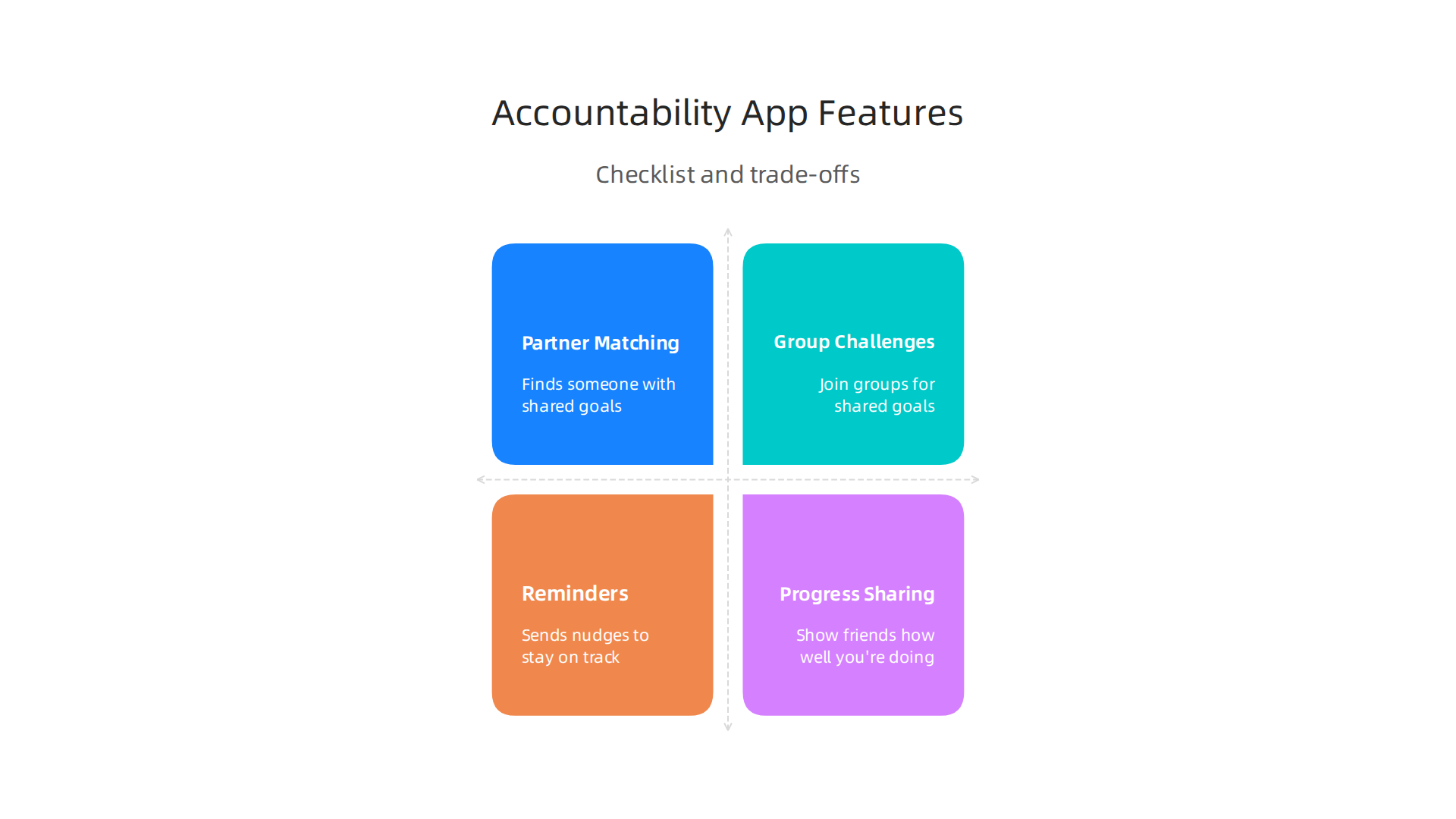
- Partner Matching: Some apps can help you find someone to be your accountability buddy. This is great if you don’t already have a friend who shares your goals. This kind of social support can make a big difference, as studies show that having a "buddy" in an app can help with habit building.
- Group Challenges: You might find apps that let you join small groups or bigger communities for shared goals. Working with others can give you a boost and a sense of belonging.
- Reminders: Most good habit apps will send you little nudges to remind you about your habits. This helps you stay on track, especially when forming new habits, which usually takes longer than 21 days, often 2 to 5 months on average, sometimes more than a year for some behaviors Time to Form a Habit: A Systematic Review and Meta-Analysis.
- Progress Sharing: This feature lets you show your friends or your accountability partner how well you’re doing. Sharing your wins can make you feel proud and keep you motivated.
- Integration with Trackers: If you use a fitness watch or another health app, some accountability apps can connect to them. This makes tracking your physical activity or other goals much easier.
- Gamification: This means the app makes habit building feel like a game. You might earn points, get badges, or see your progress as a journey. Making it fun can help you stick with it. Many modern apps use gaming elements to keep you engaged A gamified habit tracker for 3rd year students at south east ….
- Creator Tools: If you’re a coach, a brand, or someone who wants to lead groups, some apps have special tools for you. These tools let you set up challenges, track your group’s progress, and offer support.
Important Trade-Offs to Consider
When picking an app, think about these balances:
- Friction vs. Engagement: Some apps are super simple to use, meaning it takes almost no effort to log your habits. Others have lots of features and ways to interact, which can be fun but also take more time. Think about how much time you want to spend in the app versus doing your habit. Logging habits quickly is key for them to stick 9 Best Apps for Habit Tracking in 2026 (Free Picks Tested).
- Privacy vs. Social Proof: How much do you want to share? Some apps are very private, just for you. Others are built around sharing your progress with others to get support and motivation. Decide what feels right for you.
- Free vs. Premium Features: Many apps have a free version with basic features. If you want more advanced tools, like special analytics or unlimited habits, you might need to pay for a premium version. Think about if the extra features are worth the cost for your goals.
Decision Checklist for Individuals
Use these questions to help you choose the right accountability partner app for you:
- Do I want to find a partner within the app, or do I have someone already?
- Do I like working towards goals alone, with a few friends, or in a larger community?
- How important are reminders to me? Do I need lots of them, or just a few gentle nudges?
- Do I want to share my progress with others for motivation?
- Does the app connect with other tools I use (like a fitness tracker)?
- Does it feel fun and motivating to use, perhaps with game-like elements?
- Am I happy with basic, free features, or do I need more powerful tools that might cost money?
You can find many choices by looking at guides like the Ultimate Guide to the Best Habit Tracker Apps for 2026.
Decision Checklist for Creators and Brands
If you’re a creator or a brand, your needs might be a bit different:
- Can I easily set up and manage challenges for my audience or clients?
- Does the app allow for clear progress tracking and reporting for a group?
- Are there ways to communicate with and support my community directly through the app?
- Can I customize the app experience to fit my brand or message?
- Does it offer ways to reward participants or recognize their achievements?
Choosing the right accountability partner app means looking at what it offers and how it fits with how you like to work. The perfect app is the one that makes building your habits and reaching your goals feel easier and more enjoyable.
Choosing the right accountability partner app isn’t just about features and fun. It’s also super important to think about how safe and private your information will be. When you use an app for your personal goals, you’re often sharing private details about your life. So, let’s talk about privacy, safety, and doing things the right way.
Privacy, safety, and ethical considerations for accountability apps
When you pick an accountability partner app, you’re trusting it with your personal information. It’s like giving someone a diary of your habits and feelings. So, understanding how your data is used and protected is very important.
What are the privacy risks?
- Sharing Your Data: Some apps might share your private goals, progress, or even health data with other companies. This is called data sharing. These other companies might use this information to show you ads or for other reasons. Rules like the EU’s GDPR and US HIPAA laws in 2026 make sure companies handle your health data with care and need your permission before sharing it HIPAA-Compliant Mobile Apps in 2026: A Practical Guide. It’s vital that an app gets your clear "yes" before giving your health data to anyone else Digital Health Privacy Solutions – 2026 Guide.
- Learning Your Habits (Behavioral Profiling): Apps can also learn a lot about you from your actions. They might know when you work out, when you sleep, or even what makes you feel happy or sad. This information can be used to understand your habits better. While this can sometimes help the app work better for you, it’s also personal data.
- Connecting with Other Apps: If your accountability partner app links to other apps you use, like a fitness tracker or a social media app, your information might travel between them. This is called third-party integration. You should know what info goes where.
- Too Much Sharing (Social Exposure): Apps that help you find a partner or join groups are great for support. But if you share too much with people you don’t know well, it could lead to discomfort or problems.
Keeping things safe in groups
If your chosen accountability partner app lets you join groups or work with others, safety is key.
- Dealing with Bad Behavior: In any online group, there’s a chance someone might be mean or hurtful. Good apps should have ways to stop harassment and keep the space friendly.
- Stopping Wrong Information: People might share things that are not true, especially about health or well-being. Apps should try to make sure correct information is shared.
- Handling Tough Feelings: Sometimes, people share very personal or sad feelings in groups. The app and its leaders should know how to help or guide people to get proper support, especially when it comes to mental health. If you are struggling, you can find help by reaching out to organizations that offer free online screenings for depression and anxiety, for instance Mental Health America offers free online screenings for depression and anxiety.
What you can do to stay safe
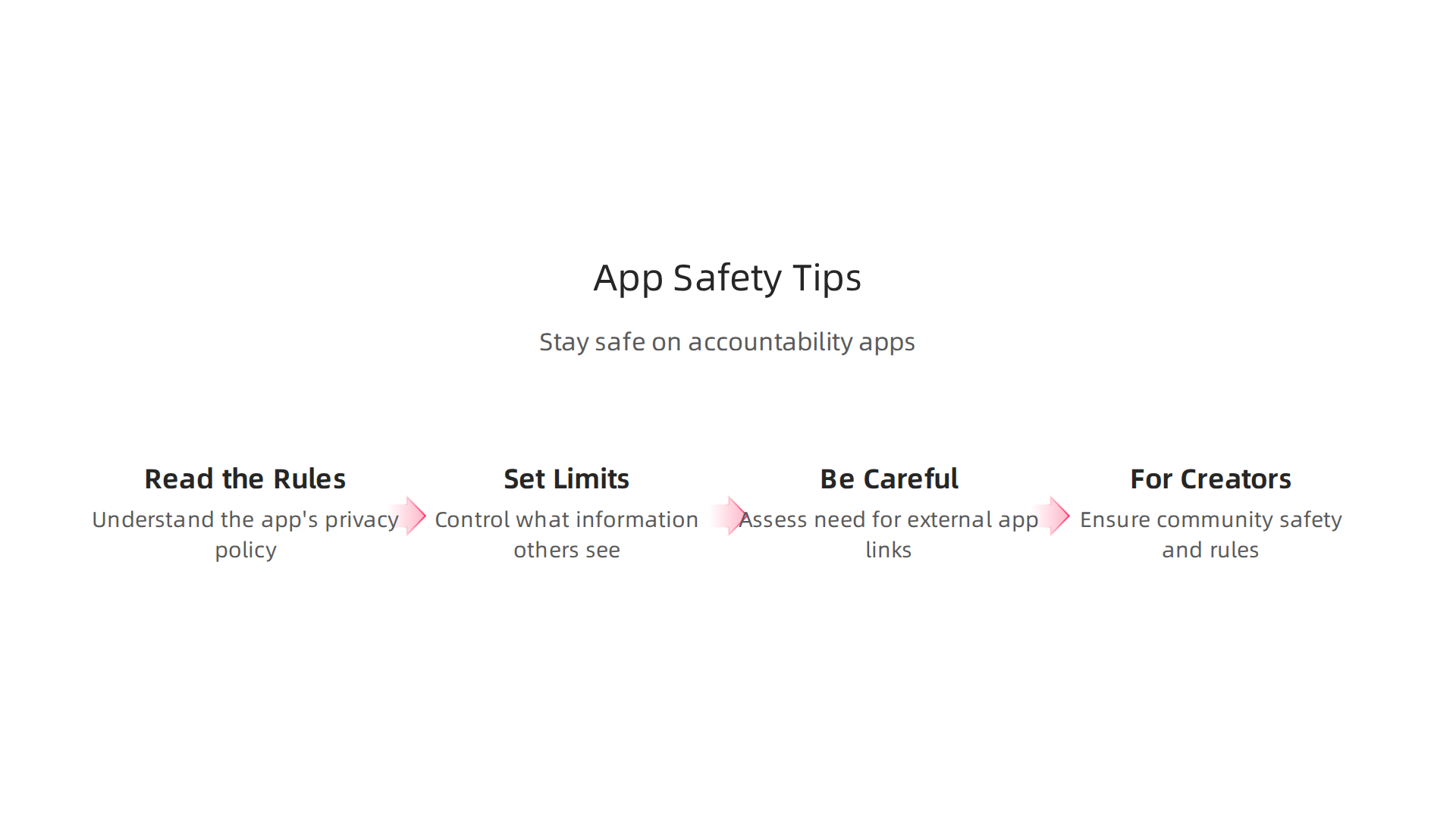
- Read the Rules: Always look at the app’s privacy policy. This is a document that tells you exactly how the app collects, uses, and shares your data. It might be long, but it’s important to understand the basics.
- Set Your Own Limits: Think about how much you want to share. You don’t have to share everything. Use the app’s settings to control what others see.
- Be Careful When Connecting: If the app asks to connect with other services, think about why it needs to. Does it truly help you reach your goal?
- If You’re a Creator: If you’re using an accountability partner app to run challenges for others, it’s your job to make sure your community is safe. Set clear rules and be ready to step in if problems arise. This is part of being ethical and responsible online.
Understanding these points helps you make a smarter choice about which accountability partner app to use. It’s about protecting yourself and others while still reaching your goals.
Do you want to stay in the loop about new challenges, helpful insights, and exciting community projects?
Join The Newsletter
Making sure your information is private and safe is very important. But once you’ve picked a good accountability partner app, the next step is often finding friends and staying excited about your goals. This is where a good community can really help. It can make you feel less alone and keep you going when things get tough.
Community and motivation: reducing loneliness and sustaining momentum
When we work on goals by ourselves, it’s easy to lose steam. An accountability partner app often offers ways to connect with others, which can be a huge boost. In 2026, we see more and more apps using community features because people want to feel connected. The market for habit tracking apps is growing fast, and community-led challenges are a big reason why Habit Tracking Apps Market Size, Share, Growth, Analysis….
How community makes a difference
Good accountability apps are designed to help you connect and feel like you belong. They do this in a few smart ways:
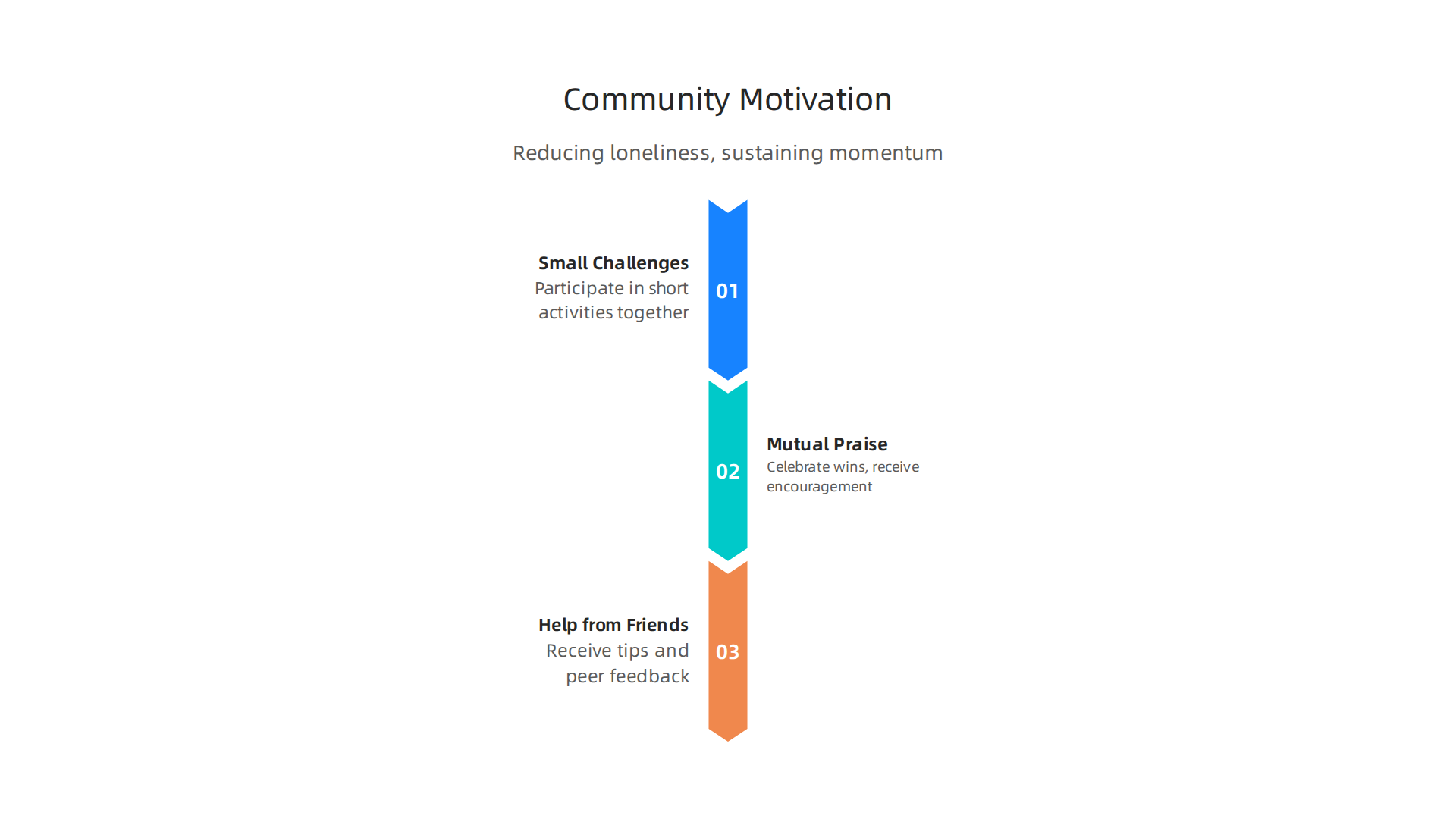
- Small Challenges: Many apps offer "micro-challenges" or short activities that you can do with others. This might be a "seven-day water challenge" or a "daily meditation" goal. When you work on these together, even if it’s just by checking in on the app, you feel like part of a team.
- Giving and Getting Praise: Apps can show off your progress and celebrate your wins. When others see you doing well, they can give you a "high five" or a nice comment. This recognition feels good and helps you keep going. It also encourages you to give feedback to others, creating a supportive loop. We know that gamified features, like those found in an accountability partner app, make people much more engaged. Apps like Habitica, for example, have added multiplayer challenges that bring in many new users Gamification in habit tracking apps: examples and results.
- Help from Friends: Sometimes, you just need a quick tip or a bit of encouragement. Peer feedback from people who understand your goals can be really powerful. Maybe you’re trying a new exercise routine using a free gym app or working on your mental well-being with some self care tips. Getting a "quote of the day motivational" from a friend can make a big difference.
Connecting with others through shared activities, like online book clubs, can offer true connection, far beyond endless scrolling. You can even join a book clubs offer true connection far beyond endless scrolling to share your reading journey.
Building communities within apps
If you are a creator or run a small brand, an accountability partner app can be a great place to grow your own community. This is a big trend for community engagement in 2026, focusing on human interaction and trusted spaces Top 10 Community Trends Shaping 2026.
- Start Small: Begin with a specific challenge that relates to your work. If you sell healthy snacks, host a "30-day healthy eating" challenge.
- Be There: Show up and talk to your community. Ask questions, celebrate wins, and offer encouragement. People want to connect with a real person.
- Give Rewards: Offer special recognition or small prizes for those who participate and reach milestones. This keeps people excited and coming back.
- Use the Right Tools: There are many the best website tools for creators in 2026 that can help you manage your community and content.
Finding your own accountability group
You don’t have to be a creator to enjoy the benefits of community. Here are some simple ways to find or build an accountability group that works for you:
- Look for Shared Goals: If you’re using a specific app like a "just run: zero to 5k app," see if there are groups inside for runners. If you’re into fitness, check out if the best free home workout apps have a group feature.
- Keep it Small and Focused: Start with just a few friends or like-minded people. A smaller group can feel safer and more personal.
- Set Clear Rules: Agree on what you’ll share, how often you’ll check in, and what kind of support you want to give each other.
- Try a Book Study: If you like reading, consider starting a group around a meaningful book. You can even guide your group to deeper meaning with the alchemist book study.
- Be Kind and Respectful: Remember, everyone is trying their best. Offer encouragement and helpful advice, not criticism.
Having a good community in your accountability partner app can help you reduce feelings of loneliness and keep your motivation high, making it easier to reach your goals and build lasting habits.
For creators & brands: using accountability partner apps to boost engagement and loyalty

If you’re a creator or run a small brand, an accountability partner app is more than just a tool for personal goals. It can be a strong way to connect with your audience and build a loyal community. In 2026, many brands are looking for new ways to get people involved, and these apps offer a perfect place to do that. The market for apps that help with habits is growing quickly, showing that people want tools to stick with their goals The State of Habit Tracking in 2026: Trends and Data.
Designing challenges that truly connect
To make your community strong, you need to create challenges and goals that feel real and exciting.
- Authentic Challenges: Design activities that truly fit what your brand is about. If you’re a fitness coach, host a "30-day movement challenge." If you sell art supplies, invite your community to a "daily sketch-along." Make it about shared values, not just selling.
- Co-Created Goals: Let your community help decide what challenges to do next. When people have a say, they feel more invested and excited. It’s like working on a project together.
- Reward Systems: Celebrate every step of progress. This can be as simple as public praise in the app, special badges, or even small prizes for those who reach milestones. Seeing their efforts recognized keeps people coming back.
Integrating your vision with the app
Making your brand’s goals part of an accountability partner app can be smoother than you think.
- Embedding Goals: Many accountability apps let you set up specific goals that match your brand’s message. For example, if your brand promotes self care tips, you could create a "Daily Self-Care Check-in" goal within the app.
- Progress Tracking (Simple): Some apps have ways to show how people are doing. You don’t need to be a tech expert. Often, simple integrations let you see overall group progress, keeping everyone motivated.
- Cross-Promotion: Use your brand’s social media and website to tell people about your challenges in the accountability partner app. And if the app allows, mention your brand within its community spaces too.
- Checking What Works: Look at the numbers. How many people joined? How many finished the challenge? These insights help you make even better challenges next time. If you’re managing many projects, handy tools can help you keep track of everything, like the best task management apps 2026 for focus and productivity.
Launching and keeping engagement high
Getting started and keeping people interested is key for a successful community.
- Pilot Groups: Before a big launch, try out your challenge with a small group of loyal followers. This "pilot" helps you find out what works and fix any problems. When planning a pilot, it’s smart to define what success looks like right from the start Evaluating pilot programs.
- Recognition Mechanics: Keep giving shout-outs and praise. Highlight people who are making an effort, not just those who finish first. Everyone likes to feel seen and appreciated.
- Community-First Design: Always think about your community first. What do they need? What makes them feel excited? Building features around their answers will make your group thrive. For example, if your brand is in storytelling, consider how an AI audiobook generator could create unique content for your community challenges.
By using an accountability partner app in these ways, creators and brands can build engaged, loyal communities that support both their audience’s growth and their own mission. It’s about moving beyond just watching to truly participating.
Are you ready to turn curiosity into action and join a vibrant community?
Summary
This article explains what accountability partner apps are, how they work, and why they can boost your chances of forming lasting habits. It walks through core mechanisms—social support, reminders, streaks, public promises—and the psychology that makes those features effective. You’ll learn the typical user flow (set a goal, find support, track progress, get nudges), the kinds of scientific evidence that show real benefits, and realistic timelines for habit formation. The guide also covers what to look for when choosing an app, the trade-offs between privacy and social features, and safety practices for group use. Finally, it offers practical advice for creators and brands who want to run challenges and build engaged communities inside these apps. After reading, you’ll know how to pick an app that fits your needs, keep your data safer, and use community features to stay motivated.