
Why free pixel games matter right now
Have you ever found yourself endlessly scrolling through your phone, feeling more tired than happy? In 2026, many of us feel this digital overload. That’s where free pixel games come in. These games bring back a simple, charming look from older video games, with blocky, colorful graphics. Think of them as tiny pieces of art that are fun and easy to get into.
The great thing about free pixel games is how easy they are to start. They don’t ask for much time or money, making them a low barrier way to play. You can jump in for a quick few minutes, get a small win, and then get back to your day. This kind of bite-sized play can actually help your mind. Studies show that casual games, which include many pixel games, can offer short-term relief from stress and anxiety, and even improve mood.

One review from 2025 noted that playing casual video games for about 30 minutes, three times a week, can help with anxiety, depression, stress, and low mood The Effects of Casual Videogames on Anxiety, Depression, Stress, and Low Mood: A Systematic Review.
These free pixel games aren’t just for passing time. They offer small moments of joy and success, which is like applying Gamified Self-Improvement: Turn Personal Growth into Play to your mental well-being. Just like how you might use a myfitnesspal: calorie counter app or one of the best free home workout apps to track your health goals, playing short, fun games can boost your creative thinking and help you feel more connected to others. People often play casual games against friends, citing it as a main reason for playing Reasons for Playing Casual Video Games and Perceived …. This simple kind of fun can help you fight digital overload and feel more balanced.
In this guide, we will help you find safe and fun sources for free pixel games. We’ll also show you how to use these games to boost your well-being and creativity. If you are a creator or a brand, you’ll also find practical ideas on how these playful experiences can help you connect with your audience and build community.
If you enjoy discovering new ways to connect, create, and find moments of joy, we invite you to get more updates. Join The Newsletter for ongoing news about books, experiments, creator opportunities, and ways to participate.
So, what are these charming free pixel games we’re talking about? Simply put, they are video games that use a style of art where everything looks like it’s made from tiny, visible squares called pixels. This gives them a classic, old-school feel that many people love. The way these games use limited colors and clear shapes is part of their artistic charm, showing that every little pixel counts to make the picture Artistic and Stylistic Principles of Pixel Art in Computer Game Design.
You can find many kinds of free pixel games. Some are like micro-puzzles, which are quick brain teasers that challenge your thinking. Others are tiny platformers where you jump and run through simple levels. There are also interactive art toys, which let you play around creatively without a clear goal. And don’t forget social pixel experiences, where you can connect with friends in pixelated worlds.
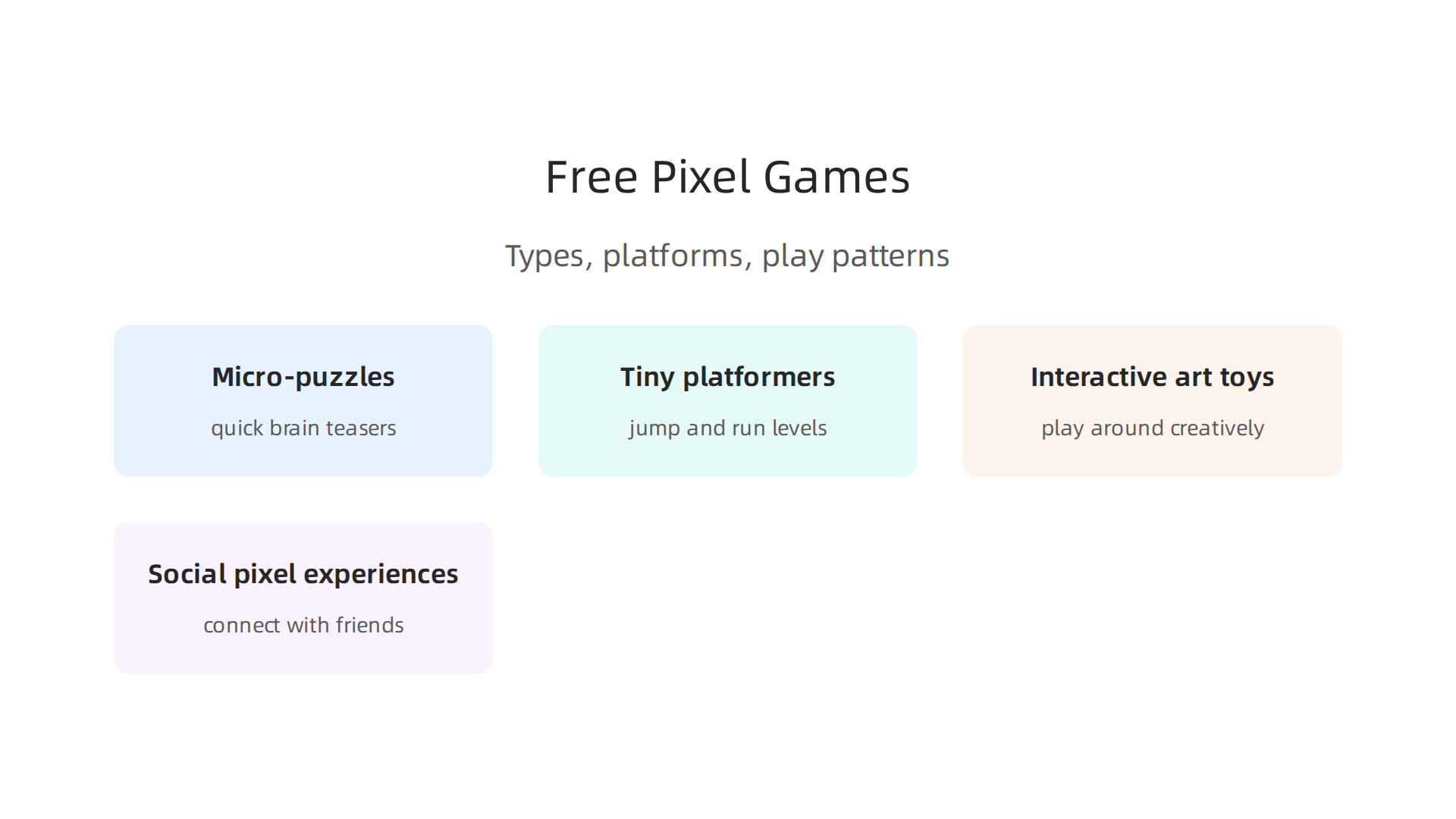
In 2026, the number of pixel games has grown a lot, with thousands available just on platforms like Steam The 2026 Pixel Game Market — Indie Dev’s Survival Guide. This shows just how popular they’ve become.
You can play these games in many places. Many free pixel games live on browser portals, which are websites where you can play right away without downloading anything. Mobile apps are another huge spot, making them easy to play on your phone or tablet while you’re out and about Pixel Art Games: The Reason Behind it’s Wide Popularity. There are also indie platforms like PICO-8, which is a special program where people make and share tiny games PICO-8 GameDev #1: Getting Started [Tutorial] – ClockworkPi Forum. You might also find them in social embeds on websites or in community servers where players gather. If you’re a creator yourself, having good online tools can help you share your games and build your audience, much like using the best website tools for creators in 2026 for other creative projects.
When you play free pixel games, you’ll often find they have short play loops. This means you can finish a round or a small goal quickly. They usually have simple controls too, so anyone can pick them up and play without needing a long tutorial. Many also offer sandbox creativity, letting you build or explore as you wish, like a digital toy box. And because they’re often so charming, they create shareable moments that are fun to show off to friends. These games are perfect for quick breaks, turning small tasks into fun challenges, much like using gamification in a to-do list.
These little games are not just fun ways to pass the time. Actually, they can be good for your mind, helping with how you feel, how much energy you have, and even how you connect with others.
Good Things About Small Games
When you play these simple games, especially free pixel games, they can give you a nice boost. For one, they can stop you from endlessly scrolling on social media, which often makes you feel worse. Instead, you get quick wins and small goals to reach. These "micro-achievements" are like getting a gold star for finishing a chore. They make you feel good and can give your mood and motivation a real lift The Effects of Casual Videogames on Anxiety, Depression, Stress, and Low Mood: A Systematic Review.
Many people find that playing casual games can help with stress and anxiety in the short term, acting like a quick mental break Casual Games, Cognition, and Play across the Lifespan: A Critical …. Some studies even show that playing certain casual video games can help with things like depression and anxiety, especially for young people Effectiveness of applied and casual games for young people’s mental health: A systematic review of randomised controlled studies. They can also be a way to have playful social rituals, where you share your scores or funny game moments with friends. Some people even play against friends in games to feel more connected Reasons for Playing Casual Video Games and Perceived ….

This can be a great way to boost your mood and connect, much like using a gamified self improvement system for personal growth.
When Games Might Not Help
It’s important to remember that while free pixel games can be helpful, they aren’t a fix-all solution. Sometimes, people might use games to avoid real-life problems. This is called "avoidance behavior." If you find yourself playing games all the time to escape feelings or tasks, it might be hiding bigger issues. Also, those quick game sessions can sometimes become too much, turning into compulsive play. It’s like eating too much candy; a little is fine, but too much can make you feel bad. If you’re using games to cope with deep feelings like sadness or worry, it might be a sign to look for more support, perhaps starting with free online screenings for depression and anxiety. The value you get from gaming is often more about how you feel about playing, not just how many hours you play Perceived value of video games, but not hours played, predicts mental well-being in casual adult Nintendo players.
How to Use Games in a Smart Way
To get the most out of free pixel games and keep things healthy, try these tips:
- Habit Pairing: Play a game only after you’ve done something else, like finishing a small chore or getting some exercise. Think of it like a reward.
- Short Challenges: Set a timer for 10-15 minutes. When it rings, stop playing. This helps keep sessions from getting too long.
- Social Sharing: Play games with friends or share your fun moments. It’s a nice way to connect without getting stuck in endless scrolling. You might even use an accountability partner app to help stay on track with these good habits.
- Track Small Wins: Notice how you feel after a short game session. Do you feel happier or more relaxed? If yes, that’s a small win for your well-being. This is similar to how a gamification to do list or apps like MyFitnessPal for calorie counting use small achievements to keep you motivated.
By using these games mindfully, you can turn them into a positive part of your day. Are you ready to move beyond just scrolling and start turning laughter and curiosity into action?
Join An Experiment
After learning how to use games smartly, the next big step is finding the right ones. To really make free pixel games a good part of your day, you need to pick ones that are safe and well-made. This means knowing what to look for before you start playing.
Finding Safe Free Pixel Games: Your Checklist
Not all free pixel games are the same. Some might have hidden tricks or not be safe for everyone. Here is a simple checklist to help you choose wisely:
- Privacy and Your Data: Check what information the game asks for. Good games collect as little as possible, especially from kids Youth/immersive tech regulatory guidance. For games played by children, there are special rules like COPPA in the US that protect their online privacy Children’s Online Privacy Protection Rule ("COPPA"). Make sure you understand if your name, email, or other personal details are truly needed. It’s best practice for game companies to have strong rules about how they protect your information Recommendations and best practices for data protection in ….
- Age-Appropriateness: Is the game made for your age or your child’s age? Look for age ratings. Games for younger players should have built-in safety features like privacy settings turned on by default Online Gaming Governance: Stakeholder Engagement Report (2026). This helps make sure the content and interactions are right for them. Game makers should take extra care when creating games that kids might play Protecting children Take particular care in the design of games that ….
- In-Game Purchases: Even if a game is free, it might ask you to buy things later. These are called "micro-transactions." See if these purchases are needed to enjoy the game or if they just offer small extras. Some games might even offer ways to limit spending Consumer protection in online video games – EUR-Lex.
- Community and Moderation: If the game has a chat or online play with others, how is it kept safe? Good games have clear rules and people who watch to make sure everyone is being kind and respectful Levelling up to stay safe – gaming report. This helps avoid bad experiences.
- Advertisements: Since many free games rely on ads, check how often they pop up and if they are suitable. Too many ads can make the game less fun.
How to Check Quality Quickly
Once you know a game is safe, think about if it’s a good quality game that will really help you.
- Session Length: Does the game let you play for just a few minutes, or does it try to keep you hooked for a long time? Remember, short challenges are often better for your mind. It’s like finding a quick moment to unlock emotional wellness through self care micro habits.
- How Easy It Is to Play: Good free pixel games are simple to understand and play. They don’t have too many confusing steps or difficult controls. This makes them easy to pick up and enjoy.
- Does It Spark Ideas? Some games, even simple ones, can make you think creatively or try new things. Does it make you curious, or does it just keep you busy without much thought?
- What Others Say: Look at reviews or ask friends who play. What do they like or dislike about the game? Community feedback can give you a quick idea of how good a game is.
To make it even easier to choose, imagine a helpful table that compares different platforms for free pixel games. Such a table could quickly show privacy ratings, age suggestions, and if a platform offers parental controls. While we cannot provide such a dynamic table here, remember to use this checklist when you explore new games.
Finding the right free pixel games means you’re actively choosing how you spend your time online. It’s about building positive habits, much like using best free home workout apps to achieve your fitness goals or best task management apps 2026 for focus and productivity.
Ready to get more insights into building good habits and finding new ways to connect? Join The Newsletter for updates on experiments, challenges, and more.
Picking the right free pixel games is just the start. The real magic happens when you play with a clear goal in mind. You can turn these simple games into tools for growing your mind, boosting creativity, and even connecting with others.
Practical Micro-Routines with Free Pixel Games
Think about quick, small tasks that fit into your day. For example, you could set aside 5 to 10 minutes for "creative sprints" in a pixel art game. This could mean trying to draw a tiny house or a funny character using pixels.

Many free pixel games offer daily challenges or "pixel prompts." These are like mini-quests that encourage you to create something new each day. It is a great way to build a habit of quick creativity without feeling overwhelmed. This kind of active engagement can turn personal growth into play, making it easier to stick with new habits and learning Gamified Self Improvement Turn Personal Growth Into Play. You can also join in "collaborative builds," where many people work together on a single pixel art project. This is a fun way to feel like you are part of something bigger.
Turn Gameplay into Creative Output
The cool thing about free pixel games is how they let you be a creator, not just a player. You can try "remixing" game elements, which means taking parts of a game and changing them to make something new. Imagine making a new outfit for a game character or redesigning a game level in your own style.
Another idea is "screenshot storytelling." You take pictures of moments in a game and then write a story about what is happening. This helps you think creatively about plot and characters. You can also create "small portfolio pieces." For instance, if you get good at drawing pixel sprites or backgrounds within a game, you can save these as examples of your art. Pixel art is a big deal right now, with thousands of games using this style in 2026, showing the growing interest in this creative form The 2026 Pixel Game Market — Indie Dev’s Survival Guide.
Community Formats That Work
Free pixel games can also be a wonderful way to connect with others. Many games have daily prompts where everyone shares their creations. It is fun to see what others come up with and share your own work in a safe space. Shared leaderboards can add a friendly challenge, pushing you to improve your skills. But it is not just about who is "best." Co-creation jams let players team up to build things together, leading to new friendships and shared achievements. Safe sharing channels are very important in these communities. They make sure everyone feels welcome and respected. These types of gamified activities can really boost how much people engage. Reports show that gamified campaigns can make user engagement jump by a lot, sometimes up to 150% 90+ Gamification Statistics & ROI Case Studies (2026).
If you are ready to take these ideas further and turn your curiosity into real results, we have just the thing. Join An Experiment and connect with others who are also exploring new ways to play, create, and grow.
Okay, we’ve seen how powerful free pixel games can be for our own minds and for small groups. But what about bigger groups? What about businesses and people who create things for a living? They can use the fun of pixel games too, to get people excited and involved.
For creators and brands: Designing pixel-based gamified experiences that actually engage
For creators and brands, the world of pixel-based games offers a fresh way to connect with people. It is not just about playing games; it’s about using game ideas to make experiences more fun and engaging.

The main goals here are to get communities more active, help people find new products, create moments that people want to share, and make it easy for everyone to join in. For instance, brands can use simple free pixel games to teach about a new product or gather feedback. Studies in 2026 show that adding games to ads can make people much more engaged. One report found that mini-games can boost how much users interact by up to 45% compared to regular ads Innovating Engagement with Mini-Games in the Digital Age. This shows that play really works!
There are many ways to make these experiences big or small. You could create little branded games, like a quick puzzle or a matching game that has your brand’s colors and characters. Or, you could host online pixel art contests where people create something new using your product as a theme. These types of contests encourage creativity and get people talking. Imagine a small game that you can put right on a website or in an email, making it super easy for people to play. These are called embeddable mini-experiences. You can also run challenges that stretch across different platforms, like a scavenger hunt that starts on social media and ends in a pixel game. For creators looking to build strong online homes for their work, exploring best websites for creators can provide useful insights. Brands are finding that these fun, easy activities help them stand out. One company, INGO, saw their sales go up by 20% in a year by using gamified campaigns Top Branded Gamification Campaigns of 2025.
To know if these efforts are working, it’s important to look at some basic numbers. You can check simple engagement metrics, like how many people started playing the game, how many finished it, and how much time they spent playing. This is like having a gamification to do list for your marketing, but for results! It is also good to look for conversion signals. This means seeing if people who played the game then signed up for something, bought a product, or visited another page. For example, a campaign by M&M’s where people found hidden items led to 25 million views and greatly increased how much people liked the brand Gamification: 2026 Verified Stats. Lastly, ask people what they thought. This qualitative feedback helps you learn what worked well and what could be better for next time. It helps make sure your pixel-based experiences are truly engaging and helpful for your audience.
After understanding how effective pixel-based games can be for getting people involved, you might wonder, "How do I even start making these?" Luckily, you don’t need to be a super expert to create simple pixel games or fun game-like moments. There are many easy-to-use tools and clever ways to work that help you make things fast.
Tool Categories for Quick Creation
You can pick from different kinds of tools, depending on what you want to make:
- Pixel Editors: These are like digital drawing pads for pixel art. They help you create tiny images, characters, and backgrounds, all made from small squares. Many game-making tools have one built-in, so you don’t need a separate program.
- Simple Game Engines: These are programs that let you build a game without writing a lot of complicated computer code. They often come with everything you need. For example, PICO-8 is a special kind of "fantasy console" that lets you create, share, and play tiny games. It includes a code editor, a pixel art editor, a map maker, and even tools for music, all in one place Pico-8 Fantasy Console. This makes it a great choice for beginners looking to make their own
free pixel games. - Browser-Hosted Creators: Some tools work right in your internet browser. This means you don’t have to download anything. They are great for quickly putting together small games or interactive parts for your website.
- Embeddable Widgets: These are like ready-made game pieces you can drop onto a webpage or into an email. They are perfect for adding quick, gamified tasks like quizzes or mini-puzzles to grab people’s attention without much effort.
Fast Workflows to Get Your Games Going
To build games quickly, you can use a few smart ideas:
- Starter Templates: Don’t start from scratch! Many tools offer templates that give you a basic game structure already in place. For PICO-8, you can find templates that help with maps and images, making it faster to build your game GitHub – PICO-8 Game Template.
- Microgame Design: Think small! Instead of trying to build a huge game, focus on making tiny games that only have one simple goal. These microgames are much faster to create and can still be very fun and engaging. You can use these simple ideas to boost personal growth, turning your efforts into play through gamified self-improvement.
- "Launch in a Day" Checklists: These are step-by-step guides that help you focus on the most important parts of making a game, so you can finish and share it very quickly. This approach is perfect for creating short, fun experiences for your audience.
Making Games Easy for Everyone to Play
When you create free pixel games, it’s important that everyone can enjoy them, no matter what device they use or how fast their internet is.
- Lightweight Play: Pixel games are usually small in file size. This means they load quickly and work well on older computers or phones, even with slow internet.
- Accessibility Tips: Make sure your games are easy for everyone to use. For example, buttons and clickable areas should be big enough. Experts suggest that clickable items on screens should be at least 44 by 44 pixels for easy tapping Best Practice in Accessible Gaming.
- Privacy for Young Players: If your game might be played by children, it’s very important to protect their personal information. Always follow rules for data protection, like the ones that recommend strict safeguards for kids, ensuring their privacy and safety in games Recommendations and best practices for data protection in videogames.
By keeping these ideas in mind, you can create enjoyable and fair pixel-based experiences that truly connect with people.
Want to keep up with new ways to make and play games, creative projects, and community challenges?
Join The Newsletter
When we make and play games, especially fun, free pixel games that many people can enjoy, it’s super important to think about how to be fair and safe. This means looking at privacy, how games make money, and making sure everyone can play, no matter their abilities.
Protecting Players’ Privacy and Data
Just as we talked about protecting young players’ information, this idea applies to everyone. When you design a game, think about only asking for the smallest amount of personal information needed. This is called data minimization. For example, a game doesn’t usually need to know your exact home address. Platforms that host games also have a role here, making sure they keep your data safe from others. Being careful with information helps build trust and makes the gaming experience better for everyone. Some casual games can even help with mental health, like reducing anxiety, so keeping players safe is key to getting these benefits. Research shows that casual video games can offer relief from stress and anxiety, and even help with depression for young people Effectiveness of applied and casual games for young people’s mental health.
Fair Ways to Make Money
Many free pixel games still need ways to make money, but it’s important to do this in a fair way.
- Clear Rewards: If your game has rewards or special items you can buy, it should be very clear what you are getting. Players should know exactly how much things cost and what the chances are for getting certain items.
- Easy-to-Understand Ads: If your game shows ads, they should look like ads. It should be easy to tell the difference between what’s part of the game and what’s an advertisement. No tricky hidden ads.
- Avoid Manipulative Tricks: Games should not try to trick players into spending money or playing too much. This means avoiding things that make players feel like they have to spend money to keep playing or to "win." For example, some games use design ideas that make you want to play just a bit longer, similar to how a gamification to do list keeps you on track. It’s about finding a good balance.
Games for Everyone: Accessibility and Inclusion
Making sure everyone can play means thinking about different needs. This is about being inclusive.
- Color Choices: Use colors that are easy for everyone to see, even people who have trouble with certain colors. Good contrast between colors helps a lot.
- Controls You Can Change: Let players change how they control the game. Maybe they want to use different buttons or a different device. This is very helpful for people with different physical abilities.
- Easy-to-Read Words: Use fonts and text sizes that are easy to read.
- Options for All Brains: Some people think and learn in different ways. Games can offer different ways to play, like allowing more time for puzzles or giving hints, to help people with conditions like ADHD or autism. Casual games are often found helpful for improving anxiety and ADHD Effectiveness of applied and casual games for young people’s mental health. Think about how an app like MyFitnessPal: Calorie Counter app might have different settings for different users. The goal is to make these fun experiences welcoming for all. This can also relate to apps like the best free home workout apps that adapt to various fitness levels.
By keeping these ideas in mind, we can make sure that games are not just fun, but also fair, safe, and open for everyone to enjoy. This helps casual games continue to be a positive tool for relaxation and mental well-being.
Summary
Free pixel games are small, low-friction video experiences that combine nostalgic art with short play loops to give quick wins, boost creativity, and reduce digital overload. This article explains why they matter now, summarizing evidence that casual play can relieve stress and improve mood, and describing the main game types, where to find them, and how to evaluate quality and safety. You’ll get a practical safety checklist—covering privacy, age-appropriateness, ads, micro-transactions, and moderation—and simple habits to use games mindfully (timers, habit pairing, social sharing). The guide also shows creators and brands how to design embeddable microgames, measure engagement, and use lightweight tools like pixel editors and PICO-8 to launch fast. Finally, it covers accessibility and ethical monetization so games stay fair and welcoming. After reading, you’ll know how to choose safe free pixel games, turn short sessions into creative micro-routines, and start building small pixel experiences for audiences.